China
Hunan, China — Towns & Travel Guide
Hunan is a landlocked province of south-central China, named for the land south of Dongting Lake and drained by the Xiang River.
Hotel links are affiliate links: booking through them may earn us a commission, at no extra cost to you. It never affects how places are ranked. How this works


Towns & cities in Hunan
Pick a town or city — each links to where to stay.

 China
China
Changde
Changde is a city on the Yuan River in northern Hunan, China, near Dongting Lake, the land of the old fable of the Peach Blossom Spring.Where to stay →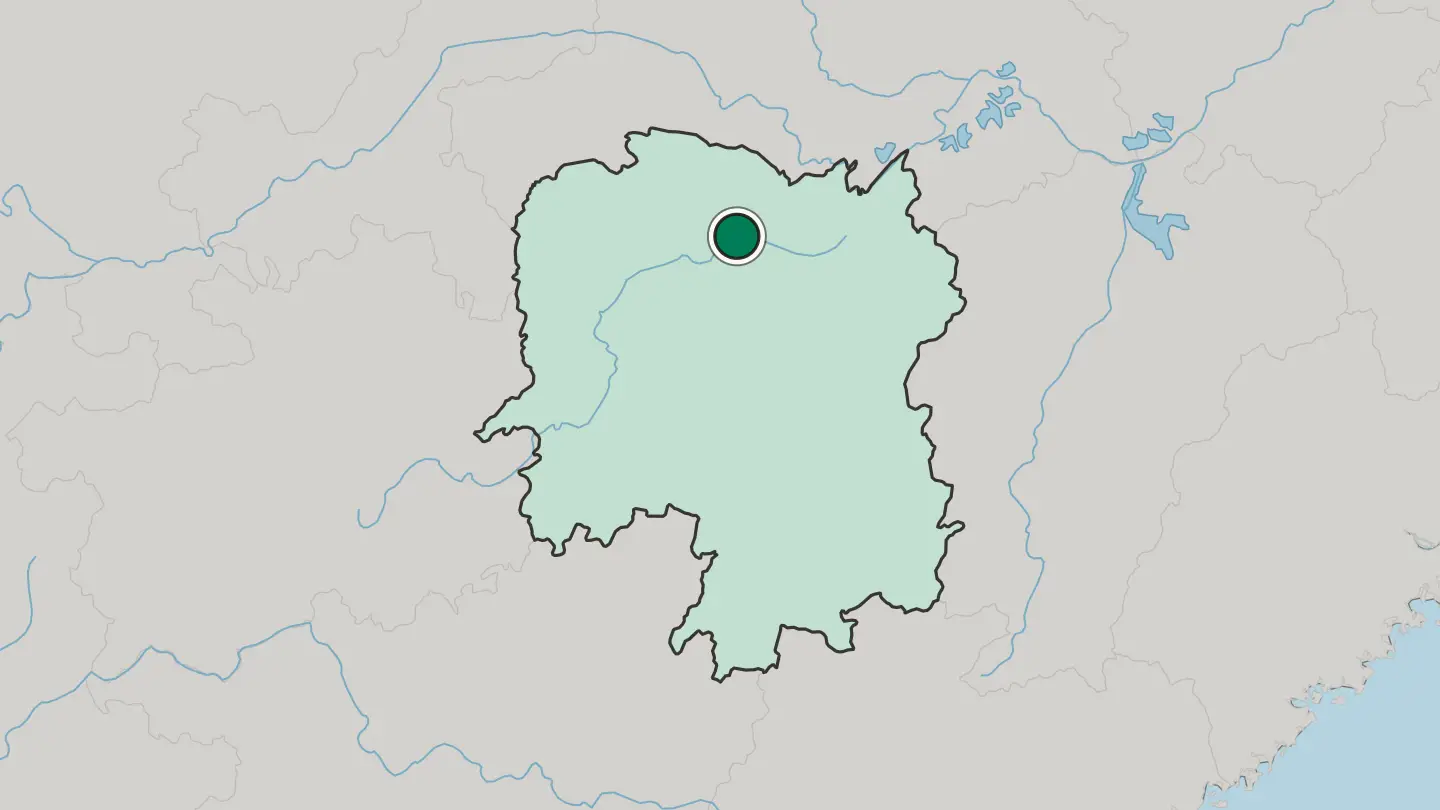
 China
China
Zhuzhou
Zhuzhou straddles the Xiang River in Hunan, a prefecture-level city once called Jianning and holding the Mausoleum of Emperor Yan.Where to stay →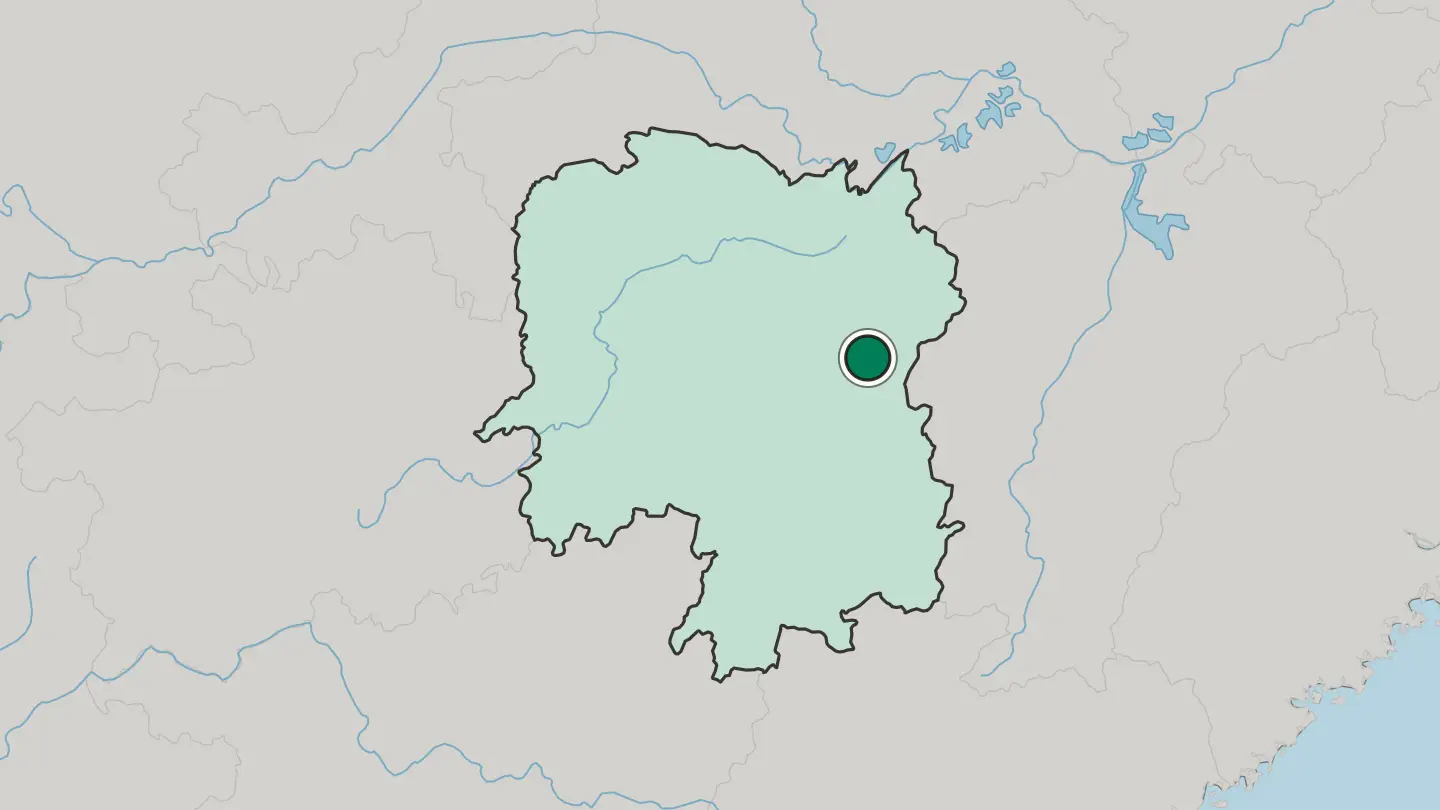
 China
China
Zhangjiajie
Zhangjiajie is a city among soaring stone pillars in northwestern Hunan, ringed by a fabled forest of sandstone peaks.Where to stay →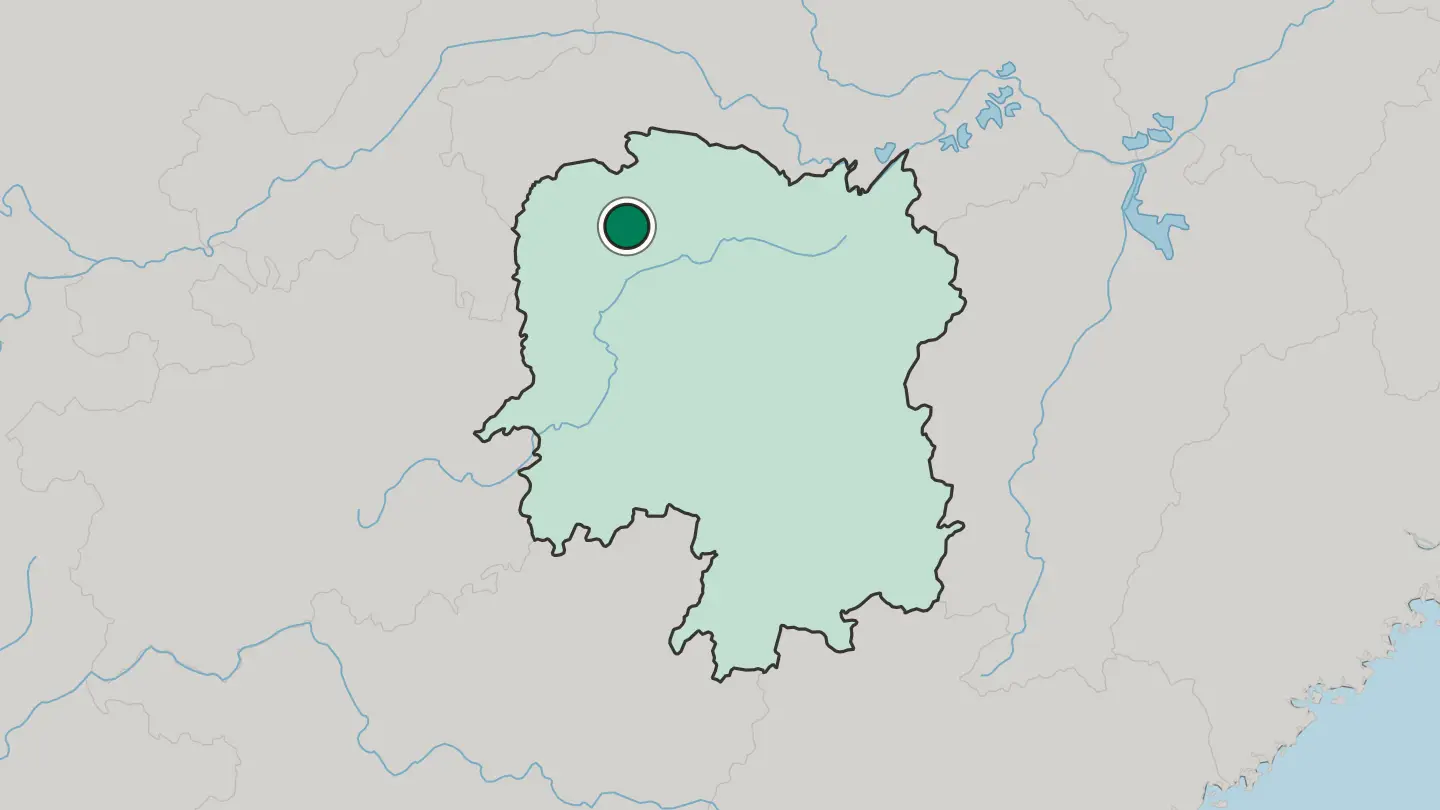
 China
China
Fenghuang
Fenghuang is an old walled county town of Xiangxi in Hunan, birthplace of the writer Shen Congwen and county of the painter Huang Yongyu.Where to stay →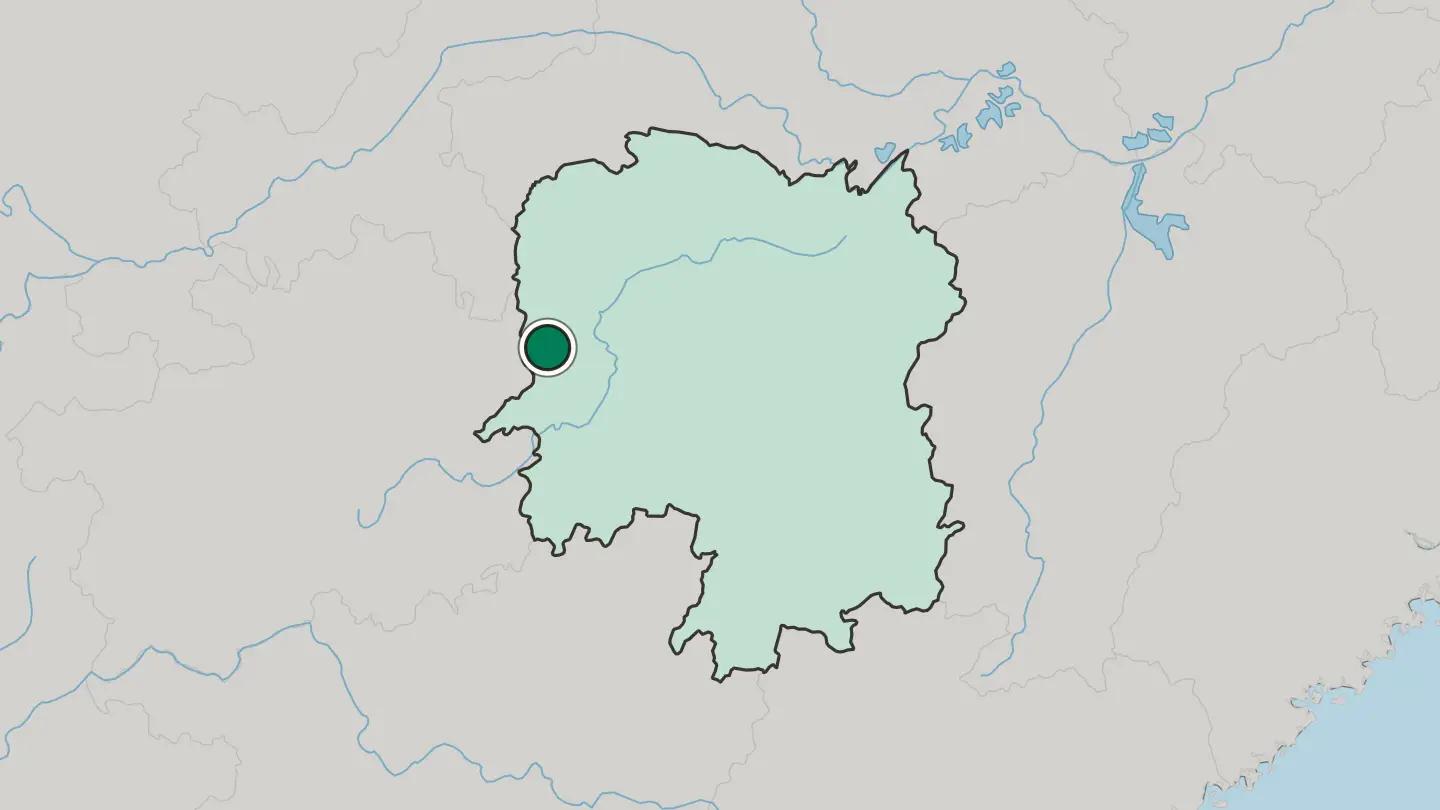
Hotel links are affiliate links: booking through them may earn us a commission, at no extra cost to you. It never affects how places are ranked. How this works
About Hunan
Hunan is chilli country.
What is Hunan known for?
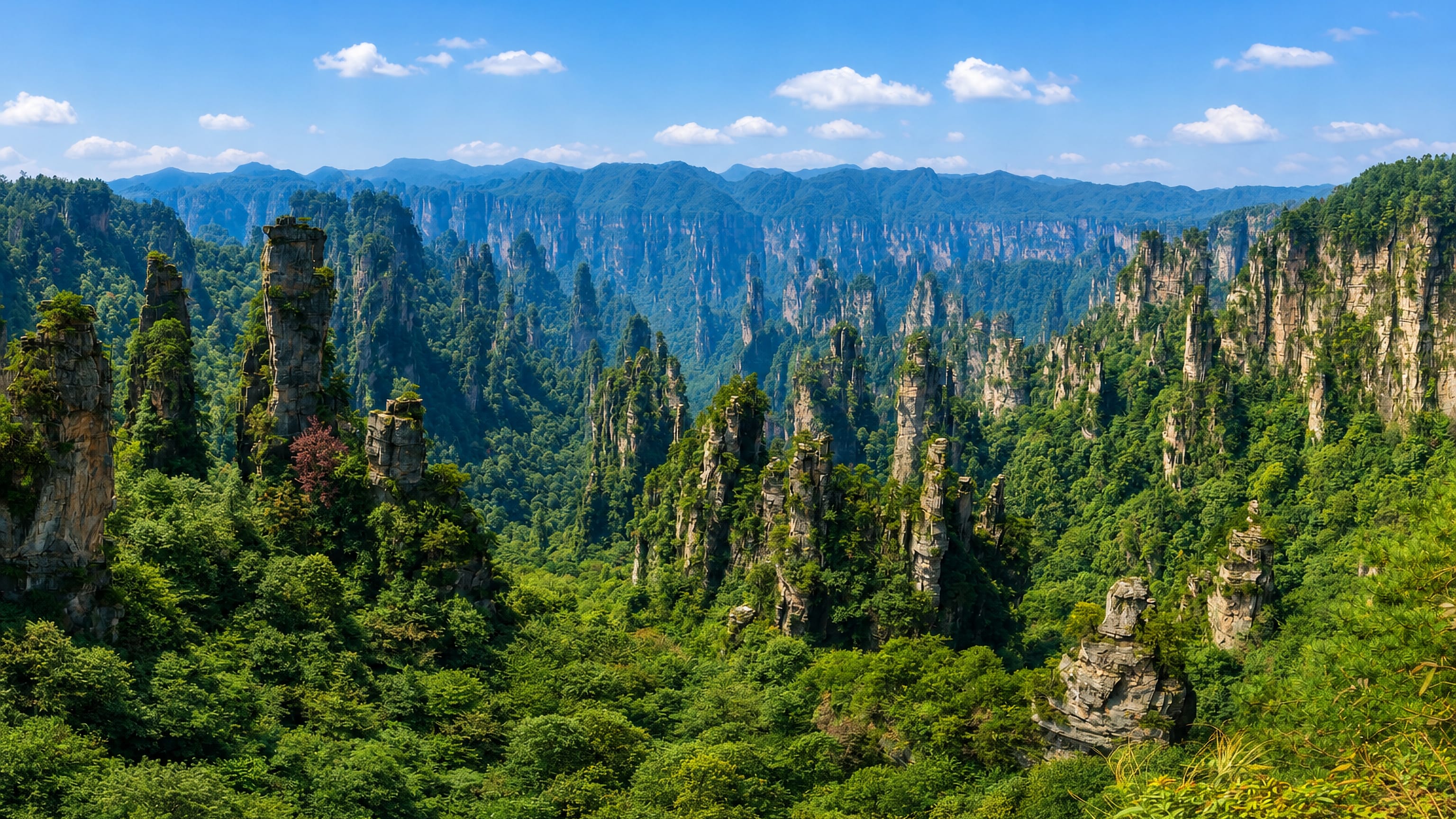
Its Xiang cuisine leans hotter and more sour than almost anywhere else in China, and the province takes its short name, Xiang, from the river that drains it. Two images pull travellers here: the quartzite sandstone pillars of Wulingyuan around Zhangjiajie in the north-west, and Shaoshan, the village where Mao Zedong was born. Between them lie the Xiang River, Dongting Lake, and the sacred slopes of Mount Heng.
Where is Hunan?
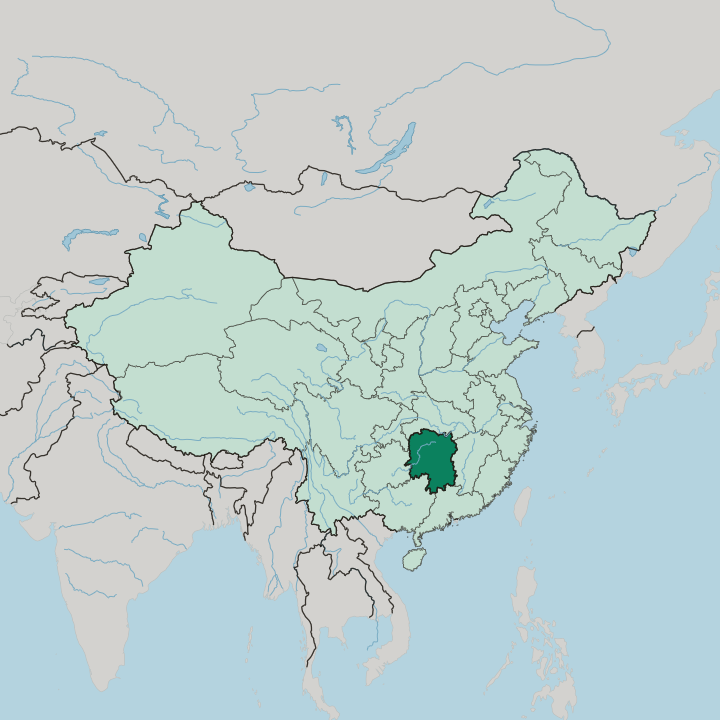
Hunan lies in south-central China, on the south bank of the middle Yangtze River and inland from the coast. The province takes its name from Dongting Lake: Hunan means the land south of the lake, and Hubei, its neighbour, means the land to the north. Water organises everything here.
The Xiang River rises in the south and runs generally north-east across the province, gathering the smaller rivers as it goes, threading through Changsha, and emptying into Dongting Lake near the Yangtze. That lake was once the largest in China. Silted and diked into farmland over the centuries, it is now the second-largest freshwater lake, after Poyang.
The land climbs away from the lowland core. Mountains and hills wrap the province on three sides, opening only toward the Yangtze in the north. In the far north-west stand the quartzite sandstone pillars of Wulingyuan, more than three thousand of them, some rising over two hundred metres from the valley floor.
Mount Heng, the southern peak of the Five Great Mountains, rises in the centre-south. Between the ranges spreads the fertile Xiang valley, the settled heart of Hunan where most of its cities and its people gather.
What is Hunan like?
Hunan runs on chilli. Its Xiang cuisine is one of the eight great regional cooking traditions of China, and locals rank it hotter and more sour than the milder styles around it, built on fresh chilli, fermented pastes, and smoked pork cured over pinewood fires. The province wears the food as identity, and red-braised pork carries the reputation of Mao Zedong, who was born at Shaoshan and never lost his taste for the heat of home.
Older layers sit beneath the kitchen. This was the ground of the ancient state of Chu, whose lacquerware, chime bells, and shamanic art turn up in tombs across the province. At Mawangdui, on the edge of Changsha, three Western Han tombs gave up silk manuscripts and the near-perfect body of a noblewoman, sealed for two thousand years.
Mount Heng draws pilgrims to the southern of the Five Great Mountains, where temples climb the wooded ridge. Fenghuang, a river town of stilt houses in the west, keeps its Ming and Qing streets intact. The common speech is Mandarin, but the province also holds its own Xiang dialects, and Tujia and Miao communities live through the western hills.
What is the history of Hunan?
Chu came first. Long before it was a province, this was the southern reach of the ancient state of Chu, whose distinctive lacquer and bronze survive in tombs across the Xiang valley. Under the Han, Changsha grew into a princely capital, a story the Mawangdui tombs tell in silk.
Hunan and Hubei were governed together for centuries as Huguang, then split into separate provinces late in the Qing dynasty. The valley bred a run of figures who reshaped modern China, Mao Zedong among them, born at Shaoshan in 1893.
What is the climate of Hunan?
Hunan has a humid subtropical climate with four distinct seasons. Summers are long, hot, and wet, and Changsha ranks among China's hotter provincial capitals when the Xiang valley bakes under the summer sun. Winters are short and chilly, damp rather than deeply frozen.
Rain falls heavily through spring and early summer, and the province gathers well over a metre of it in an average year, feeding the Xiang River and the flood-prone basin of Dongting Lake.
How do you get to Hunan?
Most travellers arrive through Changsha. Its Huanghua airport is the main gateway, and a short maglev line runs from the terminal to Changsha South station. That station sits on the Wuhan-Guangzhou high-speed line, which puts the capital within a couple of hours of both cities by fast train.
Zhangjiajie has its own airport and rail link for the sandstone pillars in the north-west. Inside the province, high-speed and intercity trains tie Changsha to Zhuzhou, Xiangtan, and Hengyang down the Xiang valley.
Common questions
What is the best area to stay in Hunan?
Changsha: food, museums, and onward connections across Hunan. Zhangjiajie: walking the sandstone pillars of Wulingyuan.
Good for
More regions in China
Updated September 2026