China
Anhui, China — Towns & Travel Guide
Anhui is an inland province of eastern China, split by the Yangtze and the Huai between granite peaks and river plain.
Hotel links are affiliate links: booking through them may earn us a commission, at no extra cost to you. It never affects how places are ranked. How this works


Towns & cities in Anhui
Pick a town or city — each links to where to stay.

 China
China
Hefei
Hefei is a city of Anhui in east China, provincial capital by Lake Chaohu, a city of Three Kingdoms battlefields, an upright judge, and modern science.Where to stay →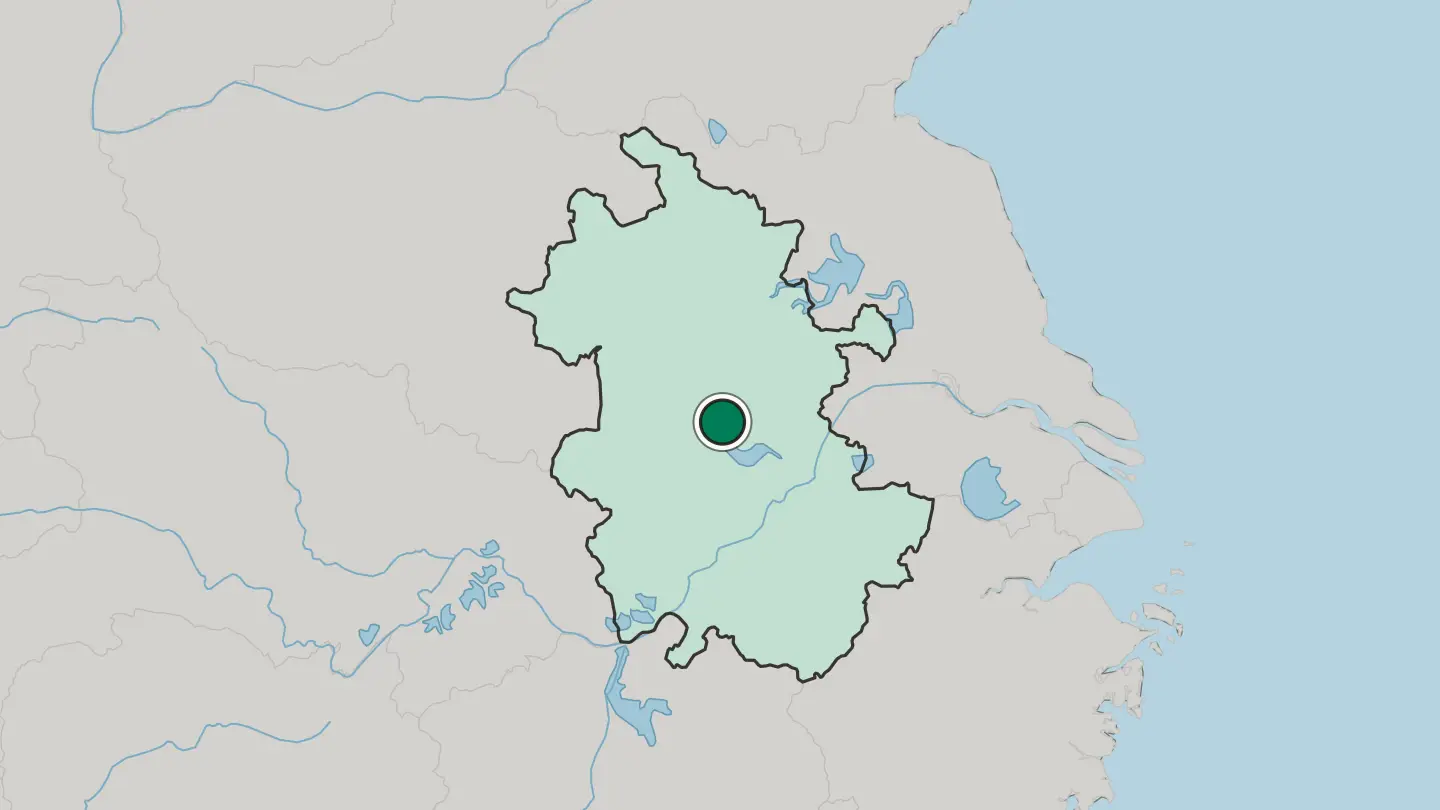
 China
China
Wuhu
Wuhu stands on the southeast bank of the Yangtze in southeastern Anhui, keeping a former customhouse, a British consular office and two pagodas.Where to stay →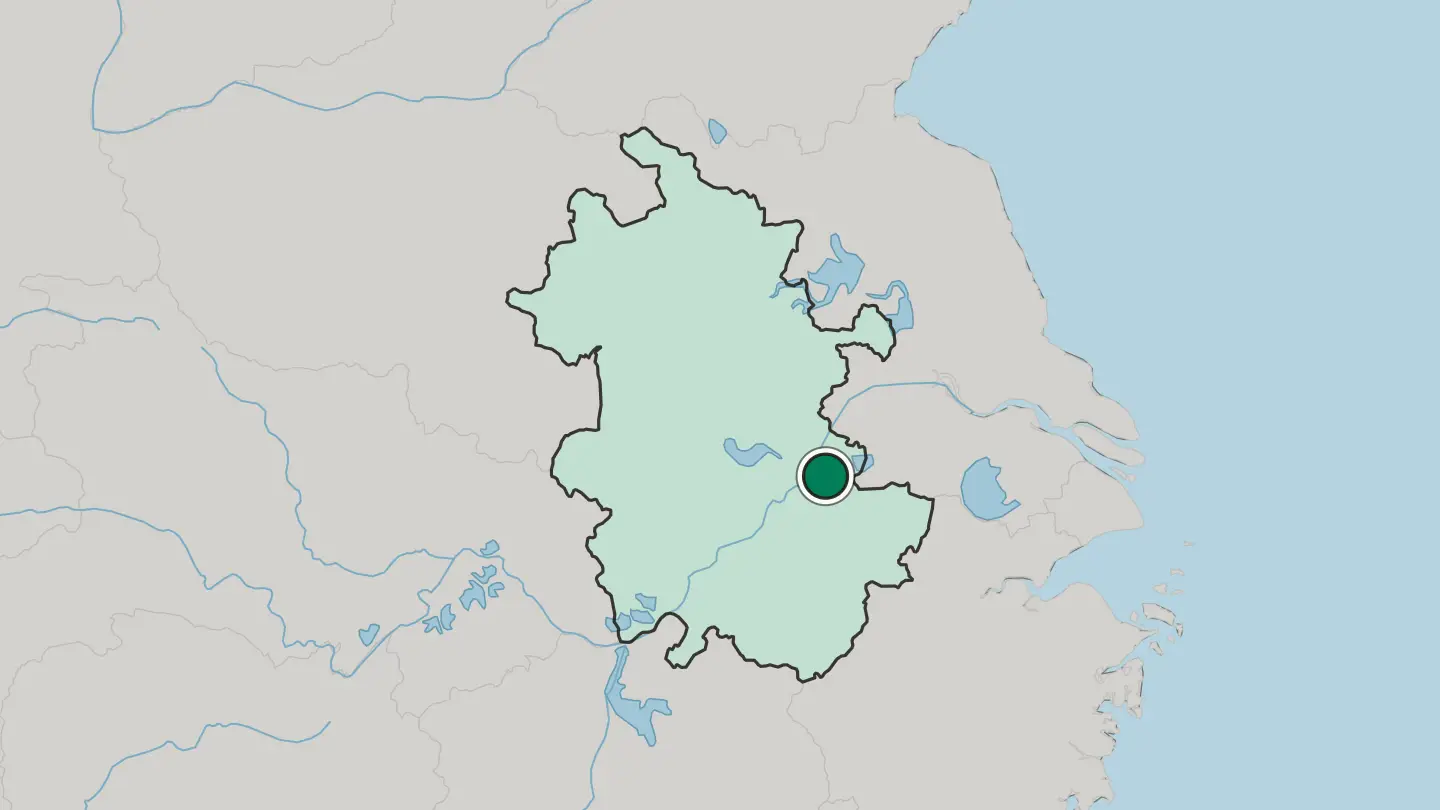
 China
China
Bengbu
Bengbu lies in northern Anhui on the Huai River, its name meaning Clam Wharf after the freshwater pearl fishery the riverbank was once known for.Where to stay →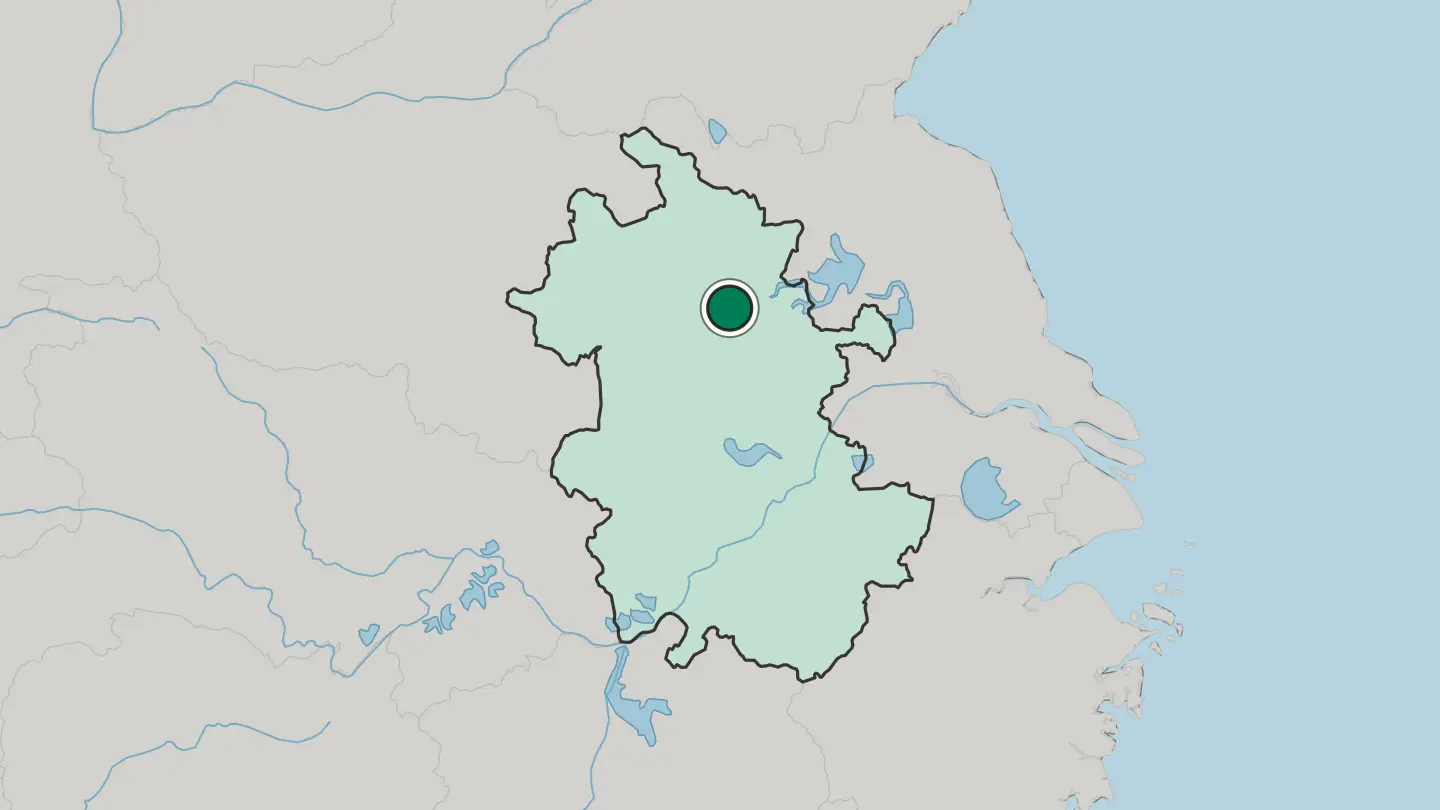
 China
China
Anqing
Anqing sits in the southwest of Anhui: the birthplace of Huangmei opera and of Chen Duxiu, with Mount Tianzhu inside its prefecture.Where to stay →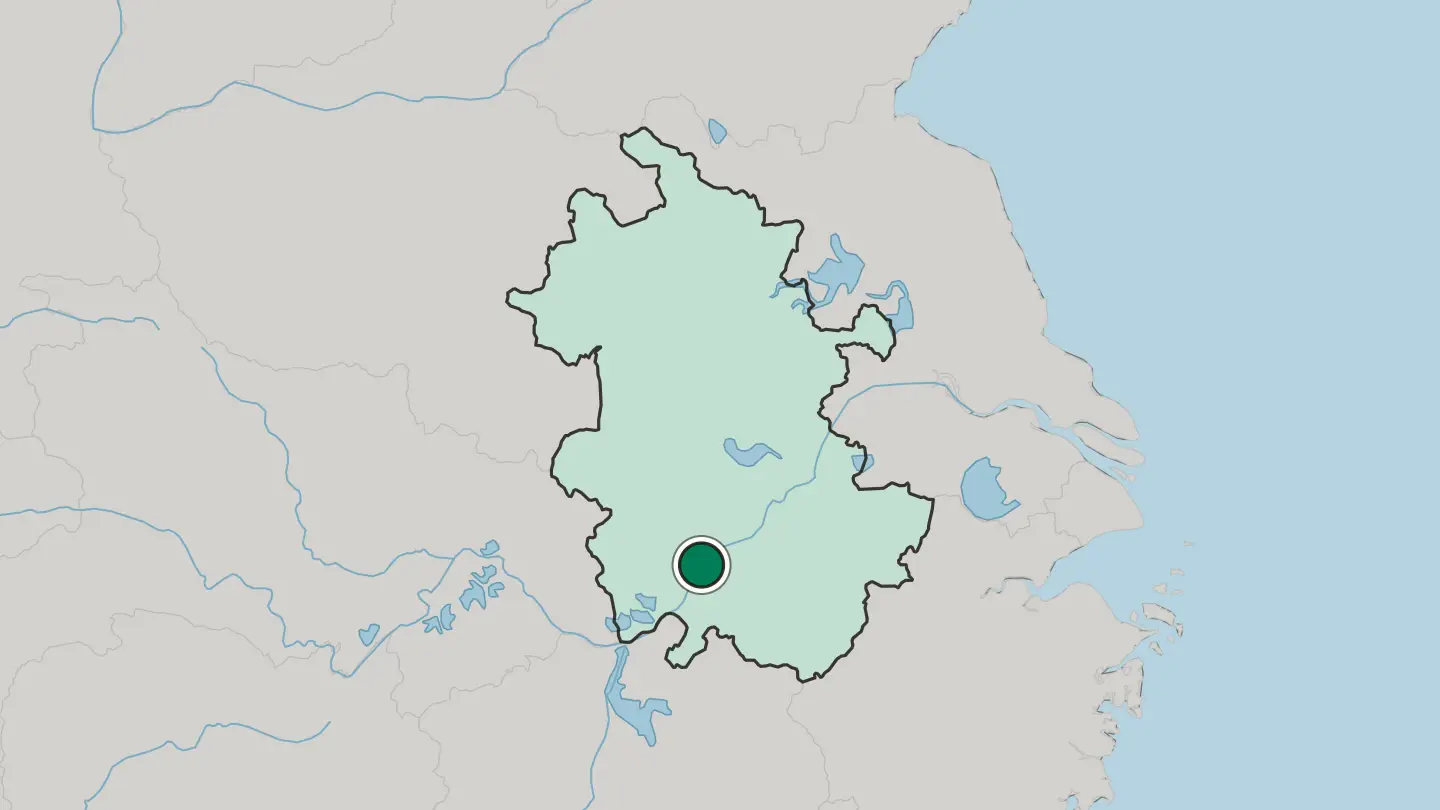
 China
China
Huangshan
Huangshan is a city in southern Anhui, China, at the foot of the Yellow Mountains and among the old Huizhou villages.Where to stay →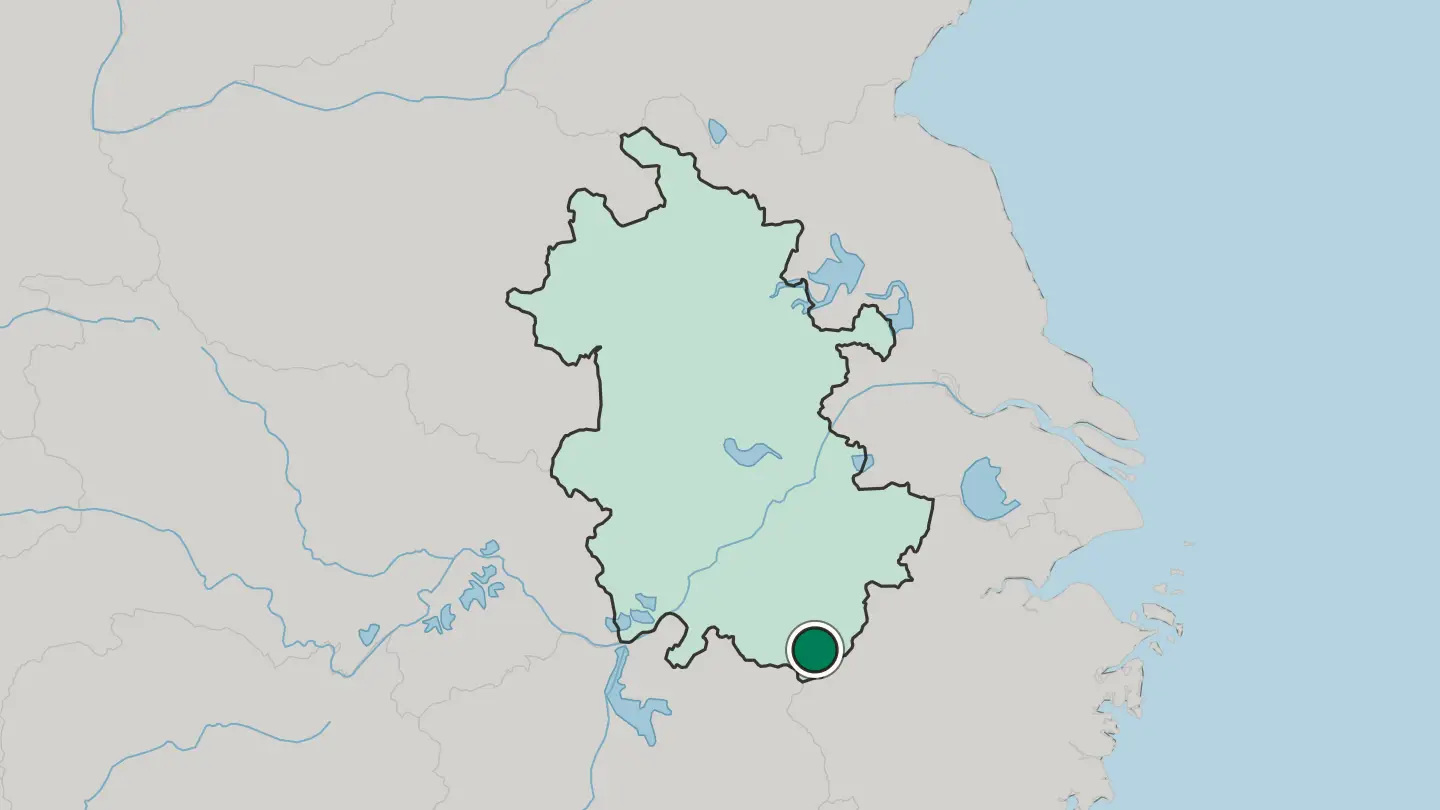
Hotel links are affiliate links: booking through them may earn us a commission, at no extra cost to you. It never affects how places are ranked. How this works
About Anhui
Huangshan is the reason most travellers come.
What is Anhui known for?
The granite peaks of that range in the south of Anhui, wreathed in cloud seas and gnarled pines, have drawn Chinese painters and poets for centuries. Below the mountains sit Xidi and Hongcun, two whitewashed Hui-style villages held on the UNESCO World Heritage List. Hefei, the capital, sits inland to the north and now trades on science and research.
Two very different Anhuis meet here.
Where is Anhui?
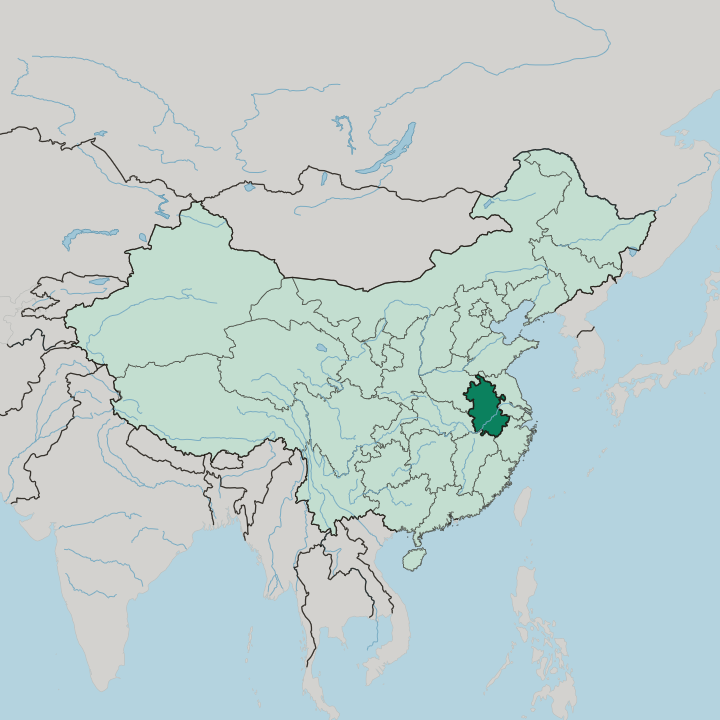
Anhui lies inland in eastern China, well back from the coast. Two great rivers cut it into bands. The Huai crosses the north, where the flat, densely farmed plain runs on into the wider North China Plain beyond the province.
The Yangtze sweeps through the south, carrying the port cities of Wuhu and Anqing on its banks. Between the two rivers the land is low and open. South of the Yangtze the ground breaks upward into hills and granite ranges, and the peaks of Huangshan rise near the province's southern edge.
The Dabie Mountains fill the south-west, straddling the border with Hubei and reaching heights of over 1,700 metres. Anhui borders six other provinces. Jiangsu and Zhejiang lie to the east, Jiangxi to the south, Hubei and Henan to the west, and Shandong to the north.
It touches no sea at any point. That layered geography, flat in the north and rising sharply in the south, gives the province two faces that feel like separate places.
What is Anhui like?
The soul of Anhui sits in its south, in the old prefecture of Huizhou. From the Ming dynasty onward the Huizhou merchants who traded salt across China grew rich and sent their money home. They built it into ancestral halls, carved archways and courtyard houses of white wall and dark tile.
That Hui style of architecture survives most fully at Xidi and Hongcun, where lanes and reflecting ponds have stood since Ming times. Craft ran alongside the trade. Brick, stone and wood carving decorate the old halls, and the same region gave China one of its eight great regional cuisines, built on wild herbs and river fish.
Opera belongs here too. The Huizhou troupes that travelled north out of Anqing carried the songs that grew, in time, into Peking opera. Ink painting drew endlessly on the peaks of Huangshan.
Merchant wealth, high craft and the mountain landscape braided together into a culture that is unmistakably southern Anhui's own.
What is the history of Anhui?
Anhui took shape as a province under the Qing dynasty. Its name is a portmanteau, joining the first characters of two old cities, Anqing on the Yangtze and Huizhou in the southern hills. Both had long mattered.
Anqing served for stretches as the provincial seat and as a Yangtze strongpoint, while Huizhou grew wealthy on the salt fortunes its merchants carried home from across the country. The rivers shaped the story. They split a farming north from a trading, mountainous south long before any single border ever drew the two halves together.
What is the climate of Anhui?
Anhui runs on a monsoon rhythm with four clear seasons. The Huai in the north marks a rough climatic line: warm-temperate country lies above it, and the milder, wetter subtropical belt lies below it toward the Yangtze. Summers are hot, and the heaviest rain falls in a concentrated wet season before autumn turns dry and cool.
Winters bite hardest in the north. High on Huangshan the air stays cooler, and a white sea of cloud regularly swallows the granite peaks.
How do you get to Anhui?
Most travellers reach Anhui by high-speed train. Hefei, the capital, is the province's rail crossroads, tied to Nanjing and Shanghai by fast lines that cover the run in a matter of hours, and it carries the main airport as well. Huangshan has its own airport and a fast-rail station for those heading straight for the mountains.
Wuhu and Anqing add river-port access along the Yangtze. Inside the province, trains and roads thread the flat north to the southern hills.
Common questions
What is the best area to stay in Anhui?
Hefei: the capital and rail crossroads. Huangshan and the southern villages: the Yellow Mountains and Hui villages. Wuhu: a stop on the Yangtze. Anqing: opera history on the river.
Good for
More regions in China
Updated September 2026