China
Hainan, China — Towns & Travel Guide
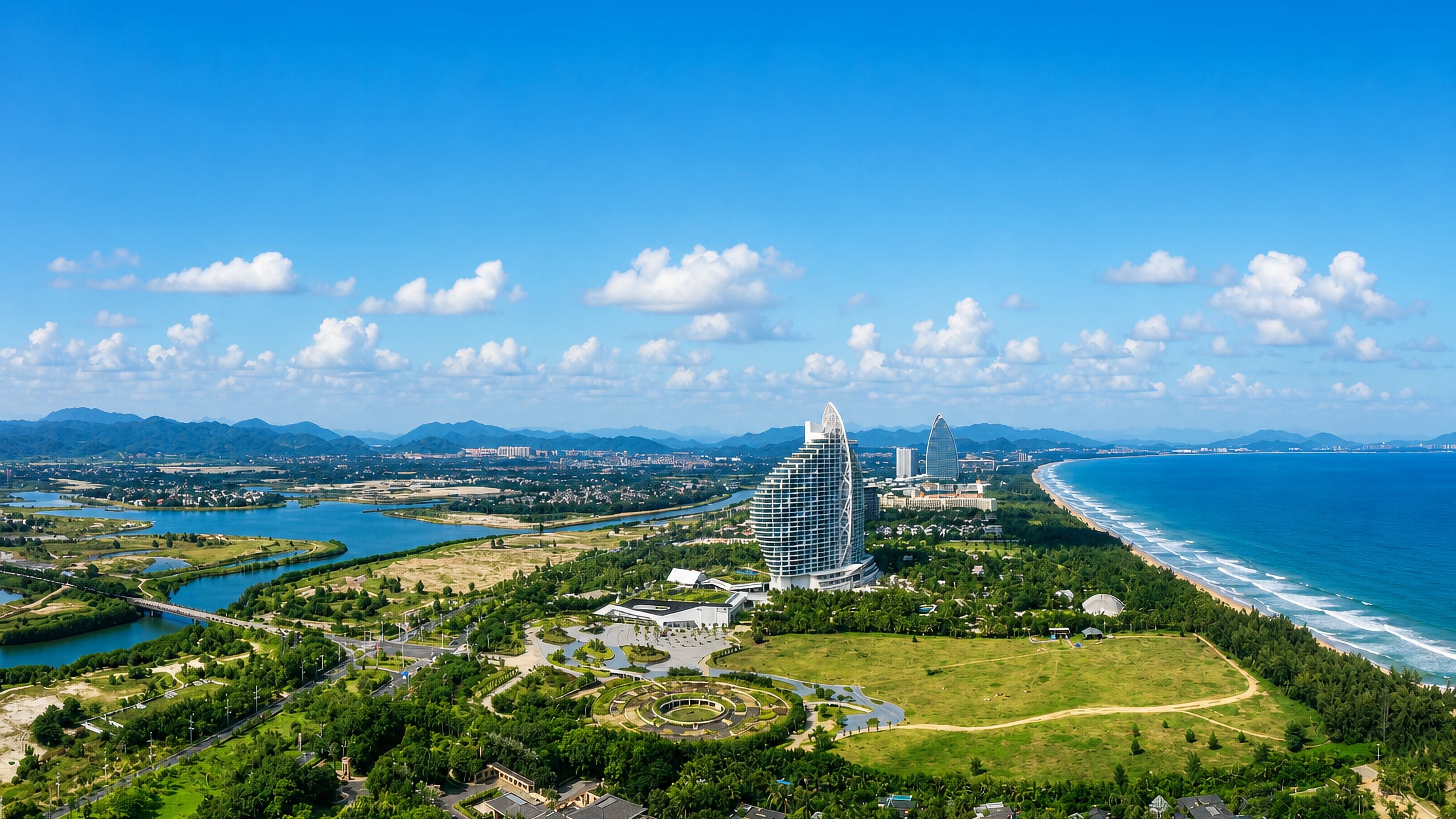
Hainan is China's tropical island province in the South China Sea, ringed by beaches and covered inland by rainforest.
Hotel links are affiliate links: booking through them may earn us a commission, at no extra cost to you. It never affects how places are ranked. How this works


Towns & cities in Hainan
Pick a town or city — each links to where to stay.

 China
China
Haikou
Haikou is a city of Hainan in southern China, capital of the country's tropical island, a coconut-shaded port of arcaded streets on the Qiongzhou Strait.Where to stay →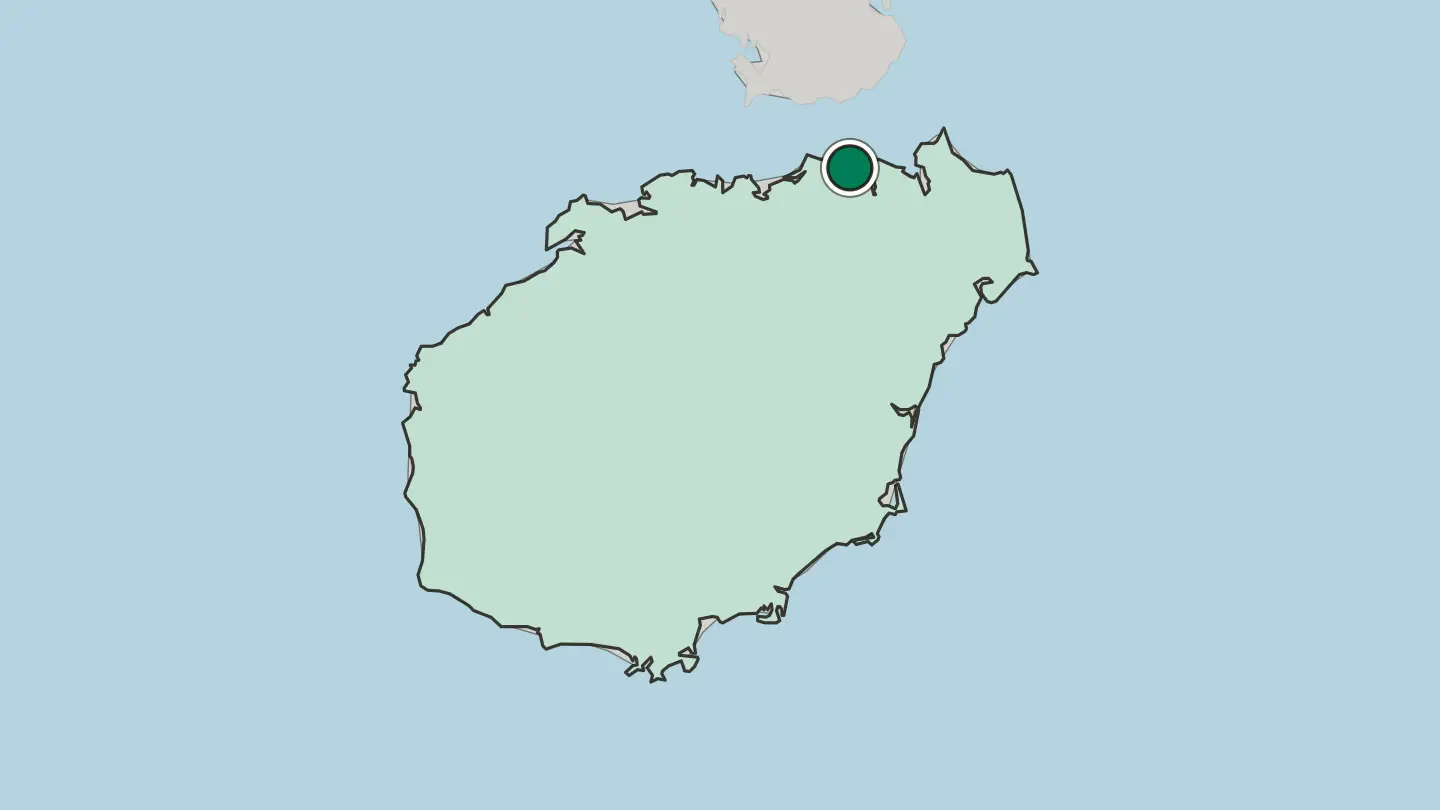
 China
China
Sanya
Sanya is a tropical resort city at the southern tip of Hainan island in China, a place of palm-lined beaches and warm water, often called China's Hawaii.Where to stay →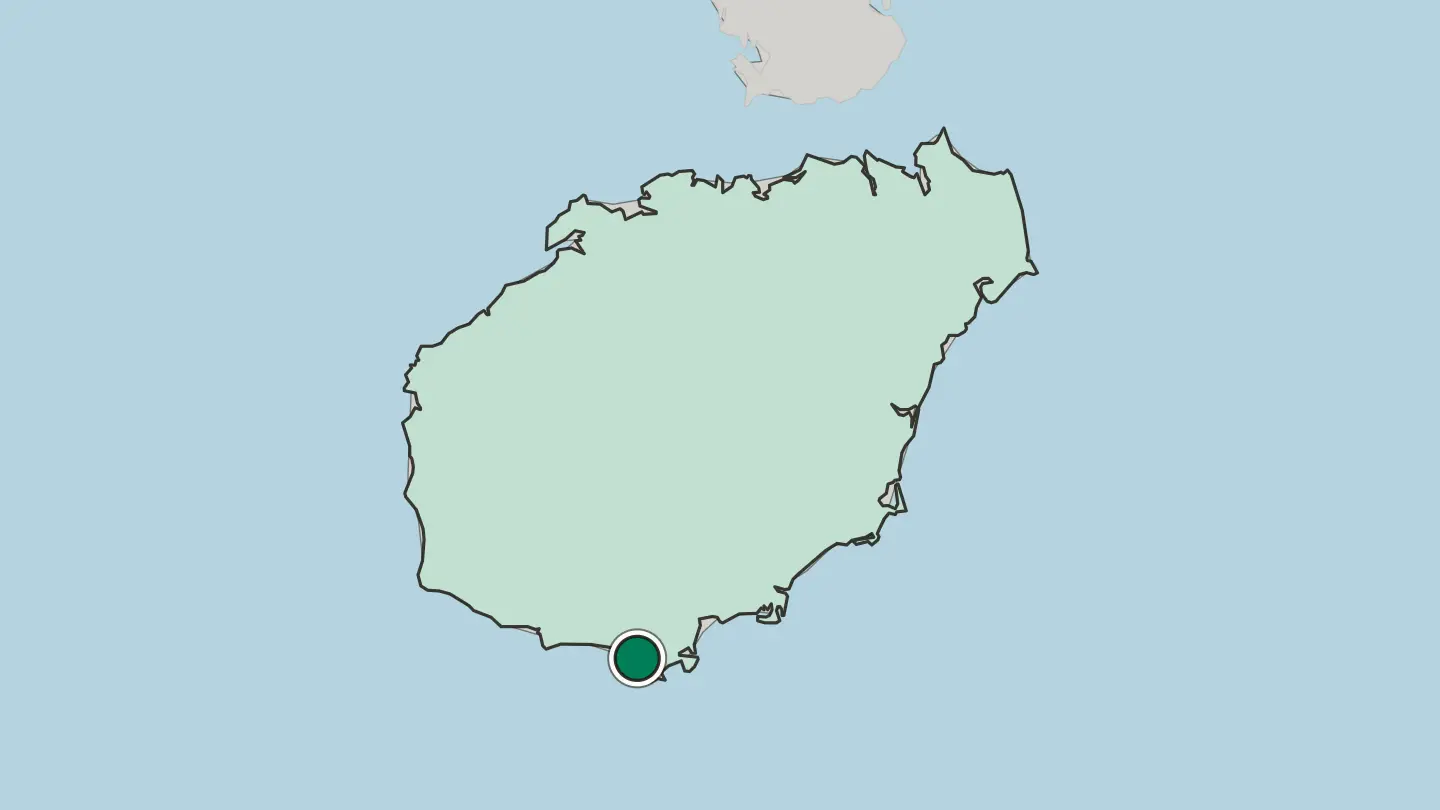
Hotel links are affiliate links: booking through them may earn us a commission, at no extra cost to you. It never affects how places are ranked. How this works
About Hainan
Hainan is the beach province.
What is Hainan known for?
Sanya, a well-known resort on the southern coast, draws sun-seekers to Yalong Bay and Dadonghai, where white sand and warm water back onto rows of resorts. Haikou, the capital, sits at the northern edge by the mouth of the Nandu River and handles the island's ports and flights. Inland the land climbs into the rainforest around Wuzhi Mountain, home to the Li people who have farmed these highlands for centuries.
It is the one corner of China where palms, monsoon rain, and a tropical coast define the whole place.
Where is Hainan?
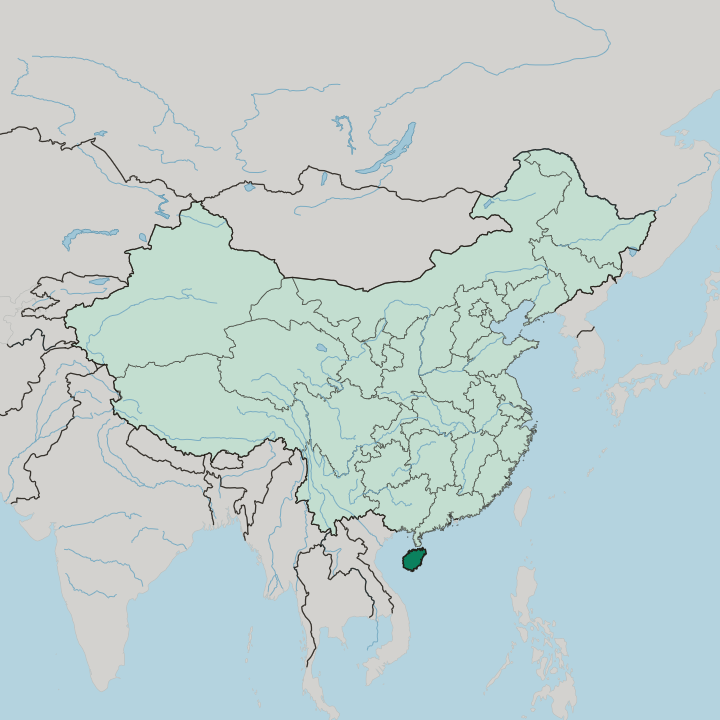
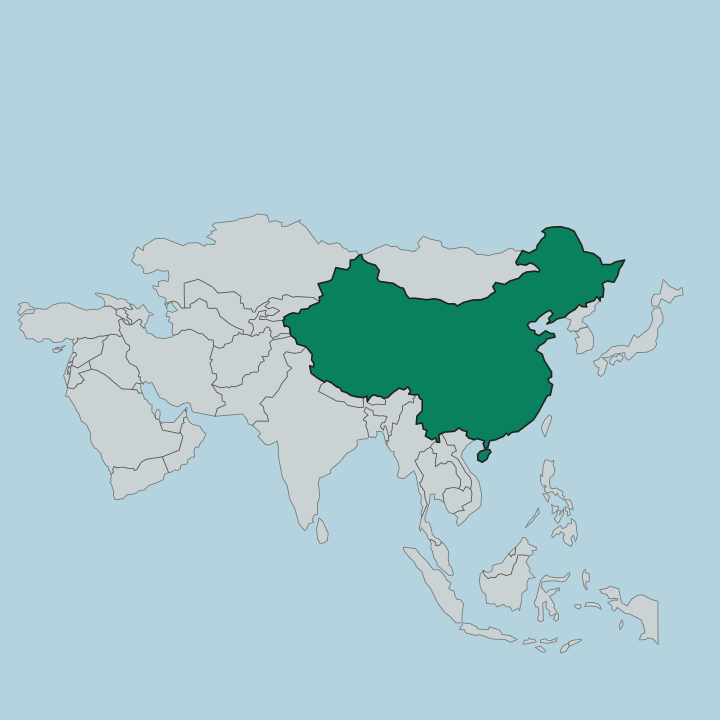
Hainan is an island. It lies in the South China Sea off the far southern tip of China, the country's southernmost province. The Qiongzhou Strait separates it from the mainland, a channel roughly 20 km wide that divides the island from the Leizhou Peninsula of Guangdong to the north.
The island is oval, wider than it is tall, and it is ringed almost entirely by coast. Haikou, the capital, stands at the northern edge by the mouth of the Nandu River, which runs 314 kilometres and drains the north into the Qiongzhou Strait. Sanya lies opposite it at the southern tip, on the shore of the South China Sea.
The interior rises as you move inland from any coast. Low coastal plains give way to hills and then to the central mountains, where Wuzhi Mountain reaches about 1,840 metres above the middle of the island. Rainforest covers much of that high ground.
The Li people settled these highlands, pushed up from the plains as Han farmers took the coast, and the villages of the Li and the Miao still sit in the western and southern hills. Every edge of Hainan meets the sea, and that ring of water has shaped the province as much as its mountains have.
What is Hainan like?
Hainan feels less like the rest of China and more like the tropics that surround it. Two cultures share the island. The Li people are indigenous to Hainan, settled long before Han migrants arrived, and they hold the highlands around Wuzhi Mountain, weaving brocade and building the boat-shaped thatched houses that mark their villages.
The Miao came later, brought from the Guizhou region as Qing soldiers in the eighteenth century, and their descendants stayed in the western hills. Han migrants took the coasts and the towns. Language splits along the same lines.
Hainanese, a variety of Min Chinese carried south by settlers from Fujian, is the common tongue of the lowlands, while the Li and the Miao keep their own languages in the interior. Food leans tropical and Cantonese-influenced, built on seafood, coconut, and the famous Wenchang chicken. The pace is slower than in mainland cities.
Beach resorts and Li villages sit on the same island, and the culture of Hainan runs from luxury hotels in Sanya to hill hamlets that still farm the old way.
What is the history of Hainan?
The Li came some three millennia ago. Han Chinese settlement came in waves from the mainland, growing under the Song dynasty when large numbers of settlers reached the north of the island, and it was to Hainan that the imperial court exiled disgraced officials to the far edge of China. From the Ming dynasty on, the island was governed as part of Guangdong on the mainland.
That changed in 1988, when Hainan was split off as a province in its own right and made China's largest special economic zone, opening the coast to the resort building that followed.
What is the climate of Hainan?
Hainan runs tropical all year. The seasons split into wet and dry rather than hot and cold, with warm temperatures holding across the island from the coast up to the hills of Wuzhi Mountain. Summer brings the rain and the typhoons that blow in off the South China Sea, and the eastern side of the island catches more of it than the drier west.
Winters stay mild and draw visitors from the colder mainland to the beaches at Sanya. Rain and heat are the constants here.
How do you get to Hainan?
Two airports carry the island. Haikou in the north and Sanya in the south each take international flights, and between them they land the bulk of arrivals. Reaching Hainan overland means a ferry: trains and cars cross the Qiongzhou Strait from Hai'an and Xuwen on the Leizhou Peninsula of Guangdong to Haikou, some rolling straight onto the rail wagons that ride the boat over.
Once ashore, a high-speed railway rings the whole island in a closed loop, linking Haikou with Sanya along both coasts in a few hours.
Common questions
What is the best area to stay in Hainan?
Sanya: beach resorts on the southern coast. Haikou: the capital and its transport links. The east coast: quieter beaches and surfing. The Wuzhi Mountain interior: the rainforest interior.
Good for
More regions in China
Updated October 2026