Italy
Umbria, Italy — Towns & Travel Guide
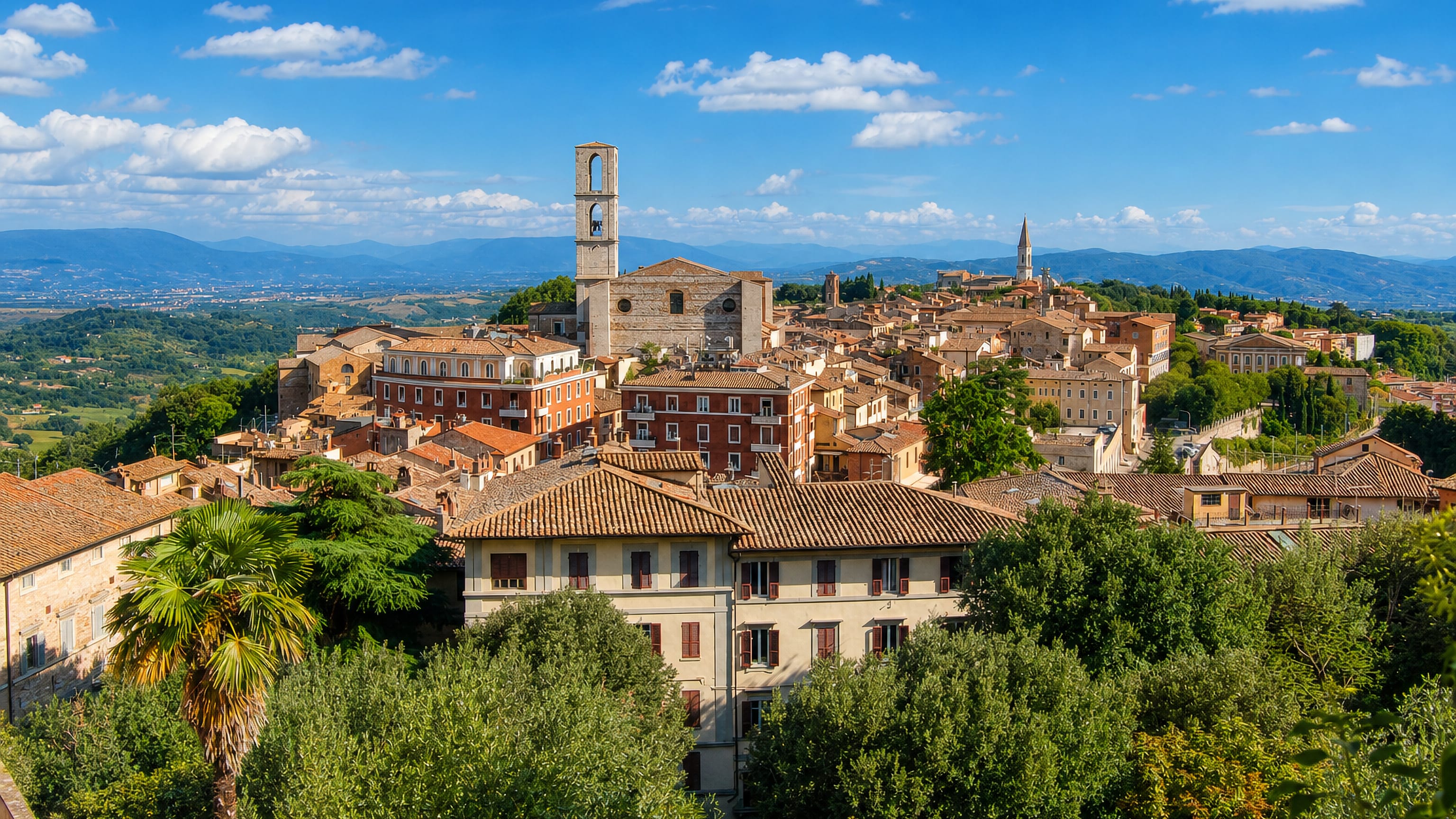
Umbria is the green heart of Italy, a landlocked region of hill towns, the Tiber valley and the Apennine ridges east of Tuscany.
Hotel links are affiliate links: booking through them may earn us a commission, at no extra cost to you. It never affects how places are ranked. How this works


Towns & cities in Umbria
Pick a town or city — each links to where to stay.

 Italy
Italy
Perugia
Perugia holds a ridge above the Tiber valley in Umbria, an Etruscan hill capital, known for the Fontana Maggiore and the Rocca Paolina.Where to stay →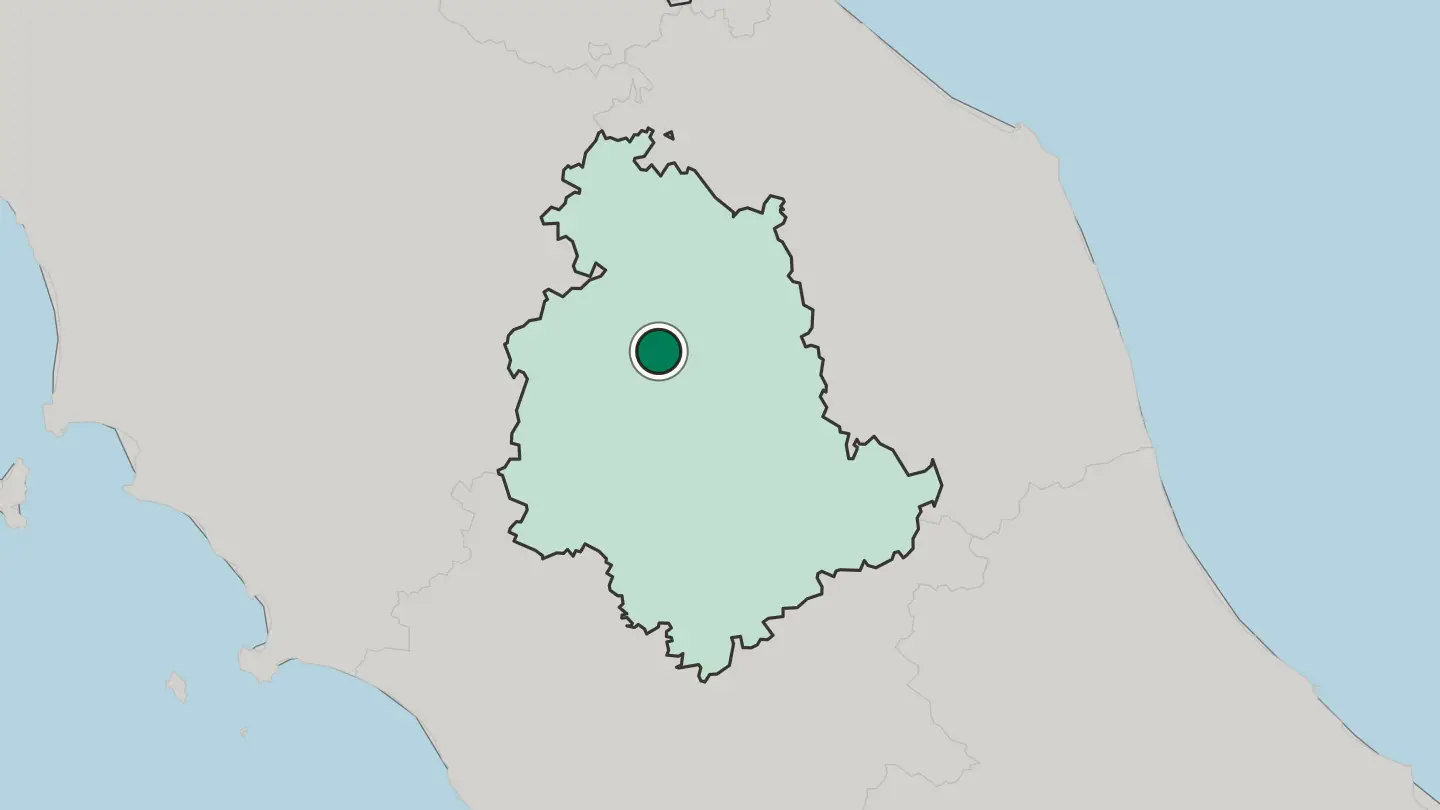
 Italy
Italy
Terni
Terni is an industrial city of Umbria in the plain of the River Nera, capital of its province and once called the Manchester of Italy.Where to stay →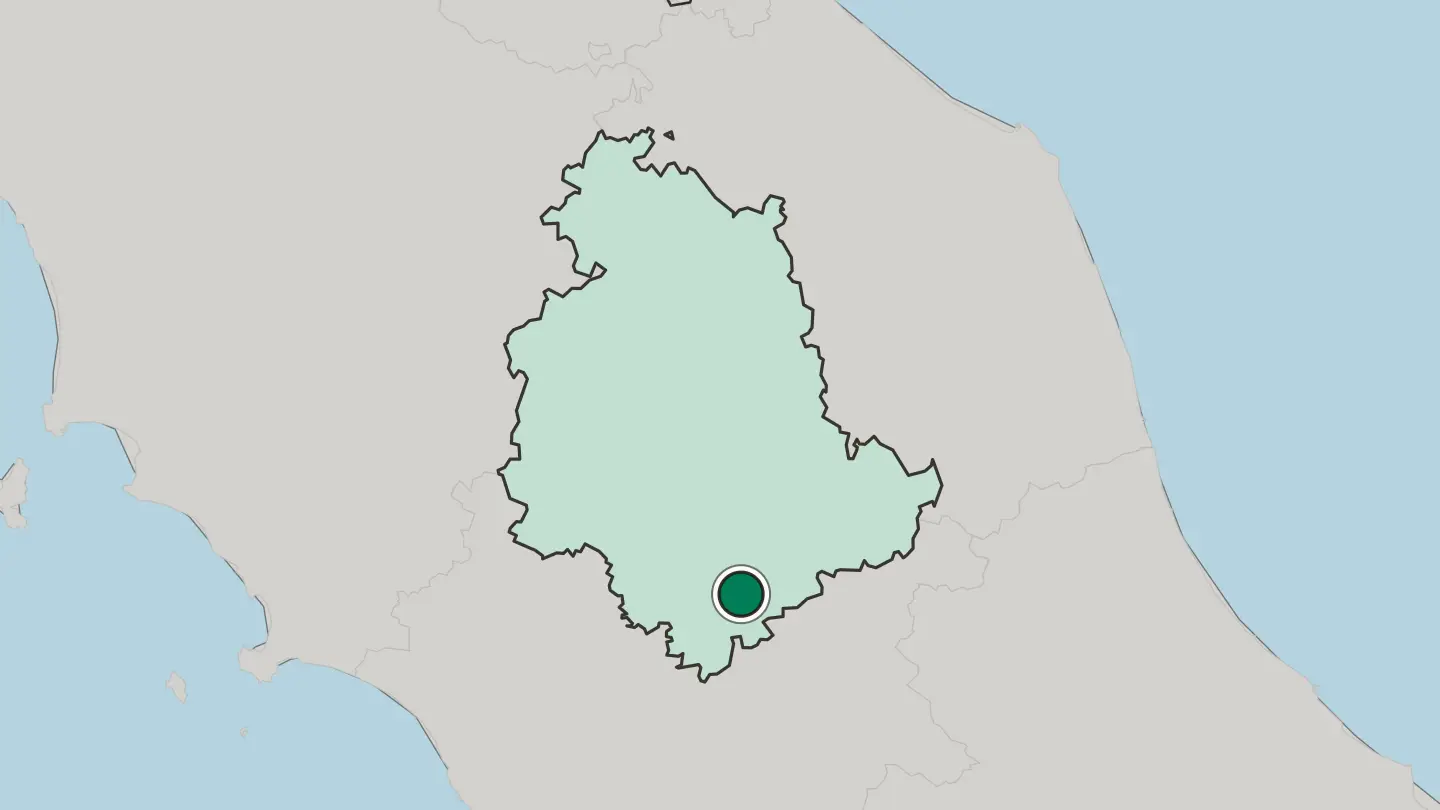
 Italy
Italy
Foligno
Foligno is an Umbrian town on the Topino, where the river leaves the Apennines for the plain, with Palazzo Trinci at its centre.Where to stay →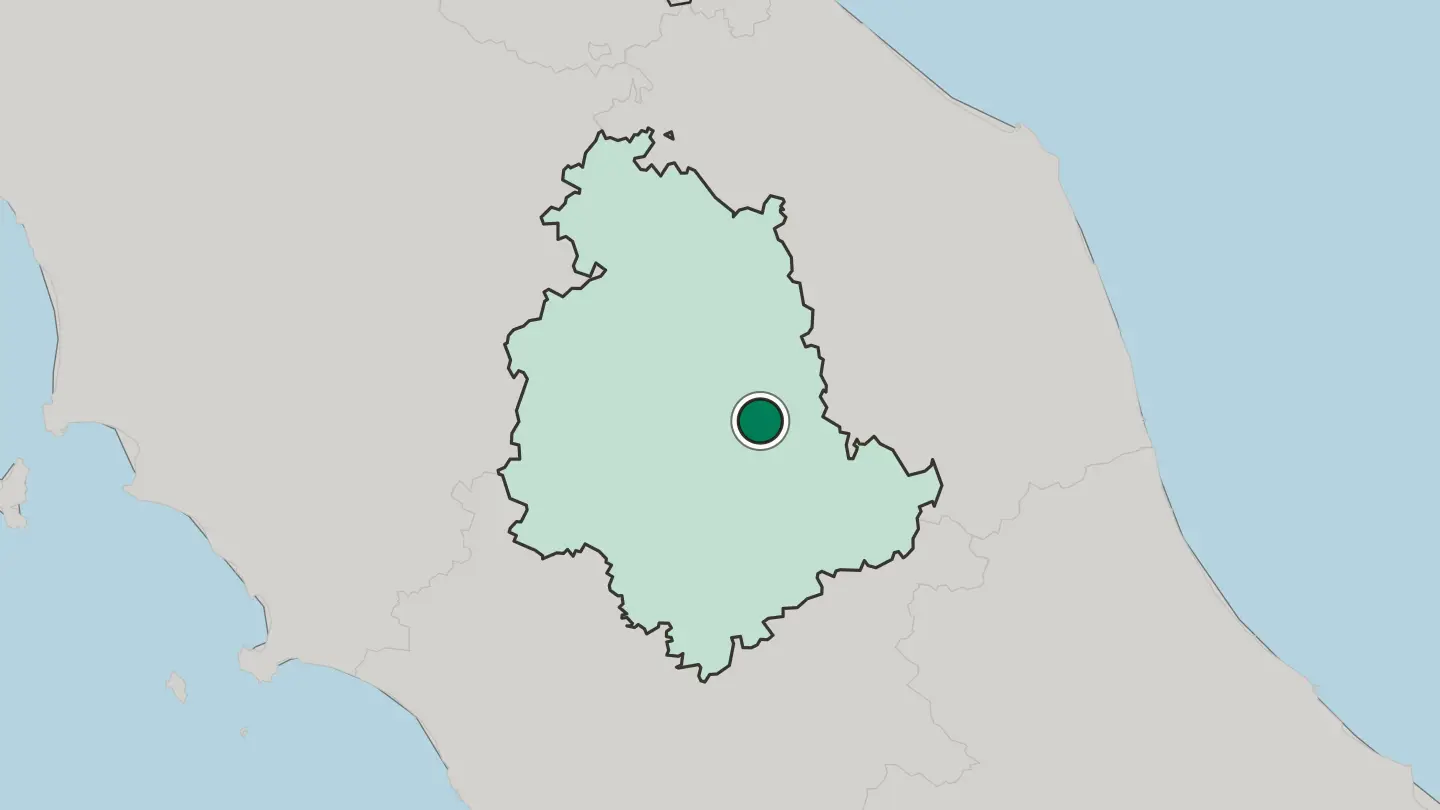
Hotel links are affiliate links: booking through them may earn us a commission, at no extra cost to you. It never affects how places are ranked. How this works
About Umbria
What is Umbria known for?
Umbria is the only landlocked region of the Italian mainland. It sits in the centre. Perugia is its capital, an old Etruscan hill town that now fills each July with the concerts of Umbria Jazz.
Assisi draws pilgrims to the basilica of Saint Francis, whose life turned this corner of the Apennines into a byword for Italian spirituality. The Tiber threads the middle of the region, and the shallow expanse of Lake Trasimeno spreads across the north-west toward the Tuscan border.
Where is Umbria?
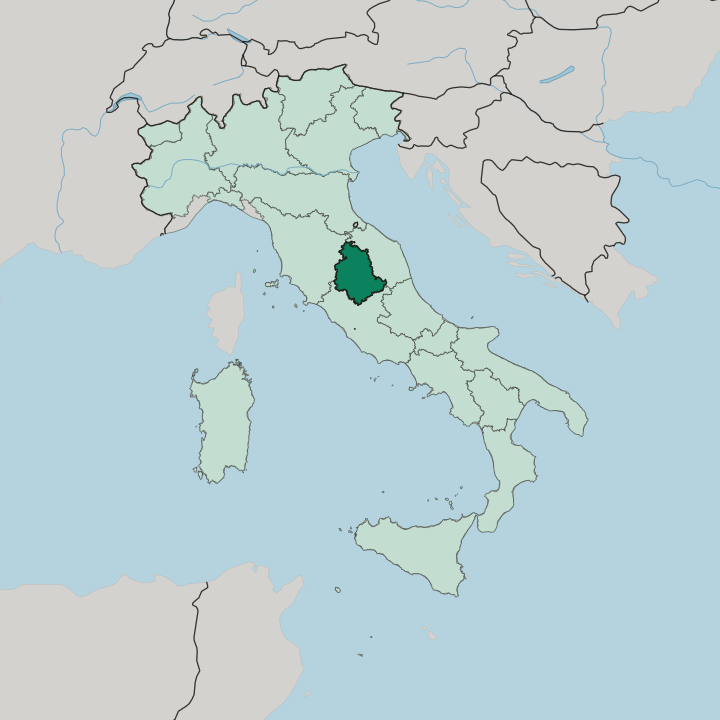
Umbria sits in the centre of the Italian peninsula, the only mainland region with no coast at all. It borders three neighbours. Tuscany lies to the west and north, Marche to the east across the Apennine watershed, and Lazio to the south on the road toward Rome.
The Tiber gives the region its spine: the river rises in the hills north of Perugia, gathers the waters of the central valleys, and slips south past Todi into Lazio. Two broad valleys shape the settled country. The Valle Umbra runs from Perugia down to Spoleto, a fertile trough that carries the old Roman roads and most of the hill towns.
West of it lies the Tiber valley proper, the Val Tiberina, threading north toward the Tuscan border. The east of the region climbs into the central Apennines, where the ridges on the Marche frontier hold Umbria's highest ground and its winter snow. In the north-west the land flattens around Lake Trasimeno, the fourth-largest lake in Italy and nowhere more than a few metres deep, its reeded shore fading into Tuscany.
That mix of river plain and mountain gives Umbria the evergreen cover that earned it the name of Italy's green heart.
What is Umbria like?
Umbria wears its Middle Ages more plainly than Tuscany does. When the popes ruled here and a salt tax touched off open revolt, the region stalled, and the Renaissance never scrubbed away the older stone. The result is a landscape of walled hill towns whose streets still climb as they did in the thirteenth century.
Saint Francis was born in Assisi, and his begging friars carried the town's name across Christendom. The painting followed the faith. Perugino, born near Perugia, led the Umbrian school and taught the young Raphael before Rome claimed them both.
Food here is plain and inland, built on what the hills give rather than any sea. Norcia lent its name to the whole Italian craft of pork butchery, its norcini curing hams and salami in the Valnerina; the same mountains yield black truffles and lentils. Montefalco presses the dark Sagrantino grape into one of Italy's most tannic reds.
And every July the concerts of Umbria Jazz turn Perugia's squares into open-air stages, a festival running since 1973.
What is the history of Umbria?
The region takes its name from the Umbri, an Italic people who held these hills before the Etruscans pushed east and fortified Perugia and Orvieto. Rome absorbed them all. After the empire fell the Lombards carved out the Duchy of Spoleto across the south, and later the popes governed the towns for six centuries as part of the Papal States.
Unification brought Umbria into the Kingdom of Italy in 1860. The modern region, split into the provinces of Perugia and Terni, was drawn up in 1927.
What is the climate of Umbria?
Umbria's weather turns on altitude. The Tiber valley and the lower hills stay mild and broadly Mediterranean, with hot dry summers that can climb toward the high thirties by day before the nights cool sharply. Climb east into the Apennines and the pattern shifts continental: winters bite harder, and snow settles regularly on the ridges above the Marche border.
Even Perugia and Orvieto, both set high on their hills, feel a raw edge in the cold months. Rain falls mostly outside high summer, which keeps the hills green.
How do you get to Umbria?
Nearly everyone arrives in Umbria by road or rail. With no coast and only one small airport, Perugia's San Francesco d'Assisi field at Sant'Egidio, the region leans on its neighbours for arrivals. Direct trains run up from Rome across the Lazio border and down from Florence through Tuscany, each roughly a couple of hours to Perugia.
Drivers from the south usually leave the A1 motorway at Orvieto and climb into the hills from there. Perugia sits at the centre. Inside the region, rail and road tie Perugia to Assisi, Spoleto and the Valle Umbra towns.
Common questions
What is the best area to stay in Umbria?
Perugia: a first way into Umbria. Assisi: the Franciscan sites and the Subasio hillside. Orvieto: arriving from the south and the Lazio border. Spoleto and the Valle Umbra: the southern hill towns and vineyard country.
Good for
More regions in Italy
Updated September 2026