Russia
Murmansk Oblast, Russia — Towns & Travel Guide
Murmansk Oblast is Russia's Arctic corner on the Kola Peninsula, between the Barents and White seas.
Find your area →


Towns & cities in Murmansk Oblast
Pick a town or city — each links to where to stay.
 Russia
Murmansk
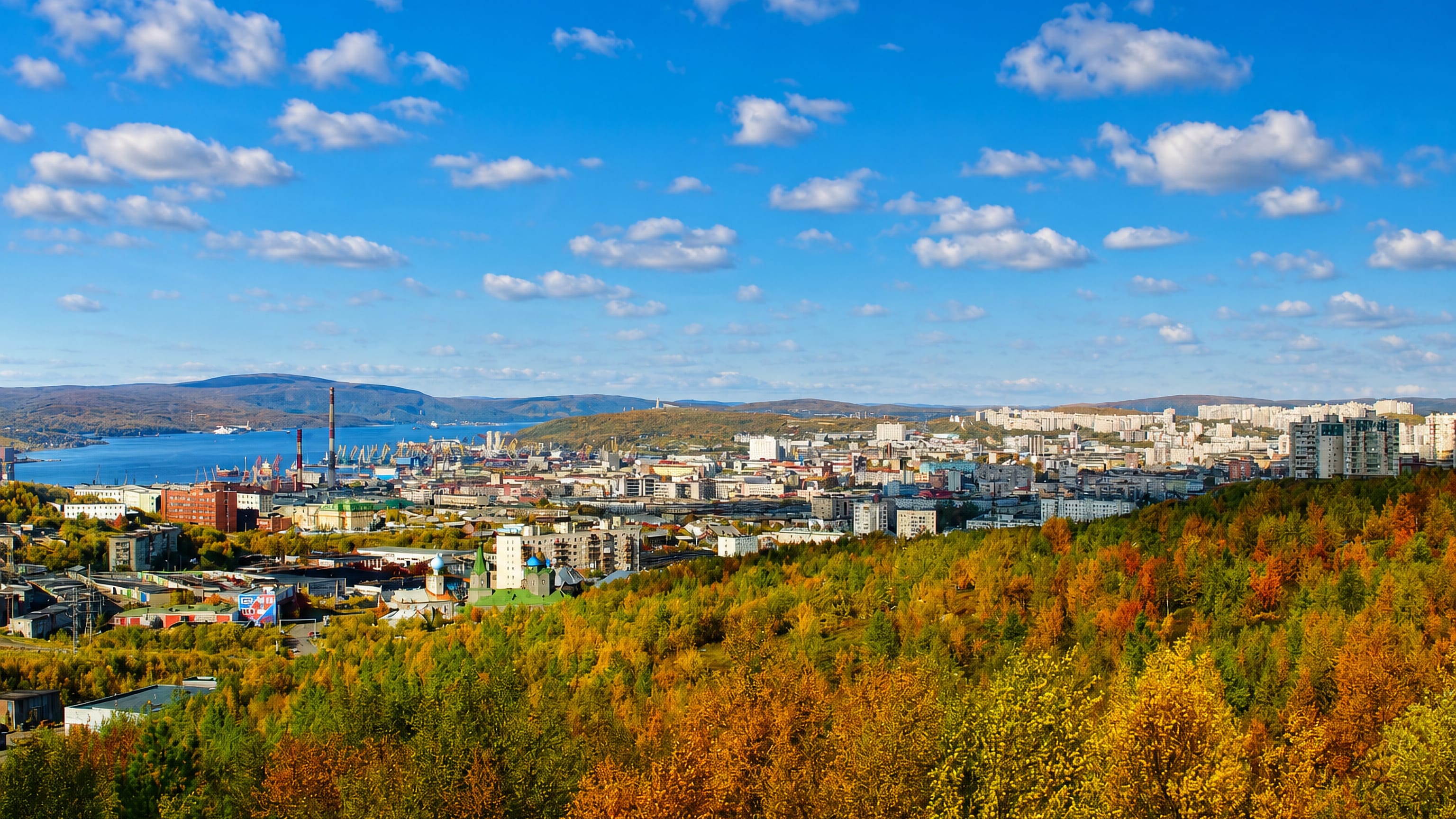
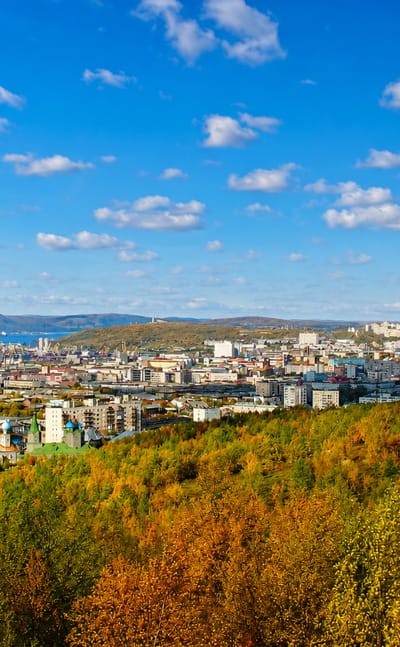
Cranes and funnels crowd Kola Bay at Murmansk, a port city in Murmansk Oblast, the largest city north of the Arctic Circle and an Arctic Ocean harbour.Where to stay →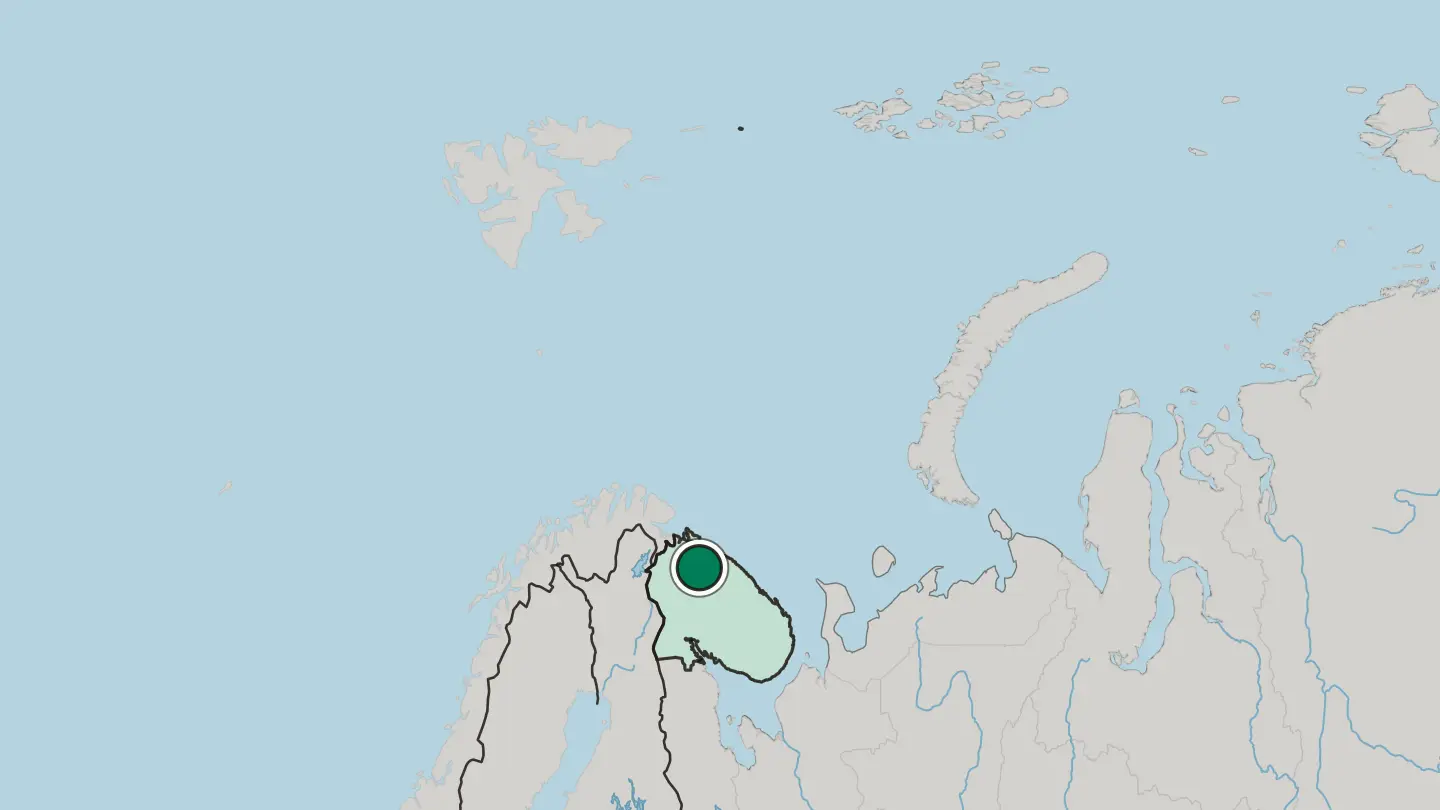
 Russia
Apatity
Apatity is a town of Murmansk Oblast, founded in 1926 along the Murman Railway west of Kirovsk and named for apatite, the mineral of its ground.Where to stay →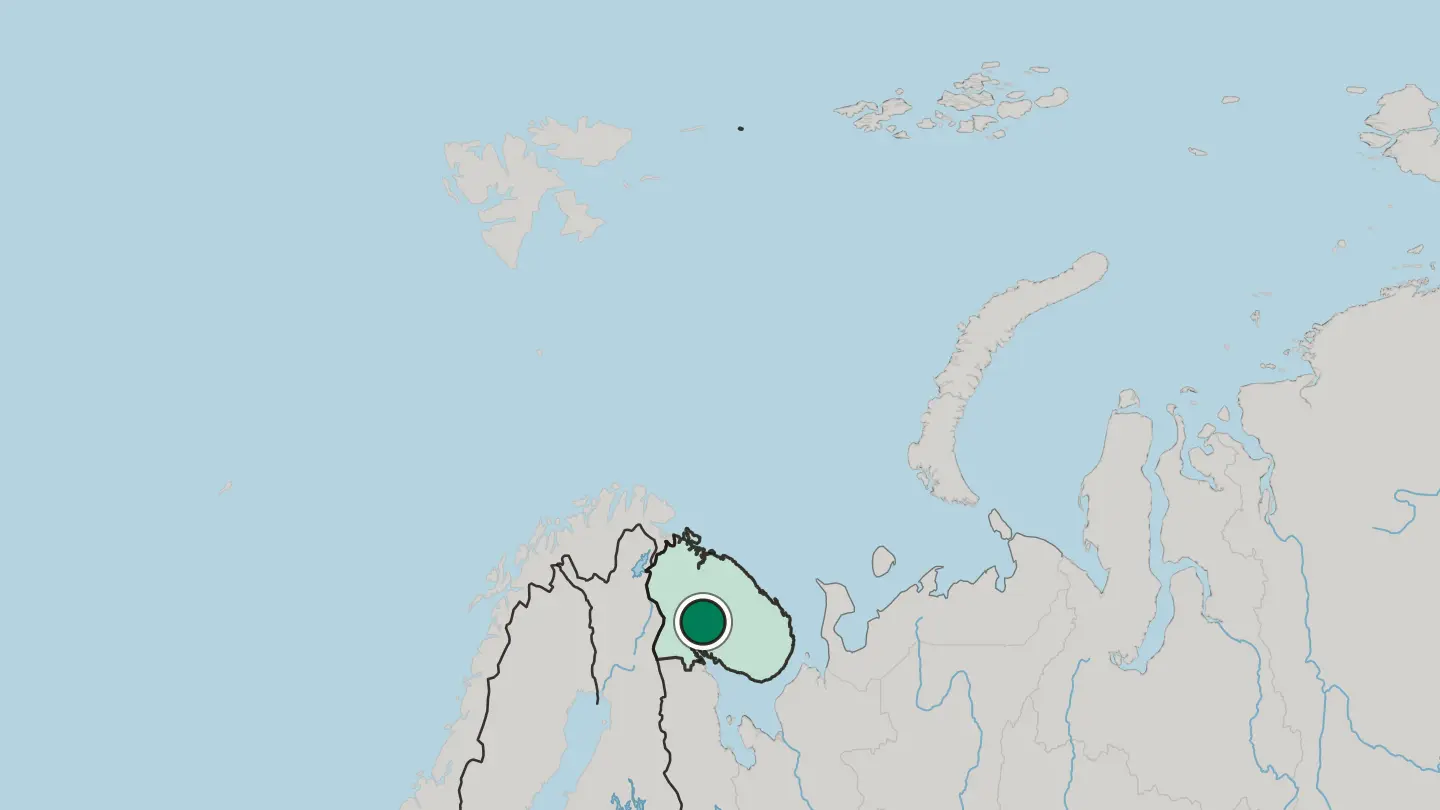
 Russia
Severomorsk
Severomorsk is a closed town on the Kola Bay in Murmansk Oblast, base of the Northern Fleet and known as Ваенга until 1951.Where to stay →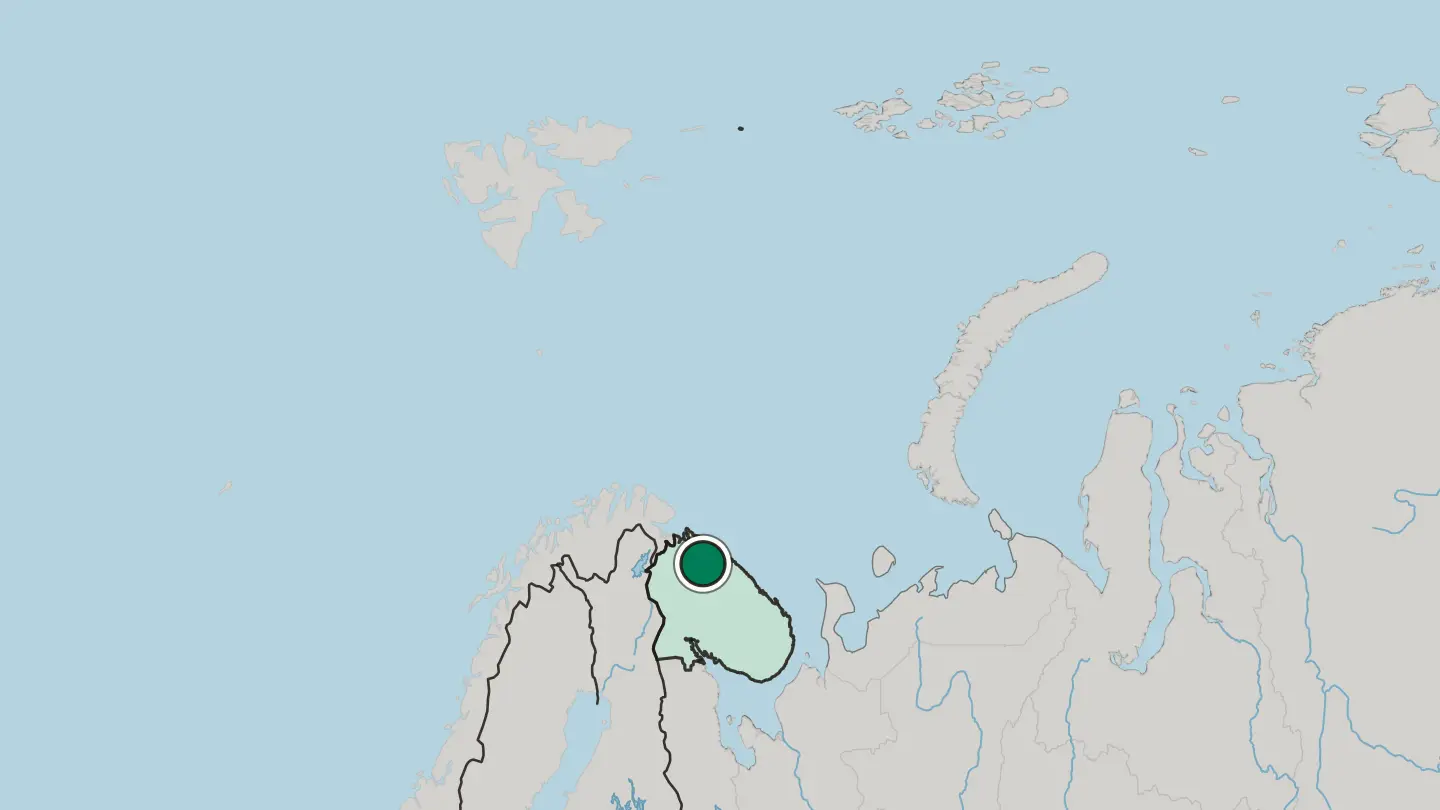
About Murmansk Oblast
What is Murmansk Oblast known for?
This is Russia's Arctic edge. Almost all of Murmansk Oblast sits above the Arctic Circle, out on the Kola Peninsula, where the tail of the Gulf Stream keeps its northern coast on the Barents Sea ice-free even in deep winter and gave the port of Murmansk its reason to exist. Inland, the Khibiny Mountains rise over the tundra, mined for apatite around Kirovsk.
Winter brings the polar night and the aurora; summer brings weeks when the sun never sets. It is reindeer country and Sámi country too.
Where is Murmansk Oblast?
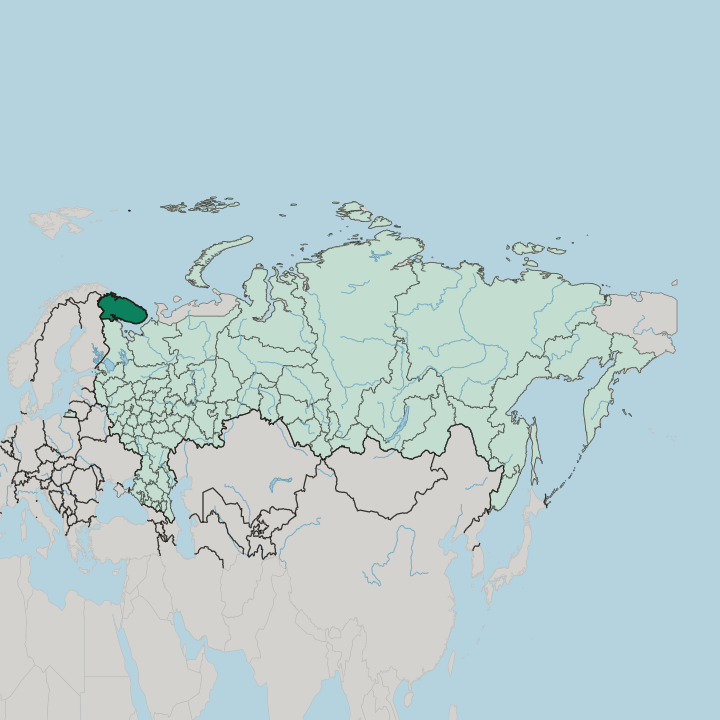
Murmansk Oblast fills the far north-western corner of Russia, almost all of it on the Kola Peninsula and almost all of it above the Arctic Circle. The Barents Sea washes the northern coast, and the deep Kola inlet cuts south into the land where the port of Murmansk stands. The White Sea closes off the peninsula to the south and east.
Overland, the region has one Russian neighbour, the Republic of Karelia running along its whole southern edge, while Finland lies to the west and Norway to the north-west across a short land border. Two foreign countries, one Russian one. The interior is not flat.
Two ranges break the tundra, the Khibiny Mountains and the Lovozero Massif, rising well above the surrounding plateau near the towns of Kirovsk and Apatity. Across the Kola Peninsula, water lies in every direction. Tens of thousands of lakes and rivers thread the peninsula, draining north to the Barents and south to the White Sea.
Tundra covers the north; forest-tundra and then taiga take over as the land runs south toward Karelia. It is a small population spread thin across a very large, very cold country.
What is Murmansk Oblast like?
The Sámi are the region's indigenous people, herders and hunters of the Kola Peninsula long before the port or the mines arrived. Their old life was nomadic, tied to reindeer and the seasons of the tundra. Much of it was broken in the Soviet decades, when pastures closed and villages were collectivised, and the community around the Lovozero district works to hold on to the language, the chanting, and the handicrafts that survived.
Reindeer still move across the northern grazing grounds. Beyond that, the region's living culture is largely Soviet and maritime in character. Murmansk was built for fish and for ships.
It is a working port above all else, with a fishing fleet, a naval presence, and the nuclear icebreakers that keep the northern sea lanes open. The polar night and the endless summer light shape the calendar as much as any festival does. Aurora season fills the dark months.
Teriberka on the Barents Sea coast has become the region's stage for northern food, music, and photography drawn out onto the open tundra. Russian is the everyday language across the whole oblast.
What is the history of Murmansk Oblast?
It began with the port. Murmansk was founded in 1916, in the last years of the Russian Empire, because Russia needed an ice-free northern harbour to take in supplies during the First World War. The oblast itself was carved out as a separate federal subject in 1938.
In the Second World War the port became the lifeline for Allied Arctic convoys, and the Luftwaffe bombed the city hundreds of times without ever closing it, a stand that earned Murmansk the Hero City title. Mining of the Khibiny apatite deposits built the inland towns of Kirovsk and Apatity through the same Soviet decades.
What is the climate of Murmansk Oblast?
This is an Arctic and subarctic climate, but a milder one than the far north usually allows. The North Atlantic Drift, the tail of the Gulf Stream, warms the Barents coast enough to keep the Kola inlet at Murmansk ice-free through the winter. Snow lies for many months, and from early December the sun stays below the horizon for weeks of polar night.
Then it reverses. From late spring the sun never sets, and light floods the tundra around the clock. The White Sea south near Kandalaksha runs a touch gentler than the exposed Barents shore.
How do you get to Murmansk Oblast?
Most travellers reach the region through Murmansk. The city has the region's airport and sits at the northern end of a railway line that runs all the way down to Saint Petersburg, the old supply route that first justified the port. From Murmansk a road pushes north-east to Teriberka and the open Barents coast, and the main highway runs south past Apatity and Kandalaksha toward Karelia.
Borders with Finland to the west and Norway to the north-west offer overland crossings. Winter roads and long distances make a car or a guided trip the usual way to see the tundra.
Common questions
What is the best area to stay in Murmansk Oblast?
Murmansk: an Arctic-port base for aurora hunting.
Good for
More regions in Russia
Updated September 2026