China
Jiangxi, China — Towns & Travel Guide
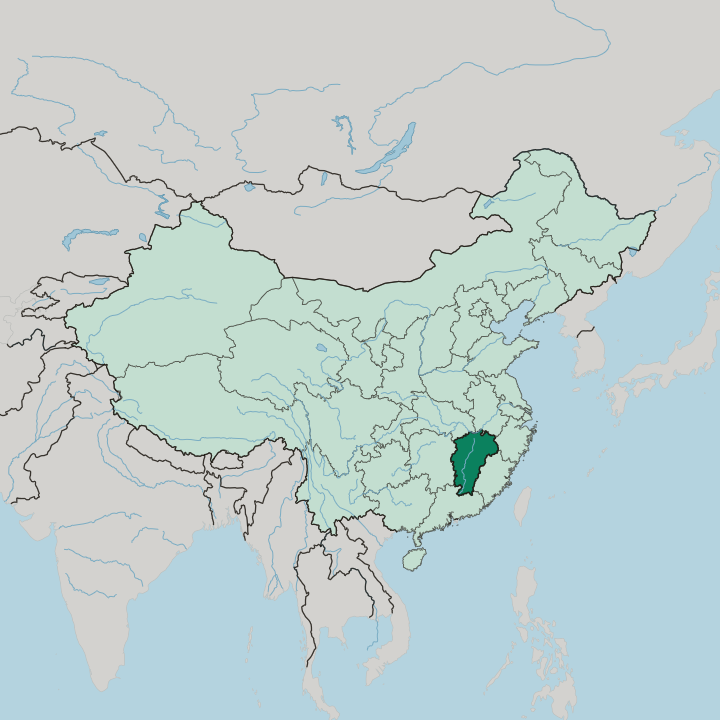
Jiangxi is an inland province of southern-central China, where the Gan River drains north into Poyang Lake, the country's largest freshwater lake.
Hotel links are affiliate links: booking through them may earn us a commission, at no extra cost to you. It never affects how places are ranked. How this works


Towns & cities in Jiangxi
Pick a town or city — each links to where to stay.

 China
China
Nanchang
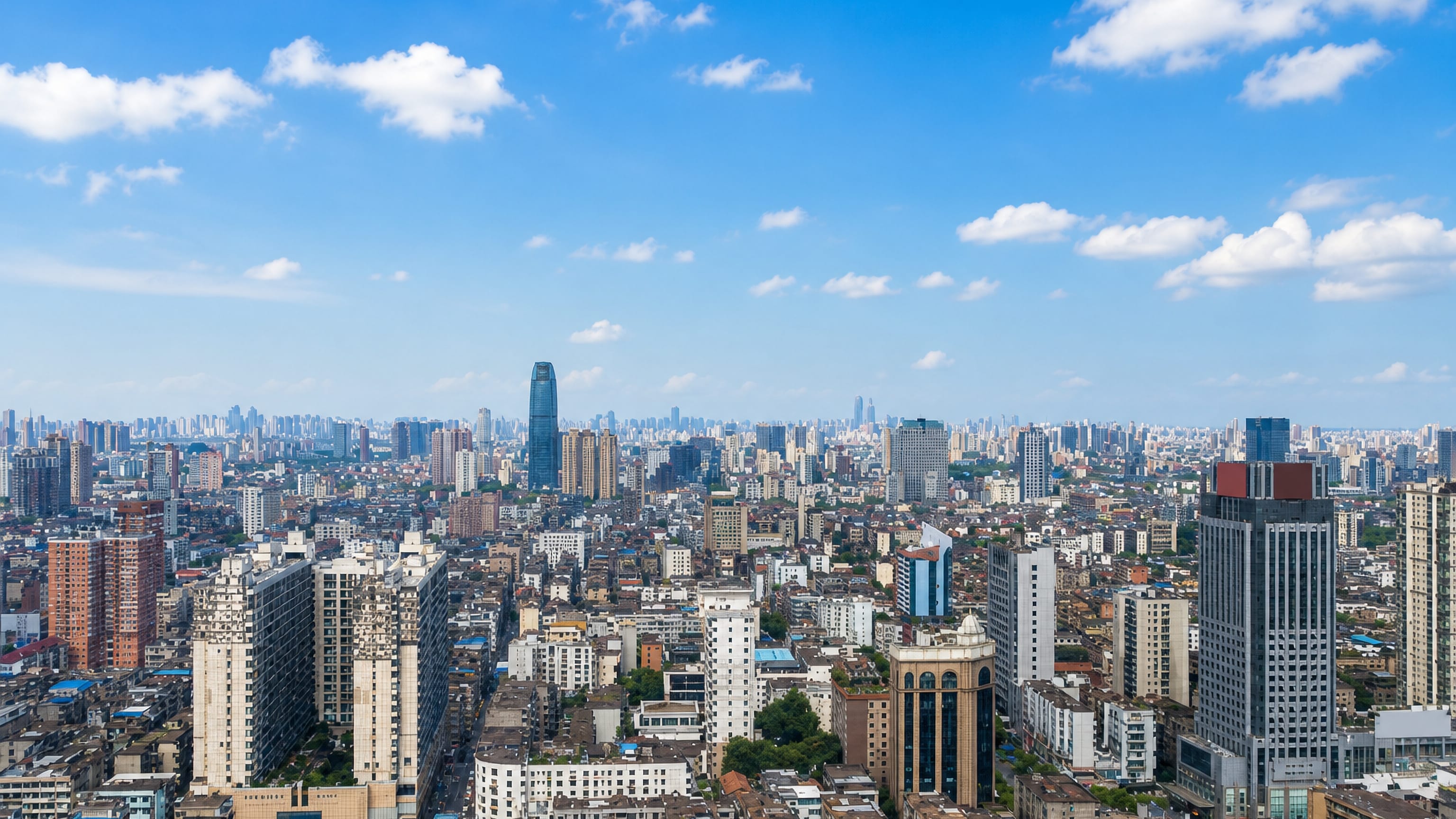
Nanchang is the capital of Jiangxi, held between the Jiuling Mountains to the west and Poyang Lake to the east.Where to stay →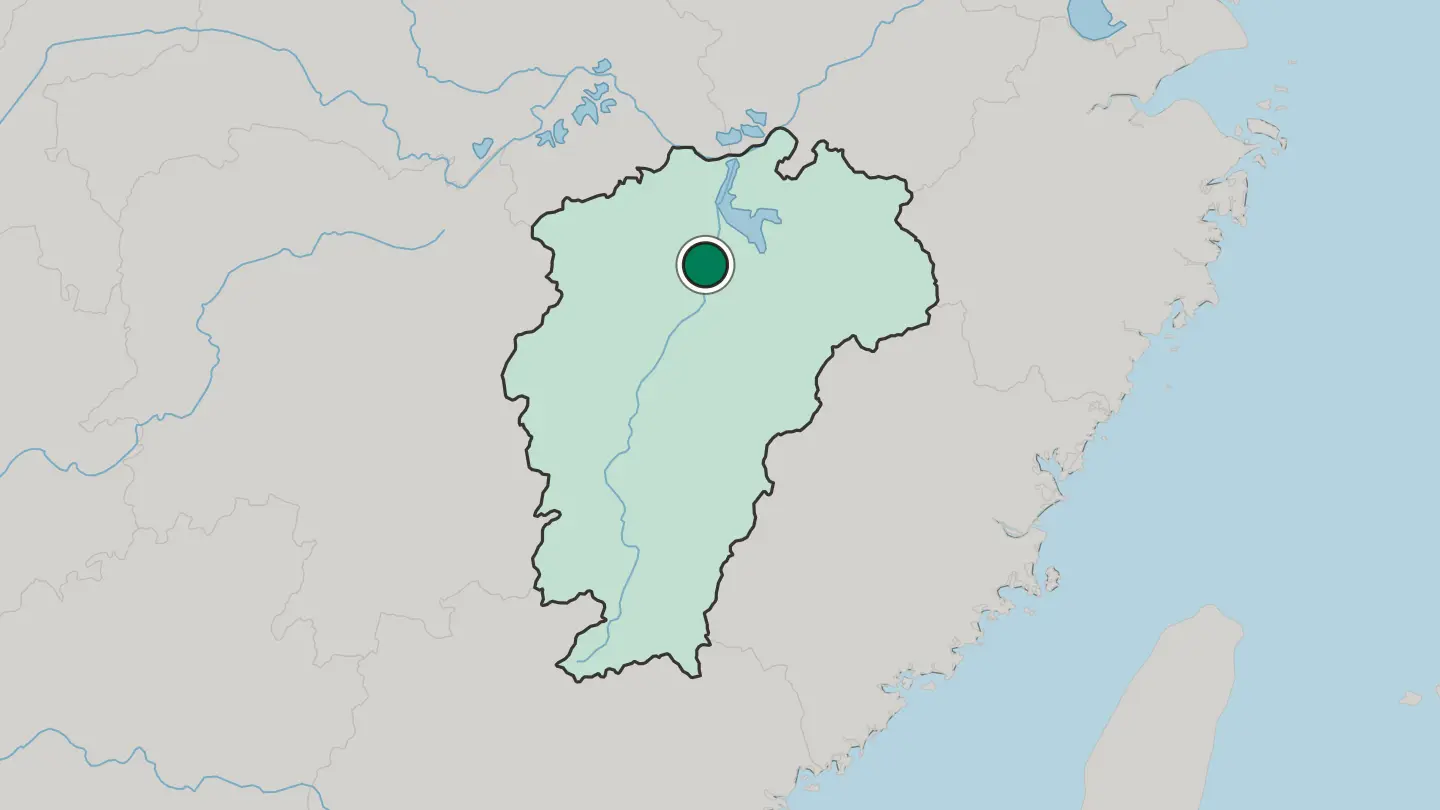
 China
China
Ganzhou
Ganzhou is an old walled city in southern Jiangxi, China, at the source of the Gan River in the heart of the Hakka country.Where to stay →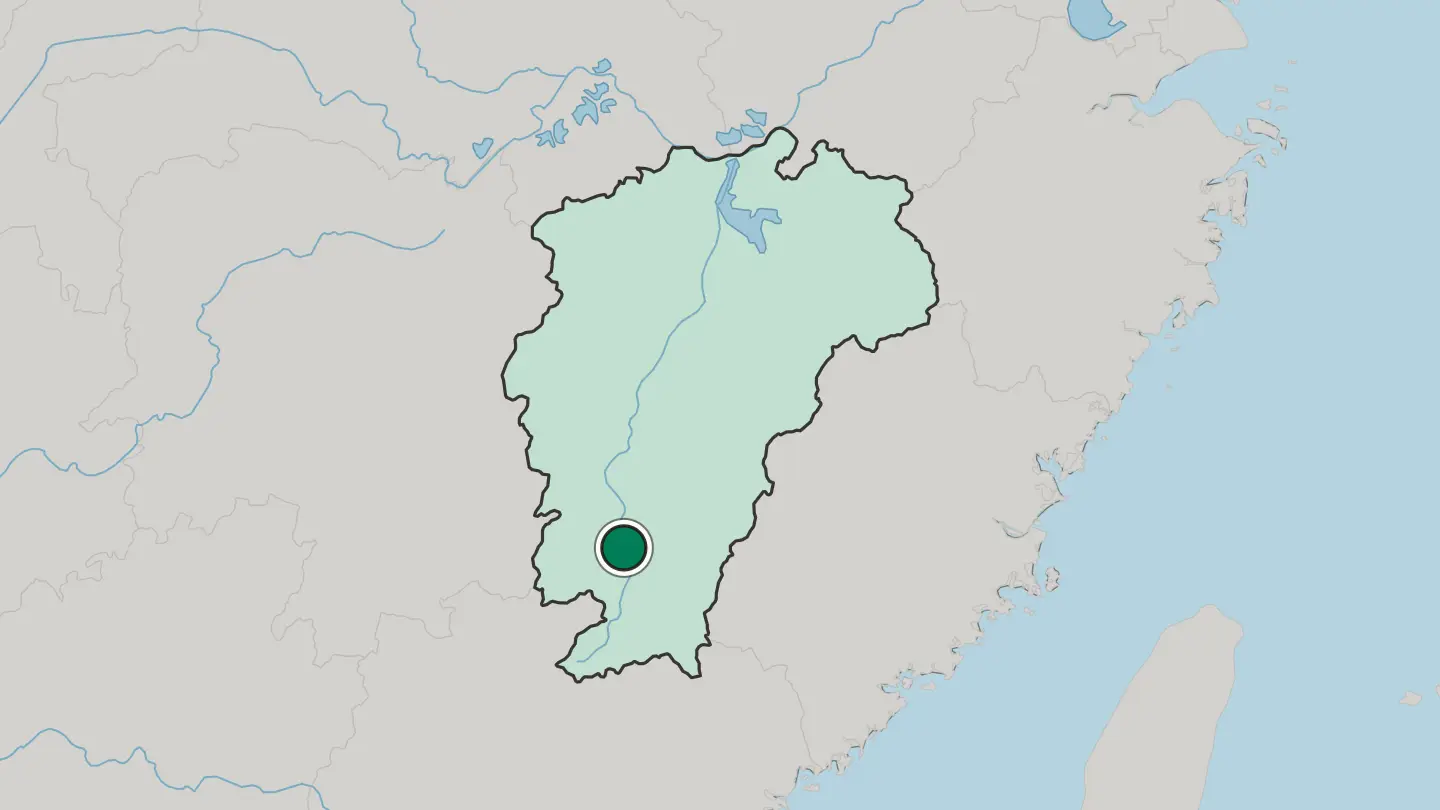 China
China
Jingdezhen
Jingdezhen is a prefecture-level city in Jiangxi known as the Porcelain Capital, where Chinese ceramics have been made for more than a thousand years.Where to stay →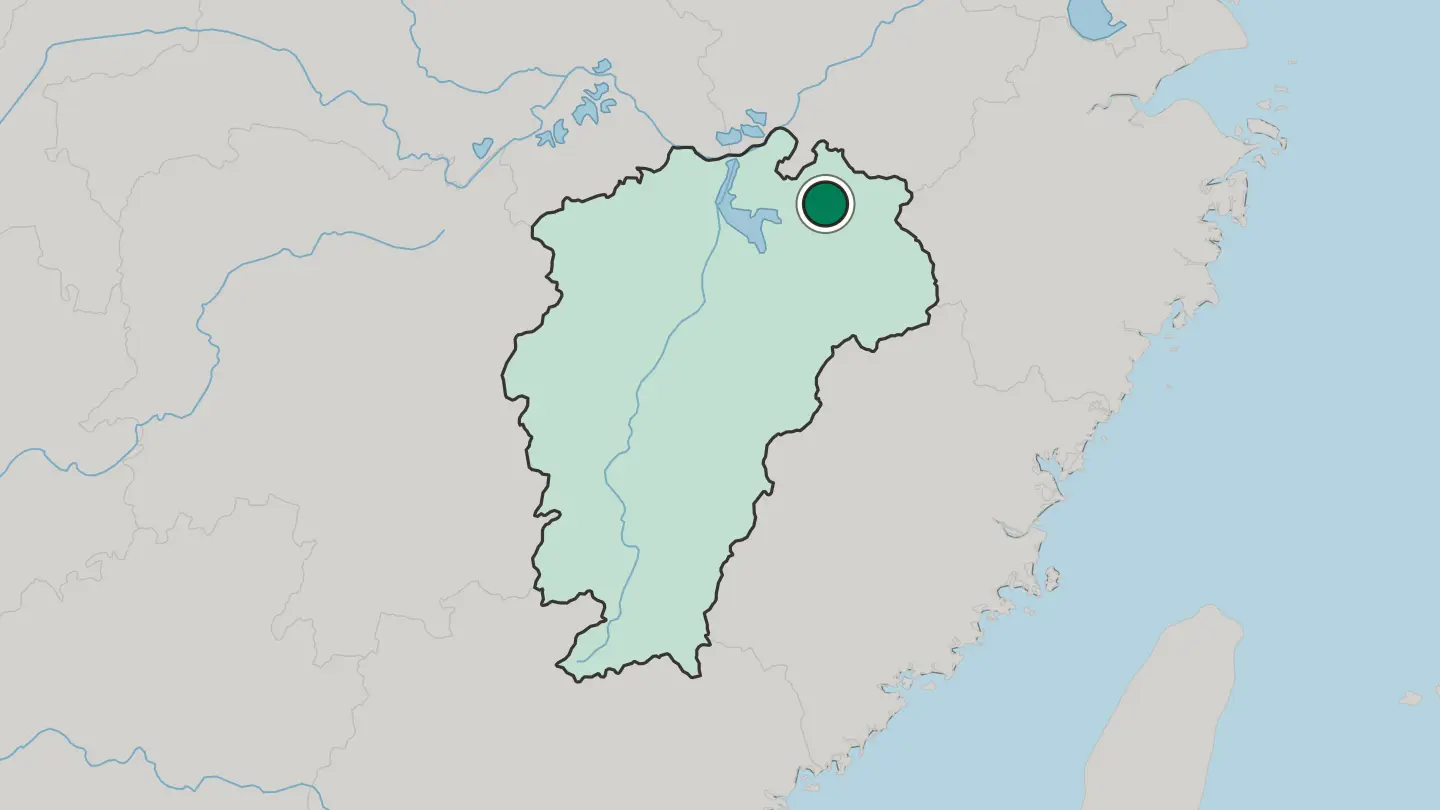
Hotel links are affiliate links: booking through them may earn us a commission, at no extra cost to you. It never affects how places are ranked. How this works
About Jiangxi
Porcelain made Jiangxi famous.
What is Jiangxi known for?
Kilns at Jingdezhen have fired ceramics for more than a thousand years, and for centuries their blue-and-white ware set the standard for the whole empire. The province is also a landscape of mountains and water, from the misty ridges of Mount Lu above the Yangtze to the terraced villages of Wuyuan that flood yellow with rapeseed flowers each spring. Nanchang, the capital, holds the Tang-dynasty Tengwang Pavilion on the bank of the Gan.
Revolution is written into the hills too, at Jinggangshan.
Where is Jiangxi?
Jiangxi sits inland in southern-central China, hemmed in by mountains on almost every side and open only to the north. The Gan River is its spine. It gathers in the hilly south and runs the whole length of the province northward, giving Jiangxi the one-character name Gàn by which the Chinese still know it.
Near Nanchang the river splits into distributaries and pours into Poyang Lake, the largest freshwater lake in the country. That lake drains in turn into the Yangtze, which forms much of the province's northern edge and carries its water on toward the sea. Ranges wall the rest. Hunan lies over the western hills and Fujian beyond the eastern ranges, with Guangdong to the south, Zhejiang to the northeast, and Anhui and Hubei closing off the north.
The land tilts from those bordering highlands down to the low, wet basin around the lake, so that nearly every stream in Jiangxi ends up in the same water. Ganzhou anchors the far south of the river valley, Jiujiang the northern port on the Yangtze. It is a province shaped, more than anything, by the single great watershed that its rivers carve.
What is Jiangxi like?
Clay defines the culture here. Jingdezhen has thrown, glazed and fired porcelain since the Tang dynasty, and for centuries its potters supplied the imperial court, sending kiln-fired bowls and vases along the rivers to the rest of China and out across the world. That craft still runs through the province's identity.
The spoken tongue across the north and centre is Gan Chinese, one of the major branches of the language, and the Nanchang dialect is its prestige form. In the south around Ganzhou the hills are Hakka country, with their own speech and their round earthen homes. Poetry belongs to the place as much as porcelain does.
When the Tang poet Wang Bo climbed the Tengwang Pavilion above the Gan in 675, he wrote a preface so admired that the pavilion has been rebuilt time and again to hold its memory. The province wears its past plainly. Old Huizhou villages in Wuyuan keep their carved wooden halls, tea and rice fields work the valley floors, and the twentieth-century revolution left its own shrines in the Jinggangshan hills.
Faith, craft and farming sit close together on this land.
What is the history of Jiangxi?
Jiangxi took its name in the Tang dynasty, from the Jiangnan West Circuit that once governed the land along the Gan. For over a millennium the province grew rich as a corridor of trade, its rivers carrying Jingdezhen porcelain and southern tea north to the Yangtze and beyond. Its modern fame is redder.
On the first of August 1927 an armed rising broke out in Nanchang, later marked as the founding day of the People's Liberation Army, and within months Mao Zedong had carried the struggle into the Jinggangshan hills to build the first rural revolutionary base. Those hills still draw pilgrims.
What is the climate of Jiangxi?
Jiangxi has a humid subtropical climate, hot and drenched in summer and cool but rarely freezing in winter. Rains arrive early. The plum-rain months of late spring and early summer soak the Poyang basin, swelling the Gan and the lake before the fierce heat of July and August settles over the valley.
The pleasant window comes later, from autumn into the clear, dry weeks around Mount Lu that draw travellers up its slopes. Winters stay grey and damp.
How do you get to Jiangxi?
Most travellers reach Jiangxi through Nanchang. Changbei airport sits north of the capital, now linked to the city by metro, and high-speed trains stitch the province into the national rail network, running to Shanghai, Guangzhou and Wuhan in a few hours. Inside Jiangxi the fast lines fan out to Jingdezhen and Jiujiang, while the Yangtze carries river traffic along the northern edge past the port at Jiujiang.
Roads climb from the valleys up to Mount Lu and Jinggangshan. It is an easy province to enter.
Common questions
What is the best area to stay in Jiangxi?
Nanchang: a first trip into Jiangxi. Jingdezhen: porcelain and hands-on pottery. Mount Lu and Jiujiang: mountain scenery above the Yangtze. Wuyuan: ancient villages and spring flower fields.
Good for
More regions in China
Updated September 2026