China
Fujian, China — Towns & Travel Guide
Fujian is a mountainous coastal province of south-eastern China, facing Taiwan across the Taiwan Strait, with Fuzhou its capital.
Hotel links are affiliate links: booking through them may earn us a commission, at no extra cost to you. It never affects how places are ranked. How this works


Towns & cities in Fujian
Pick a town or city — each links to where to stay.
 China
China
Xiamen
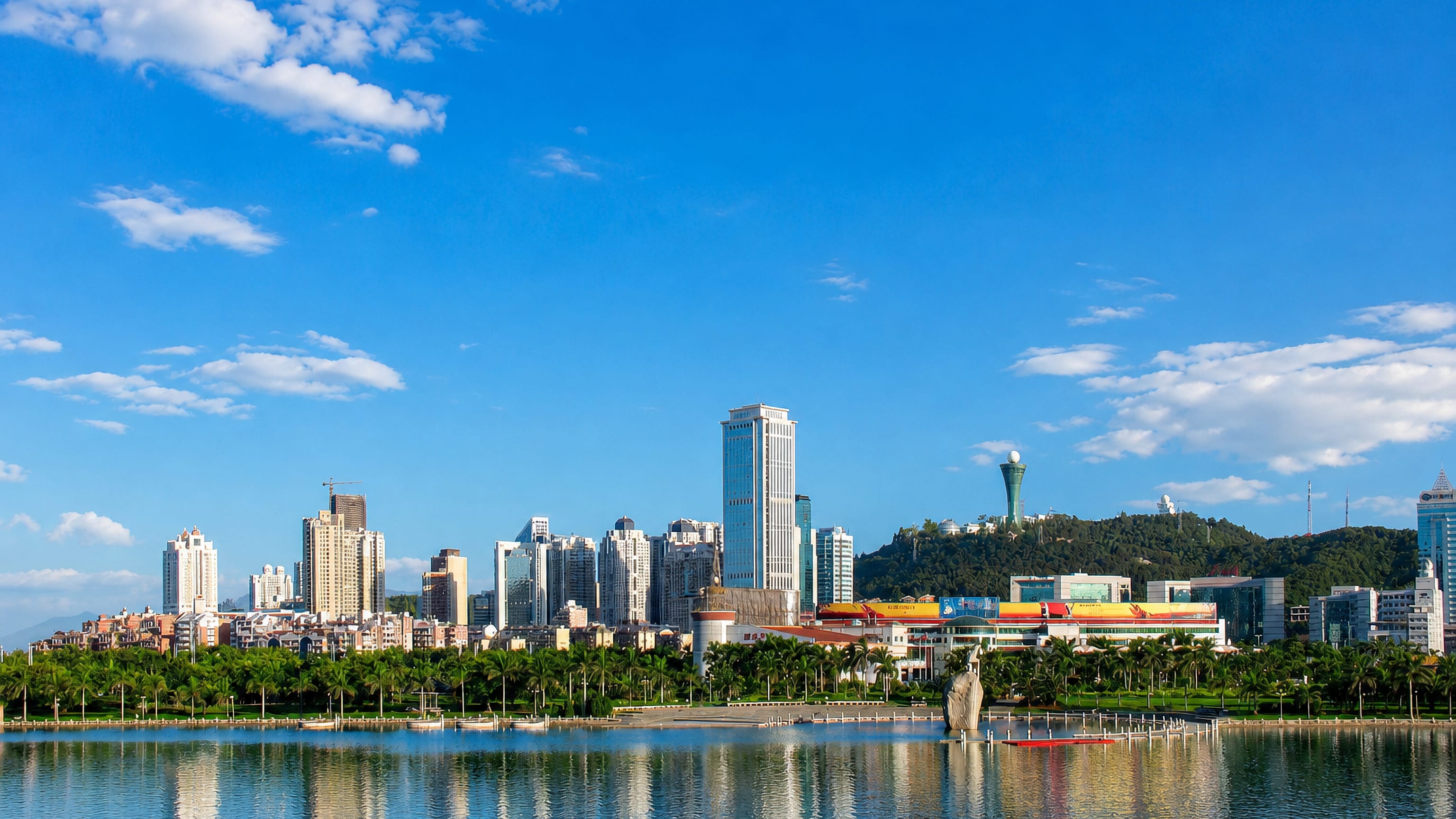
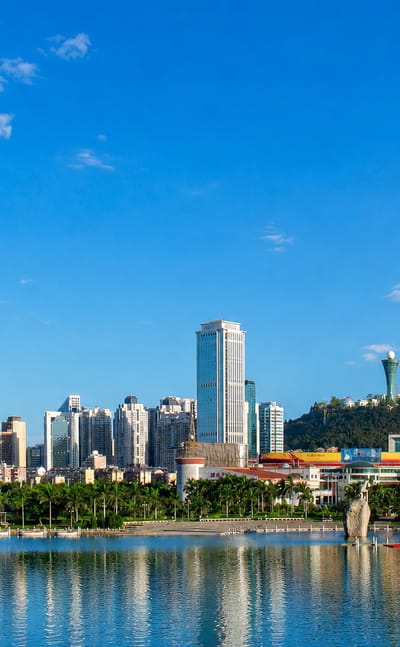
Sea light fills the harbour at Xiamen, an island city in Fujian, known for Gulangyu and the South Putuo Temple.Where to stay →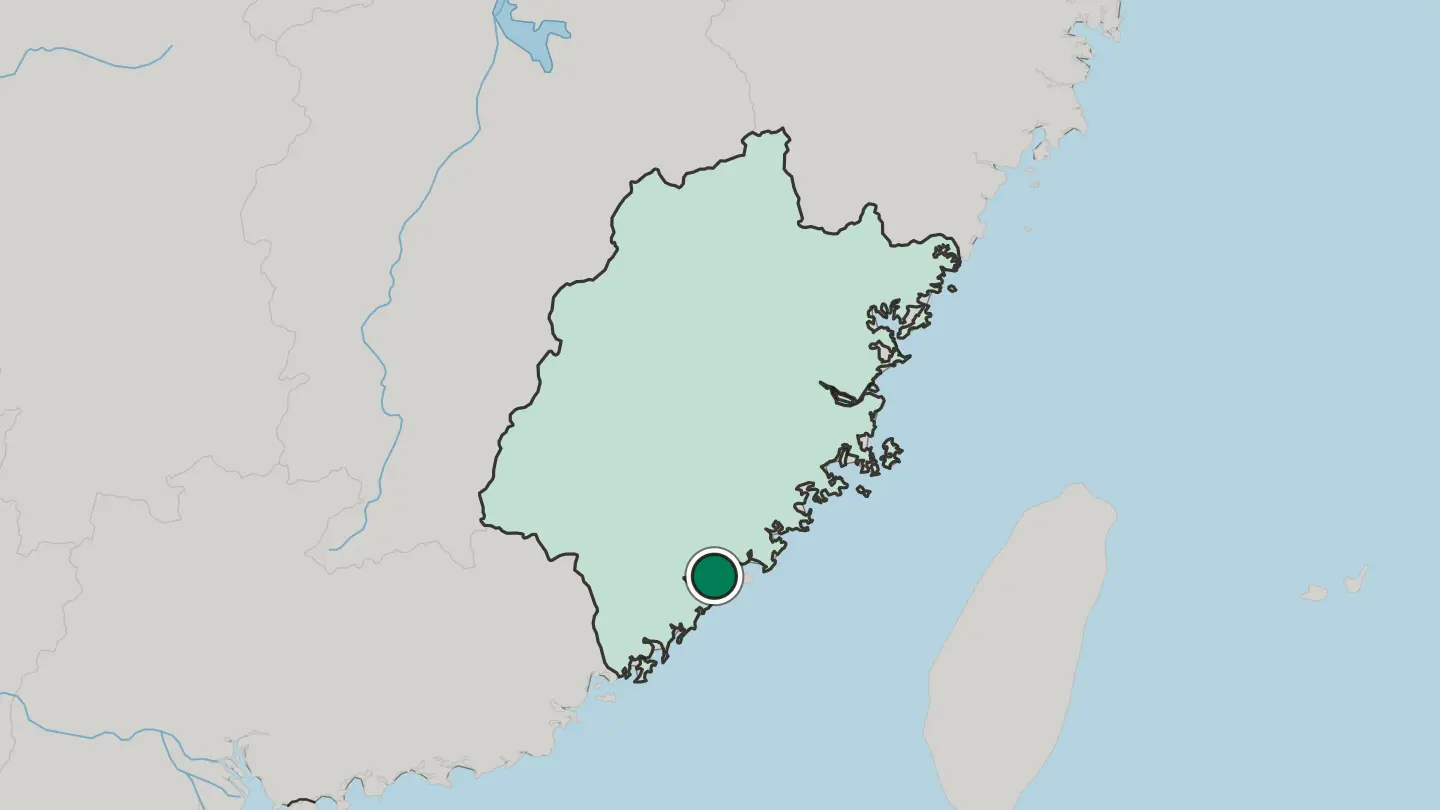
 China
China
Fuzhou
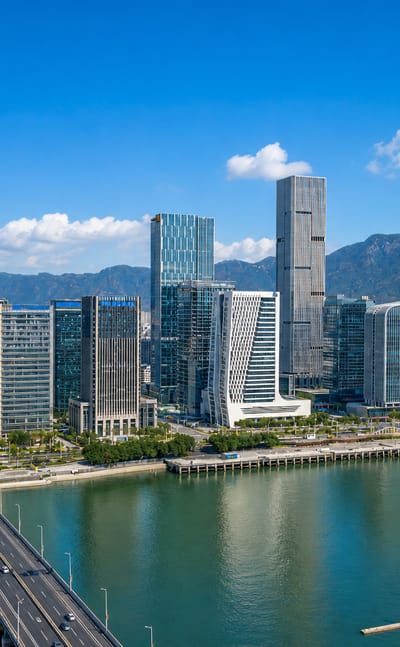
Old lanes wind through Fuzhou, the coastal capital of Fujian, known for Sanfang Qixiang and its treaty-era churches.Where to stay →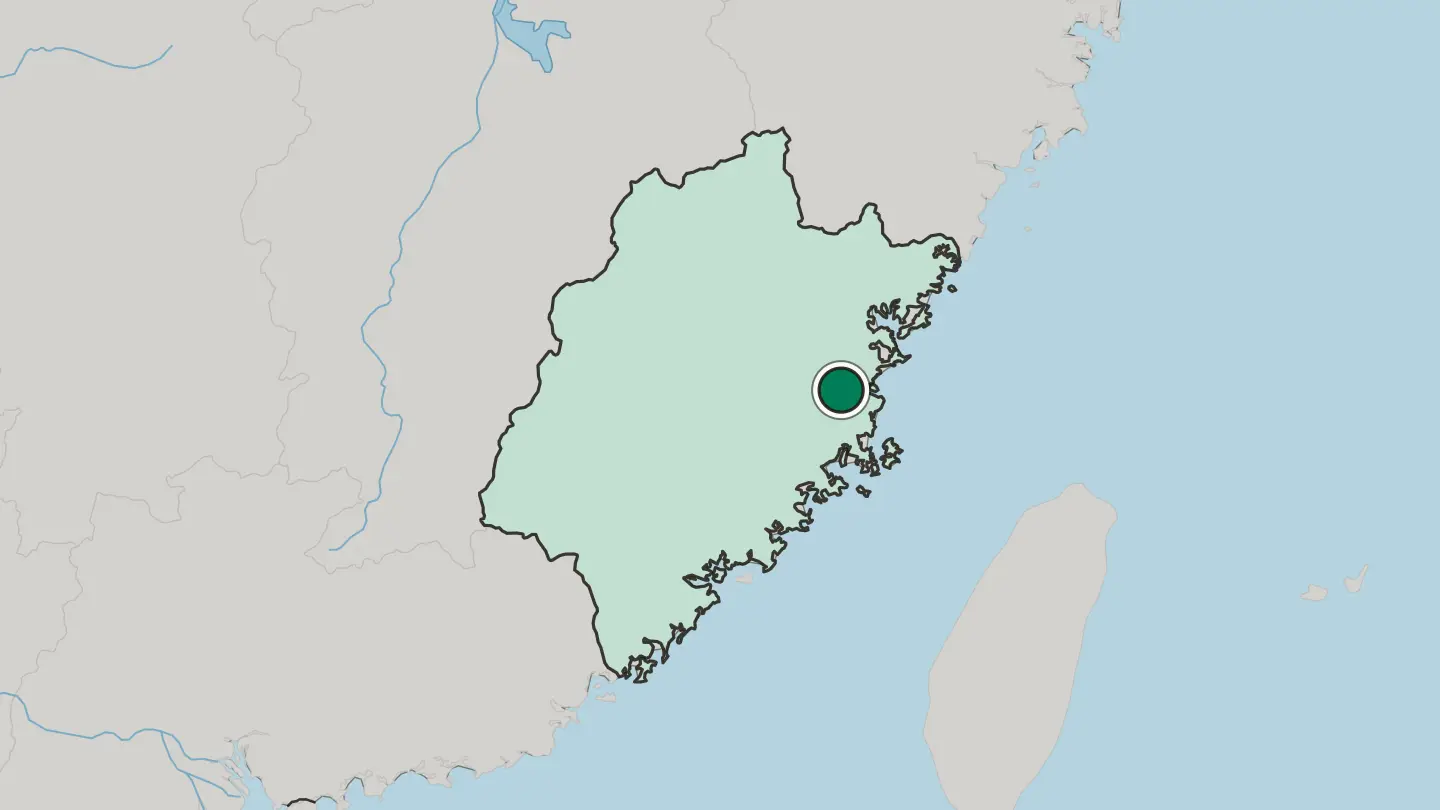
 China
China
Putian
Putian is a coastal city in Fujian, southeastern China, the birthplace of the sea goddess Mazu.Where to stay →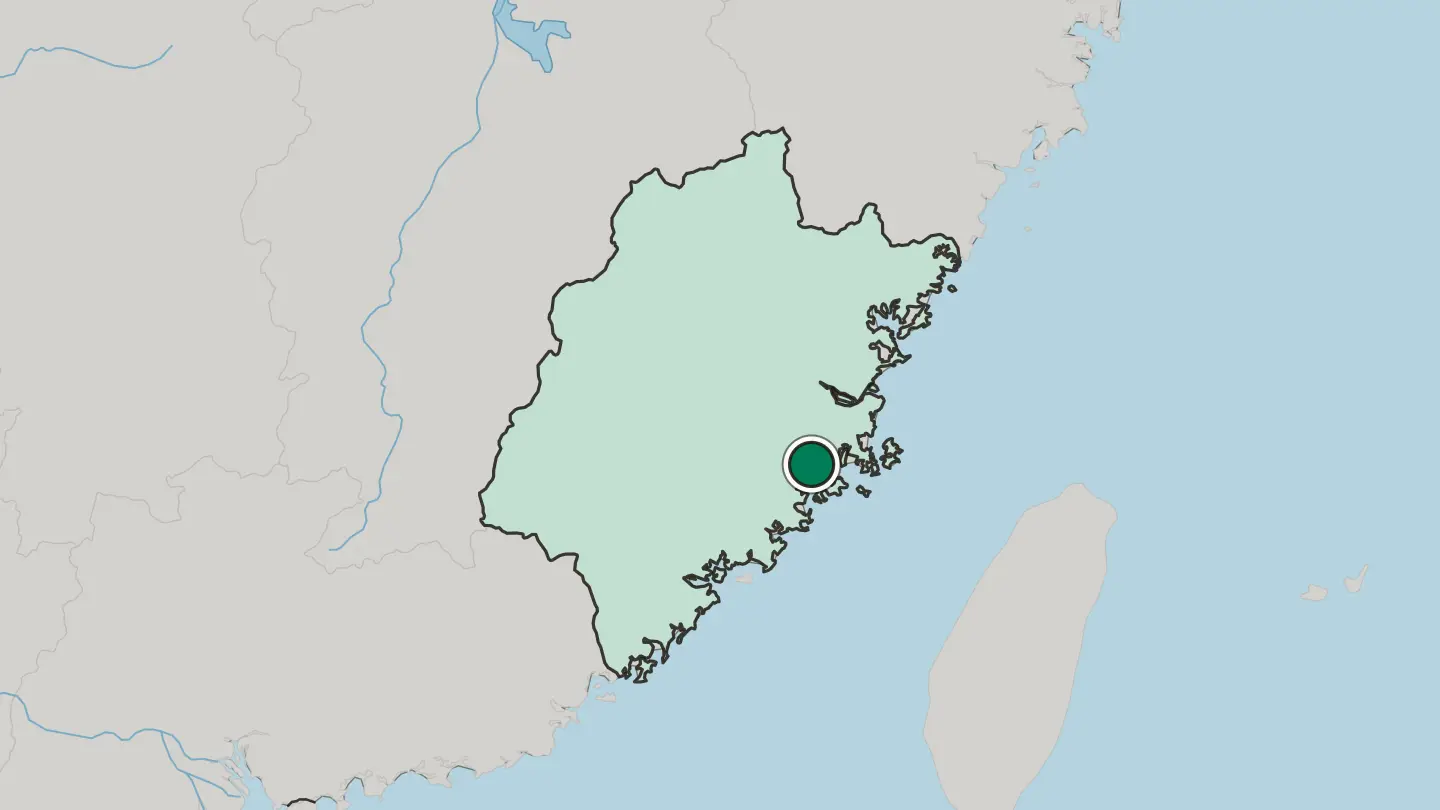
 China
China
Quanzhou
Quanzhou is a historic port city in Fujian on the southeast coast of China, once the greatest harbour of the Maritime Silk Road.Where to stay →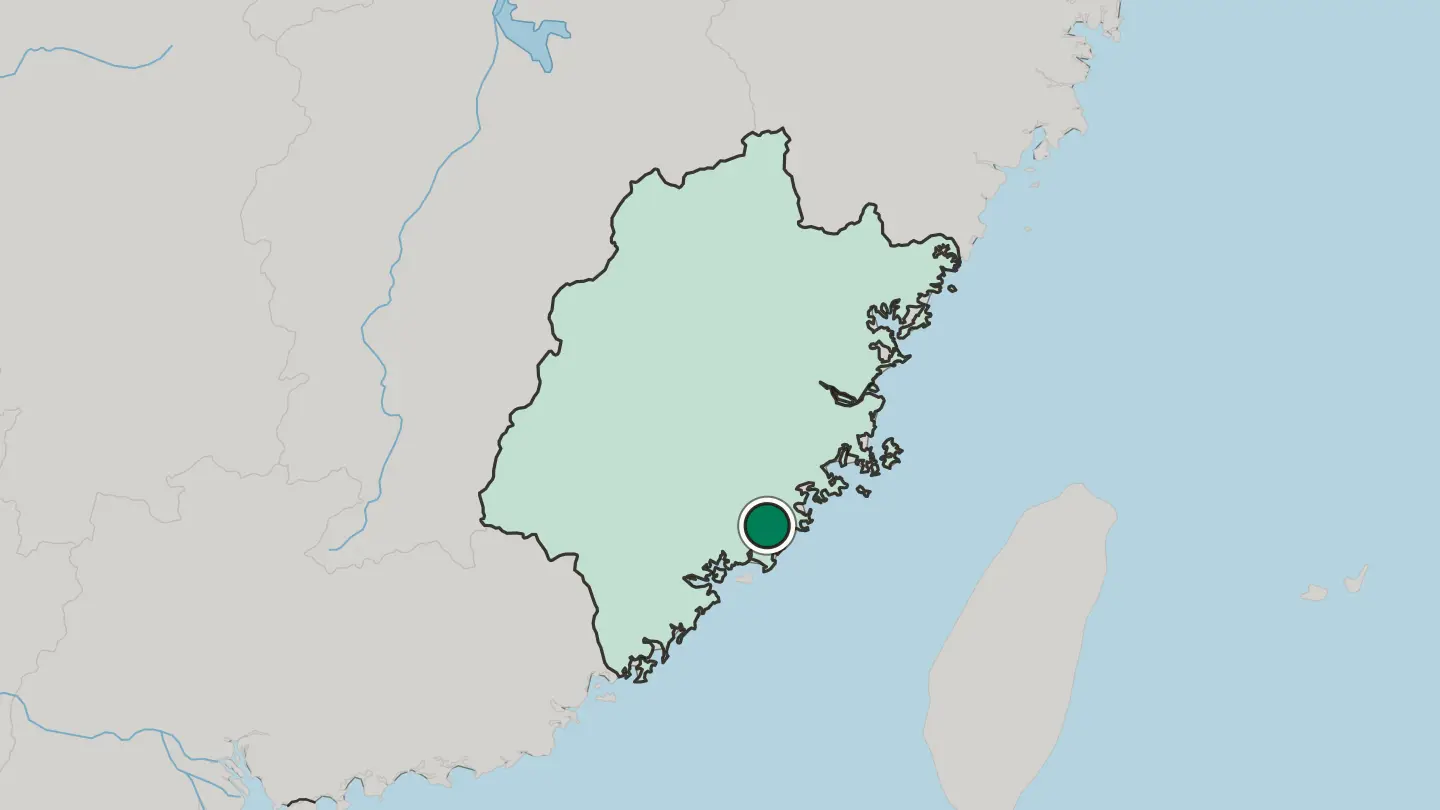 China
China
Jinjiang
Jinjiang stands on the south bank of the Jin River opposite Quanzhou, a Fujian city carrying Anping Bridge, Cao'an and the Cizao Kiln Sites.Where to stay →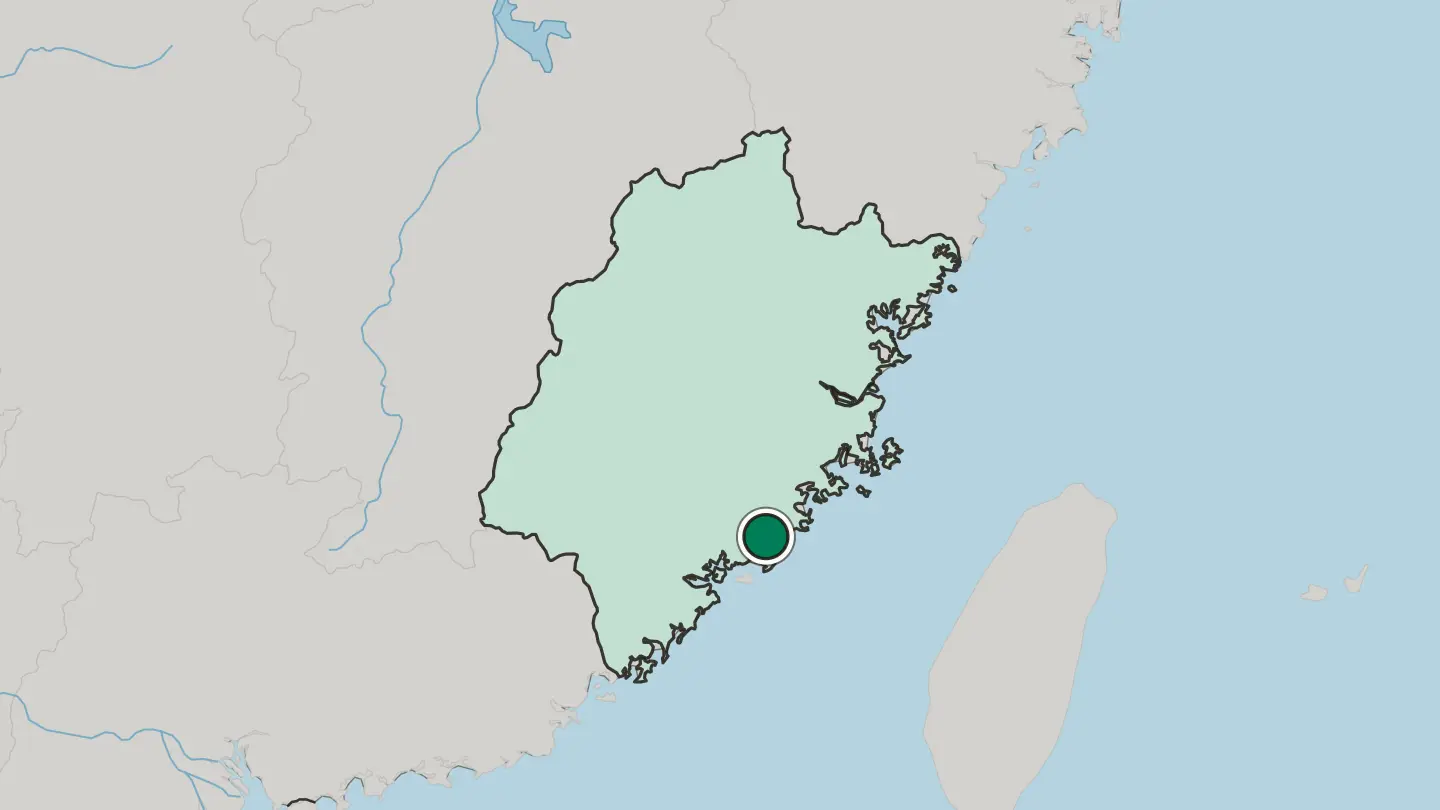
 China
China
Longyan
Longyan is a mountain city in western Fujian, China, the heartland of the Hakka and their great earthen roundhouses.Where to stay →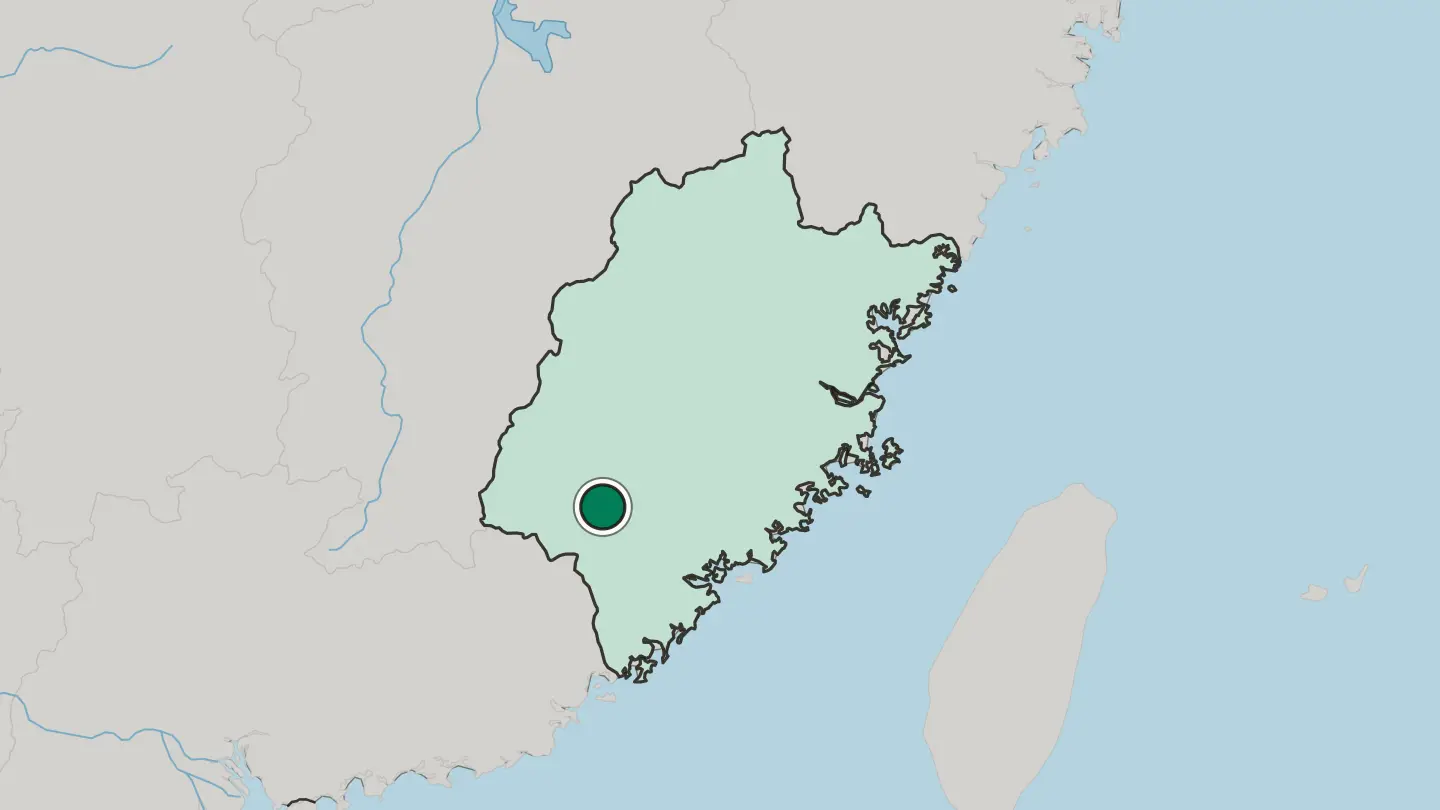
 China
China
Sanming
Sanming, also called Minzhong, is a mountain city in western Fujian, lying between the Wuyi and Daiyun ranges and reaching west to Jiangxi.Where to stay →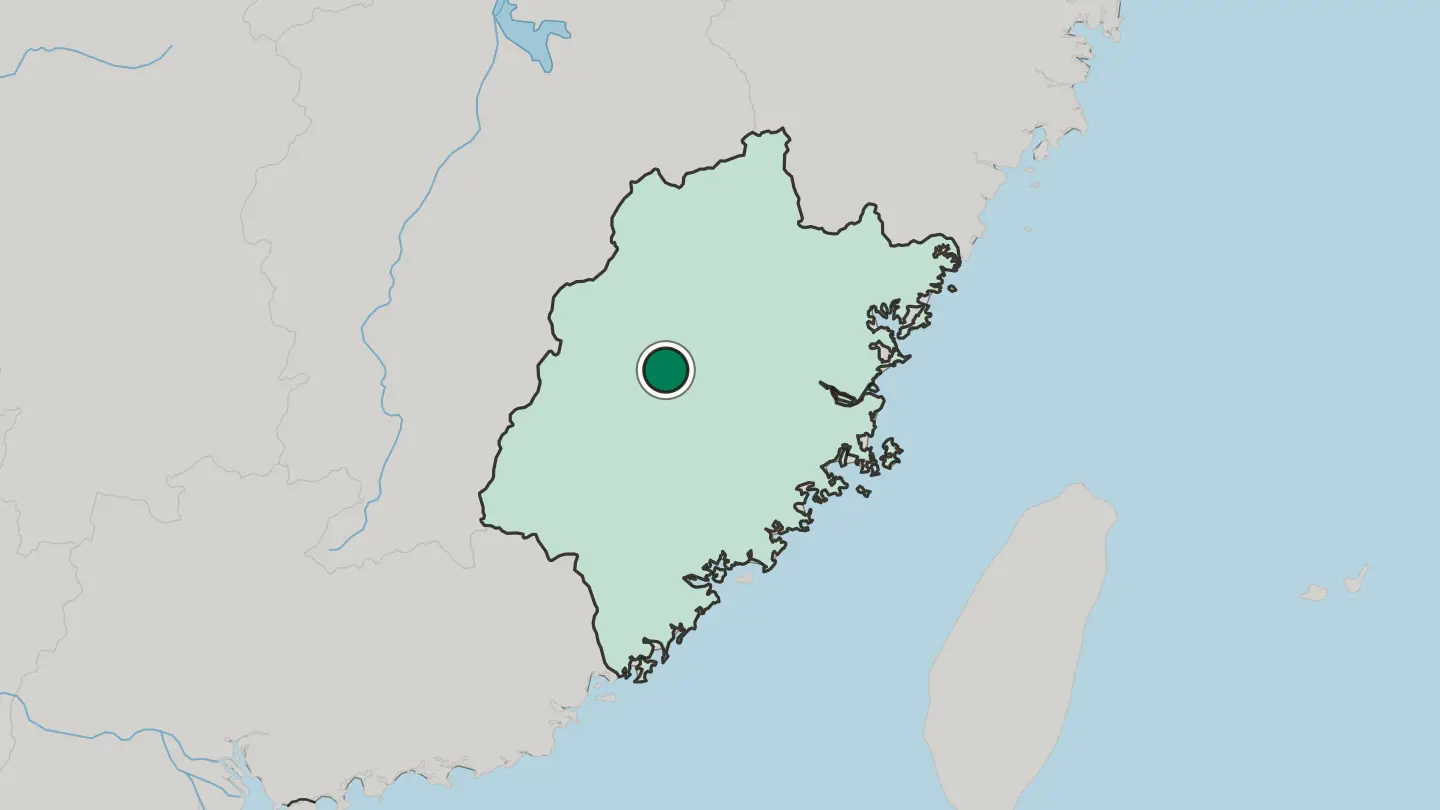
 China
China
Zhangzhou
Zhangzhou is a prefecture-level city on the Taiwan Strait coast of Fujian, wrapped around Xiamen and holding the Fujian Tulou sites inland.Where to stay →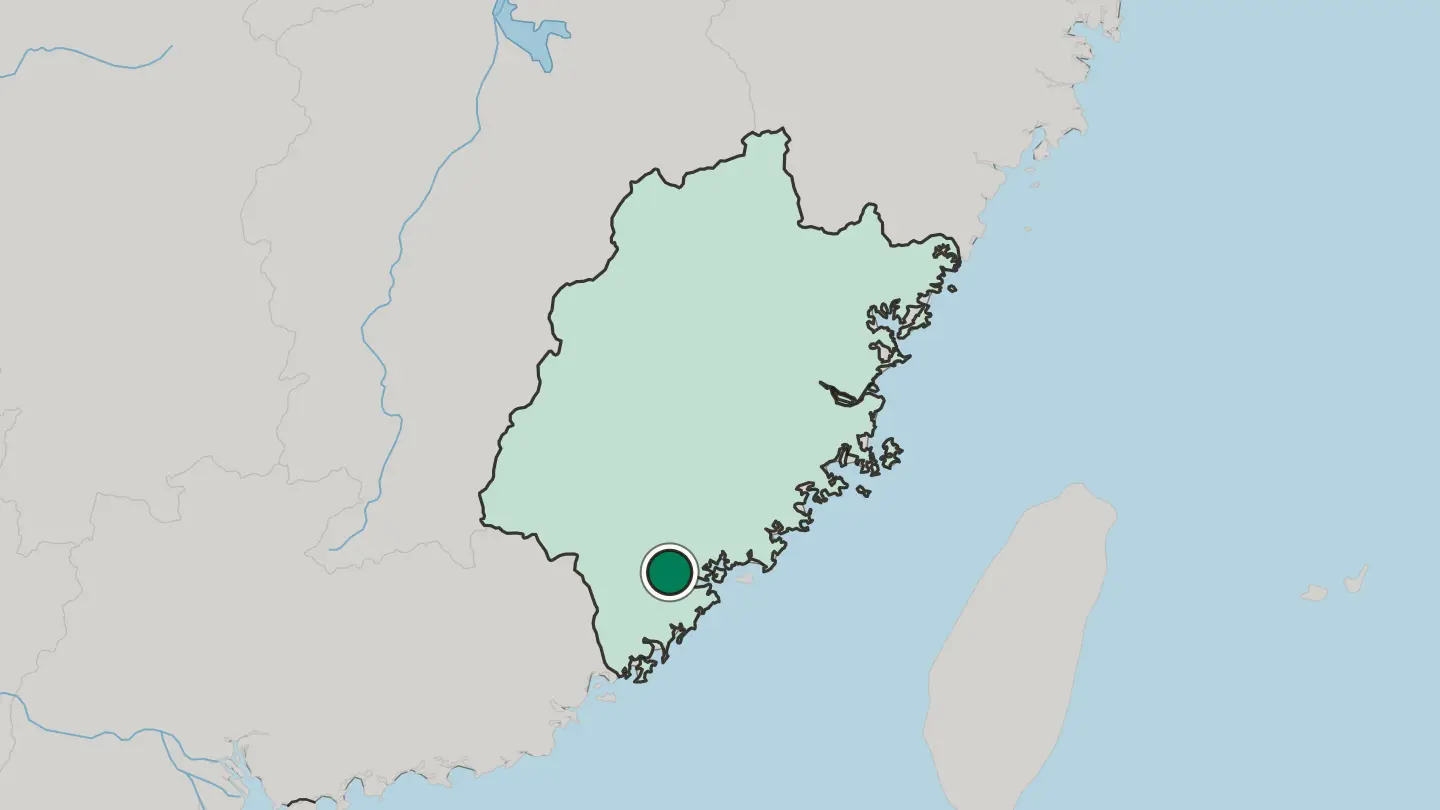
All towns & cities (11)
 China
China
Nanping
Nanping is a prefecture-level city in northwestern Fujian, inland up the Min River from Fuzhou, with part of the Wuyi Mountains inside its bounds.Where to stay →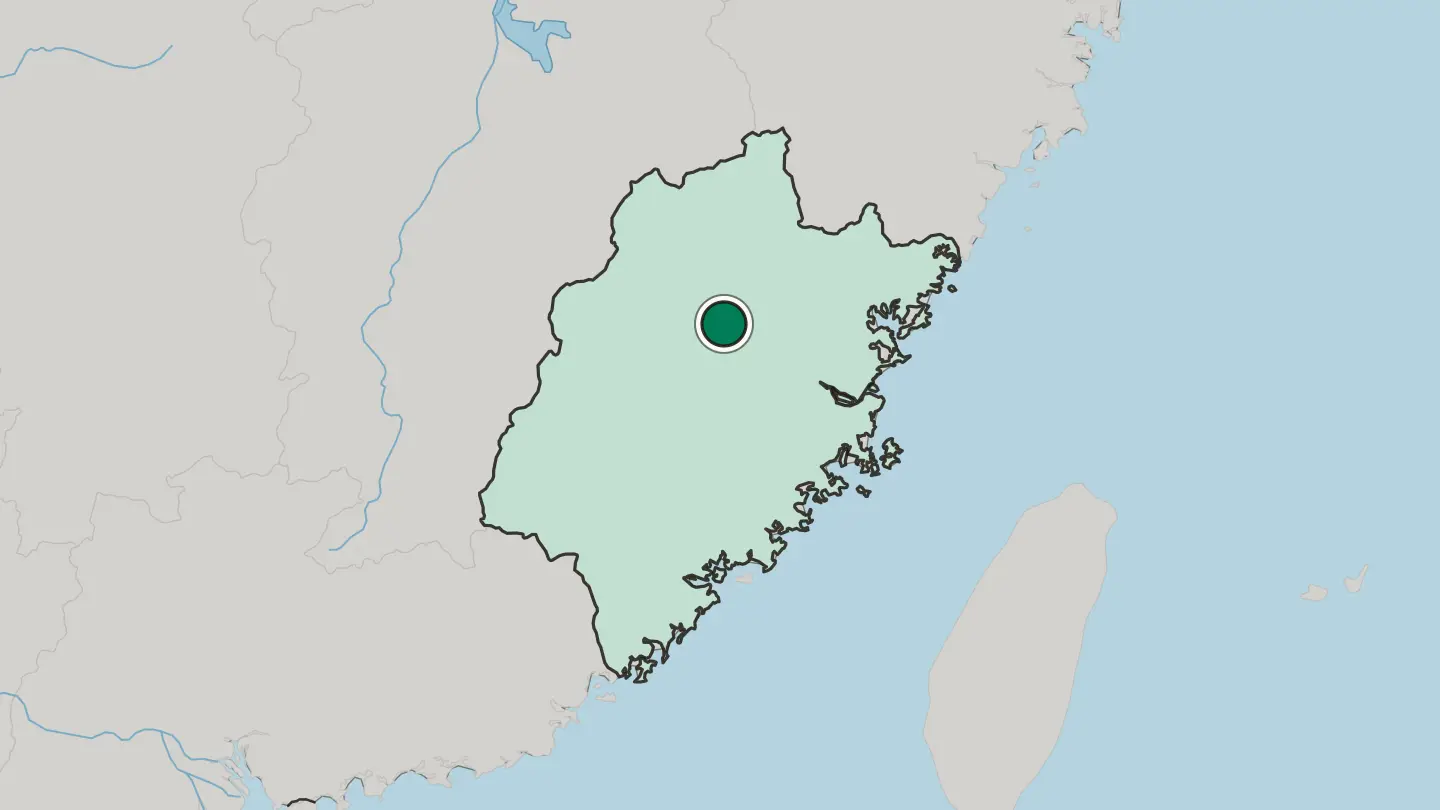
 China
China
Ningde
Ningde sits on the northeastern coast of Fujian, between Fuzhou and the Zhejiang border, with beaches, islands and mountains in one prefecture.Where to stay →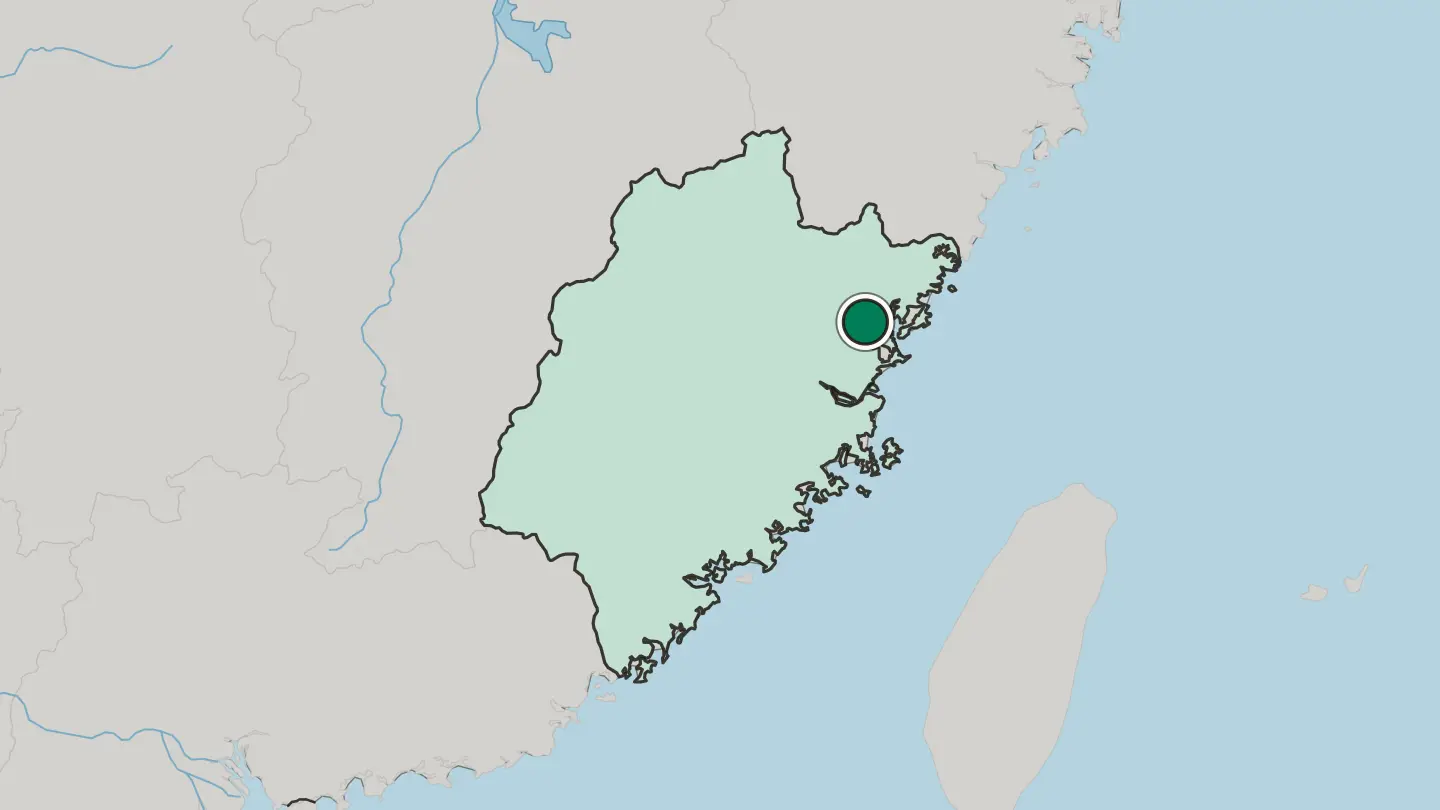 China
China
Fuqing
Fuqing is a county-level city of Fujian under Fuzhou, an industrial place holding Wanfu Temple, Longjiang Bridge and the Ruiyan Mile Statue.Where to stay →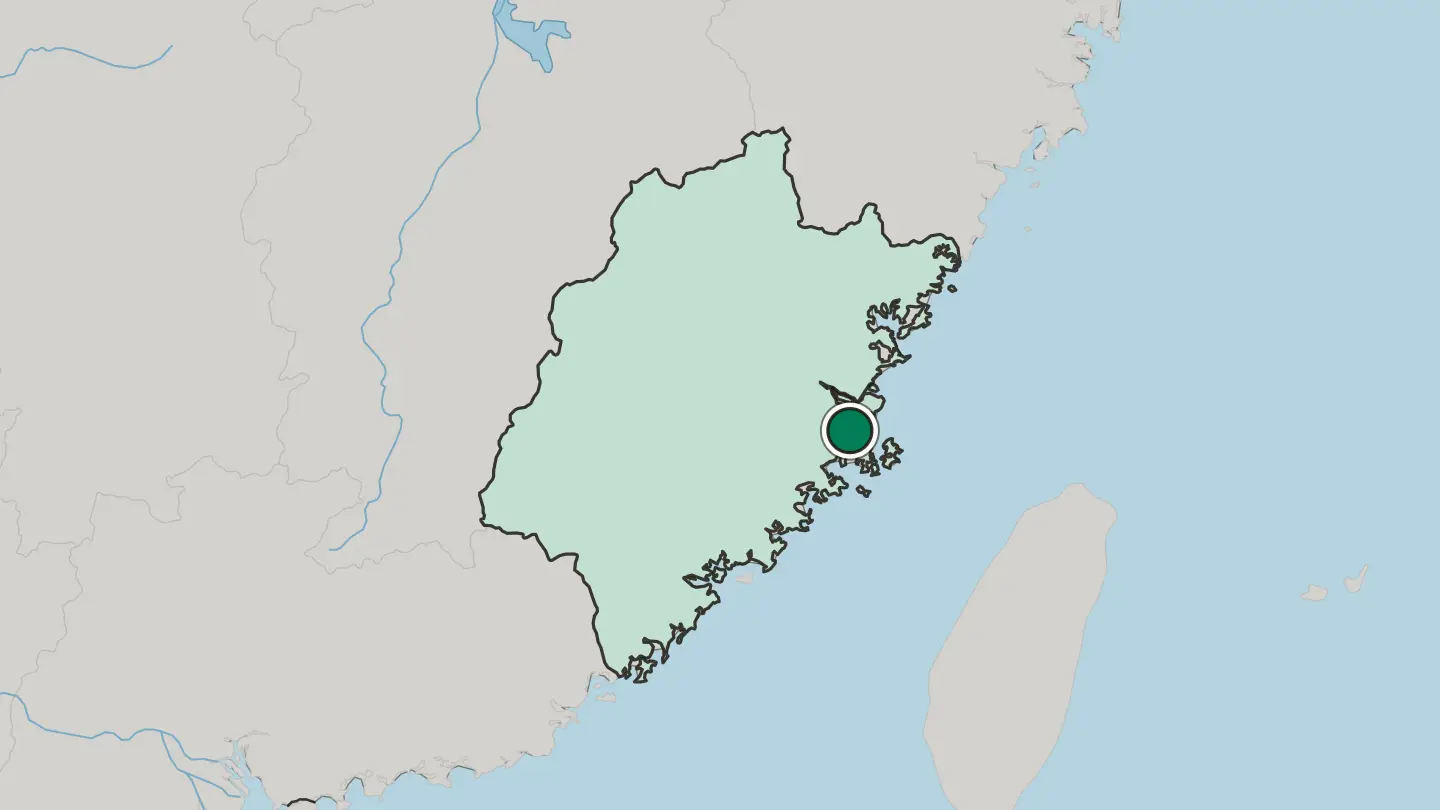
Hotel links are affiliate links: booking through them may earn us a commission, at no extra cost to you. It never affects how places are ranked. How this works
About Fujian
Tea, sea trade, and rammed earth.
What is Fujian known for?
The Wuyi Mountains in the north-west grow the oolong that carried the province's name abroad, and their misted gorges hold the temples where Neo-Confucian scholars once taught. Quanzhou was one of the great ports of the medieval world, the eastern anchor of the Maritime Silk Road. Inland, the Hakka built the Fujian Tulou, huge circular clan houses of packed earth.
Xiamen and its small island of Gulangyu add a colonial layer of villas and sea air. All of it faces the water.
Where is Fujian?
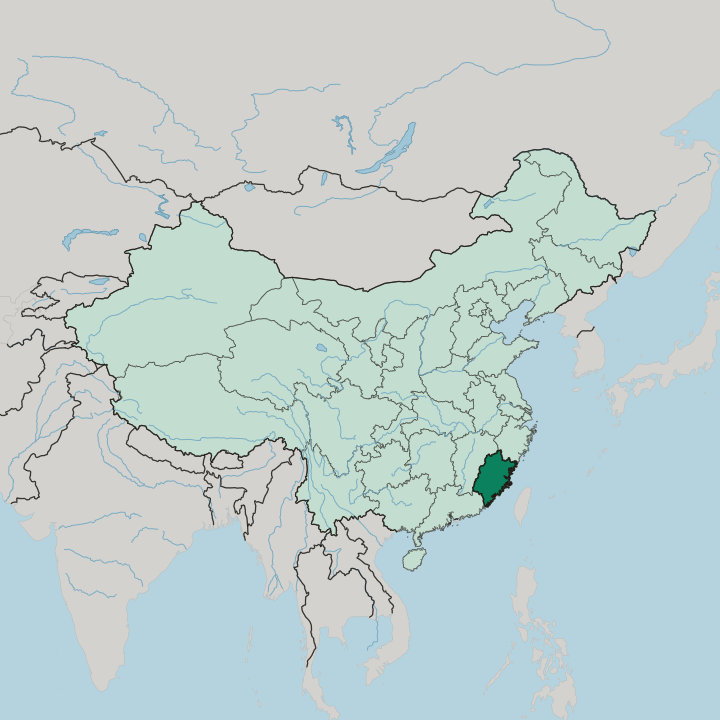
Fujian sits on the south-eastern coast of China, its whole eastern edge given over to the Taiwan Strait. The island of Taiwan lies just across that water, closer to Fujian than to any other part of the mainland. Mountains define the rest.
Hills and ranges cover the great majority of the province, so the flat land is thin and clings to the coast and the river valleys. The Wuyi Mountains rise along the north-western boundary, walling Fujian off from Jiangxi and carrying Mount Huanggang, the highest ground for hundreds of miles, along the divide. Zhejiang borders the north, Guangdong the south.
The coast is the province's other defining line. It runs a long, deeply indented course of roughly 2,120 kilometres, broken into bays, capes and more than a thousand offshore islands. Fuzhou stands in the north-east on the Min River, the longest in Fujian, which drains the interior ranges down to the sea.
Quanzhou and Xiamen lie south along the shore. Each grew up around a natural harbour on the strait, and rivers here run short and quick, falling out of the mountains rather than crossing broad lowlands. That squeeze of high ground against the sea has kept the people looking outward, to the water, for a very long time.
What is Fujian like?
Fujian speaks in many tongues. The province is the home of Min Chinese, a branch of the language so split by the mountains that neighbouring valleys can struggle to understand each other. Southern Min, the speech of Quanzhou, Zhangzhou and Xiamen, travelled with emigrants across the sea and is better known abroad as Hokkien.
Fuzhou keeps its own Eastern Min dialect in the north. This is one of the great source regions of the overseas Chinese, and coastal families have kept ties to Southeast Asia and Taiwan across many generations. The sea runs through the culture as much as through the geography.
Quanzhou grew rich on the Maritime Silk Road, and its lanes still hold a working mosque, Buddhist and Daoist temples, and the goddess-of-the-sea shrines that sailors left behind. Inland, the Hakka raised the Fujian Tulou, drum-shaped fortresses of rammed earth that housed a whole clan behind one thick wall. Tea sits at the centre of daily life.
The Wuyi Mountains gave the world its rock oolong and the first black tea, and a slow round of small cups is how business and friendship are still conducted. Faith, trade and tea braid together here in a way found nowhere else in China.
What is the history of Fujian?
The old name for this land is Min. It was carried by the tribes who held these valleys long before the Chinese state reached the coast. Fuzhou served as capital of an independent Kingdom of Min that rose in 909, one of the many small states of a divided age.
When the Song dynasty later drew a superprefecture across the region, it fused the names of two towns into the word Fujian, and the province took roughly the shape it holds now. Trade made the fortune that followed. Quanzhou became one of the busiest ports on earth, and its ships reached deep into the Indian Ocean.
What is the climate of Fujian?
Fujian runs warm and wet. The province lies just north of the tropics, so its climate is subtropical and monsoon-driven, with long humid summers and short mild winters along the coast. Rain arrives in heavy bursts from late spring, and the eastern shore can be raked by typhoons blowing in off the Taiwan Strait in late summer.
The Wuyi Mountains in the north-west turn cooler and cloudier, wrapped in the mist that the tea bushes thrive on. Frost is rare down by the sea.
How do you get to Fujian?
Most visitors fly into Xiamen or Fuzhou, the province's two main airports. From either city the high-speed railway runs the length of the coast, linking Xiamen, Quanzhou and Fuzhou in a couple of hours and connecting on to the rest of China. Reaching the interior takes more effort.
A branch line and mountain roads climb north-west to Wuyishan and the tea country, while the tulou villages sit off the fast routes and need a local bus or hired car. Ferries also cross the Taiwan Strait to the islands offshore.
Common questions
What is the best area to stay in Fujian?
Xiamen: the coast and the ferry to Gulangyu. Quanzhou: the Maritime Silk Road old town. Wuyishan: tea terraces and river gorges. Fuzhou: the provincial capital and rail hub.
Good for
More regions in China
Updated September 2026