Brazil
Acre, Brazil — Towns & Travel Guide
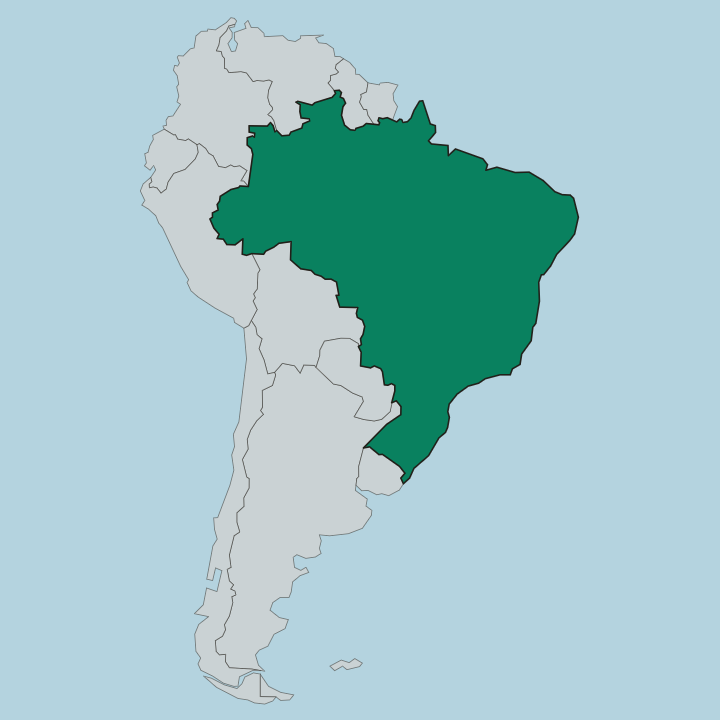
Acre is Brazil's westernmost state, a wedge of Amazon rainforest pressed against Peru and Bolivia, with Rio Branco on the Acre River as its capital.
Hotel links are affiliate links: booking through them may earn us a commission, at no extra cost to you. It never affects how places are ranked. How this works


Towns & cities in Acre
One town here has its own guide — it links to where to stay.
 Brazil
Rio Branco
Rio Branco is the capital of Acre, a rubber-trade town on the Rio Acre in the far west of Brazil, founded on a seringal in 1882.Where to stay →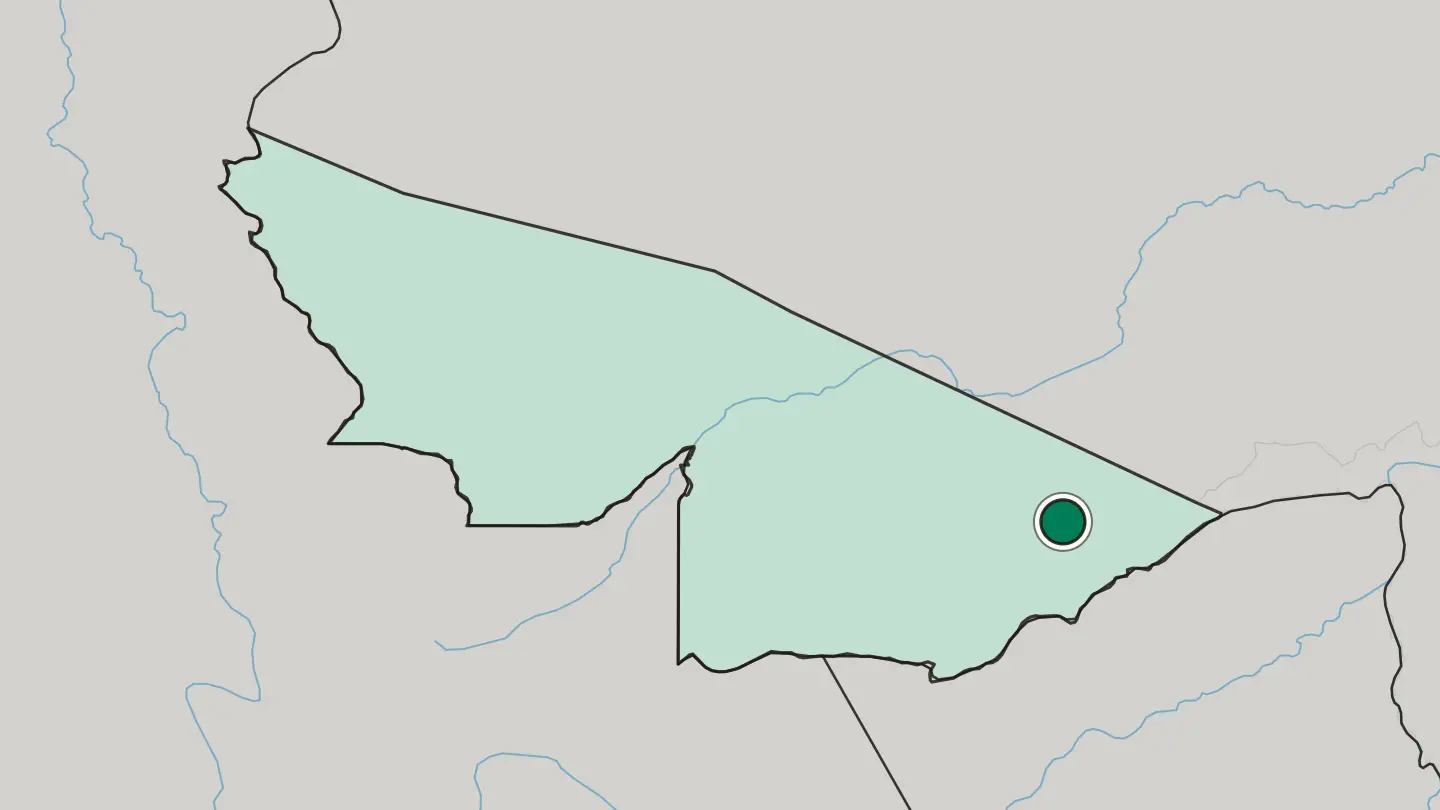
Hotel links are affiliate links: booking through them may earn us a commission, at no extra cost to you. It never affects how places are ranked. How this works
About Acre
What is Acre known for?
Acre is the far western corner of Brazil, an Amazon frontier state hemmed in by Peru and Bolivia. Rubber made it. The forest that once drew rubber tappers still covers more than four-fifths of the state, and it is the land most associated with Chico Mendes, the tapper and union organiser killed at Xapuri in 1988.
Rio Branco, the capital, sits on the Acre River in the east. Cruzeiro do Sul anchors the far west on the Juruá. Between them stretch protected reserves, Brazil-nut groves, and some of the least-disturbed rainforest in the country.
Where is Acre?
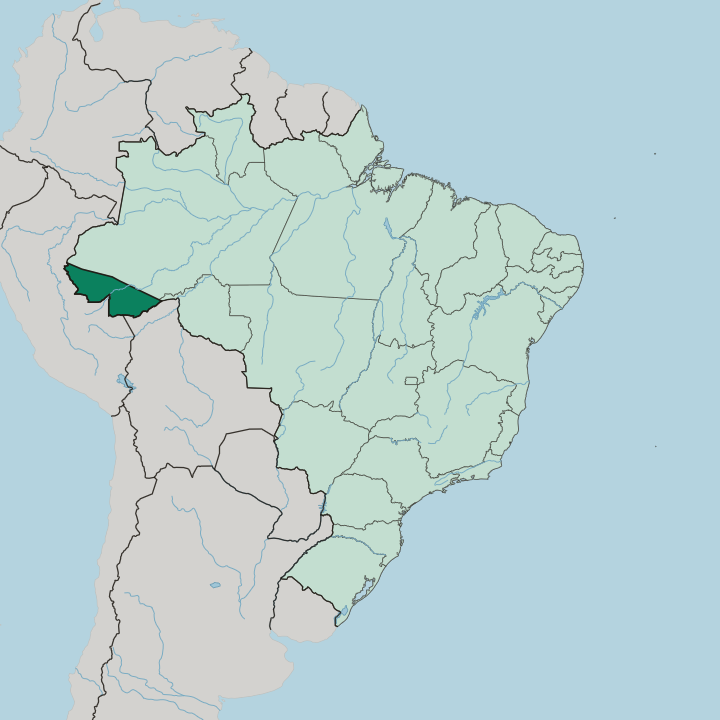
Acre fills the far west of Brazil, the last state before the country runs out toward Peru. It sits deep in the Amazon basin, in the forest belt that drains north and east toward the Amazon River. Amazonas curves around it to the north; Rondônia lies to the east. West and south the long border is with Peru, and to the south-east it borders Bolivia.
This is a genuine triple frontier, and much of the state lies closer to the Pacific than to Brazil's own Atlantic coast. Rivers order Acre, not roads. The Acre River gives the capital, Rio Branco, its footing, traces part of the line with Bolivia, and joins the Purus far downstream.
Two of the Amazon's largest tributaries, the Juruá and the Purus, enter the state from Peru already formed and run in almost parallel courses across the lowland; the Tarauacá, Envira, and Iaco thread between them. Nearly all of this is flat, warm Amazon rainforest, more than four-fifths of it still standing. The land breaks its flatness only in the far west.
There the wooded ridges of Serra do Divisor National Park rise above the canopy and mark the westernmost point of Brazil, hard against the Peruvian line.
What is Acre like?
Acre calls itself the land of the forest peoples, and the phrase is close to literal. Its modern people came in two waves: Northeastern Brazilians, many from Ceará, drawn by the rubber boom, and the indigenous nations who were here long before them. Huni Kuin, Ashaninka, Yaminawá, and Katukina communities still live along the rivers, several in reserves of their own.
The rubber tapper, the seringueiro, is the defining figure, and Chico Mendes made that figure political. His fight for the tappers and the standing forest turned Acre into shorthand for Amazon conservation, and the state brands itself around that inheritance. Then came something stranger.
Santo Daime, a religion built around the ayahuasca brew, was founded in Rio Branco in 1930 by Raimundo Irineu Serra, and Acre remains its heartland. Everyday culture splits. It is Amazonian at the table and Northeastern in the music.
Forró carries the accent of the Ceará migrants; tacacá and river fish carry the accent of the forest. Portuguese is the common language, spoken over a base of indigenous tongues from the Pano family. It is a small state that punches oddly hard on the national imagination.
What is the history of Acre?
Acre was not always Brazilian. Through the rubber boom it was claimed by Bolivia and worked by Brazilian tappers, and that mismatch lit a war. Between 1899 and 1903 the tappers, led by José Plácido de Castro, rose against Bolivian authority in what Brazil calls the Acrean Revolution.
The Treaty of Petrópolis settled it in 1903: Bolivia ceded the territory to Brazil in exchange for a cash payment, some land in Mato Grosso, and the promise of a railway. Acre was governed as a federal territory for decades, becoming a full state of Brazil only in 1962.
What is the climate of Acre?
Acre is hot and wet the year round, a lowland equatorial climate with little change in temperature. The calendar splits in two. A long rainy season runs from about December to May, when the Juruá and Purus swell and river travel slows; the drier months fall between June and November.
Even the dry stretch brings its own oddity, the friagem, when a push of southern air sweeps up the Amazon basin and drops the temperature for a few days at a time. Rain feeds the forest that covers most of the state.
How do you get to Acre?
Almost everyone reaches Acre by air, and almost every flight lands at Rio Branco. Its airport, Plácido de Castro, sits on the BR-364 a short way out of the capital and connects only to other Brazilian cities, usually by way of Brasília or São Paulo. Cruzeiro do Sul has the state's second airport, the way in for the far west.
Overland, the BR-364 is the lifeline east to Rondônia and the rest of Brazil, while the BR-317 runs south to the borders. That road crosses into Peru at Assis Brasil, over the bridge to Iñapari, and touches Bolivia near Brasiléia. Acre has no rail line at all.
Common questions
What is the best area to stay in Acre?
Rio Branco: arriving and getting your bearings in Acre. Cruzeiro do Sul: the Juruá valley and the far west. Xapuri: the Chico Mendes story.
Good for
More regions in Brazil
Updated October 2026