
Japan
Miyazaki, Japan — Towns & Travel Guide
Miyazaki fills the sunny eastern coast of Kyushu, a Pacific-facing prefecture of Japanese myth, surf beaches and celebrated mango orchards.
Hotel links are affiliate links: booking through them may earn us a commission, at no extra cost to you. It never affects how places are ranked. How this works


Towns & cities in Miyazaki
Pick a town or city — each links to where to stay.

 Japan
Japan
Miyazaki
Miyazaki is the capital of Miyazaki Prefecture on the island of Kyushu, and the shrine Miyazaki Jingū stands at its heart. The air runs subtropical.Where to stay → Japan
Japan
Miyakonojō
A residence carries the name. Miyakonojō keeps the Miyakonojō Shimazu Residence and the Oshima Hatakeda Site inside Miyazaki Prefecture.Where to stay →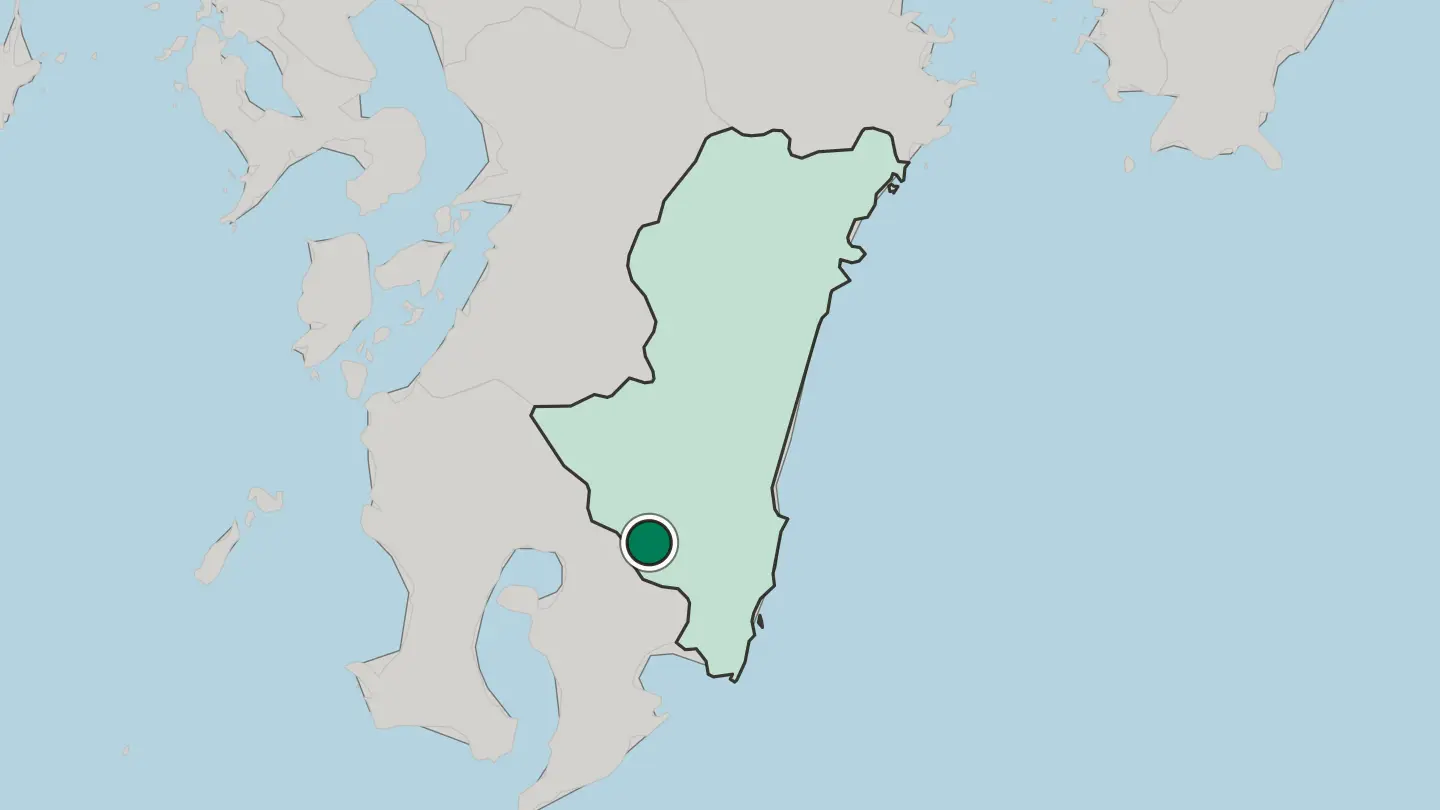
 Japan
Japan
Nobeoka
Nobeoka sits in the north of Miyazaki Prefecture, a wide municipality holding Mount Hiei. Its castle keeps the Naitō name.Where to stay →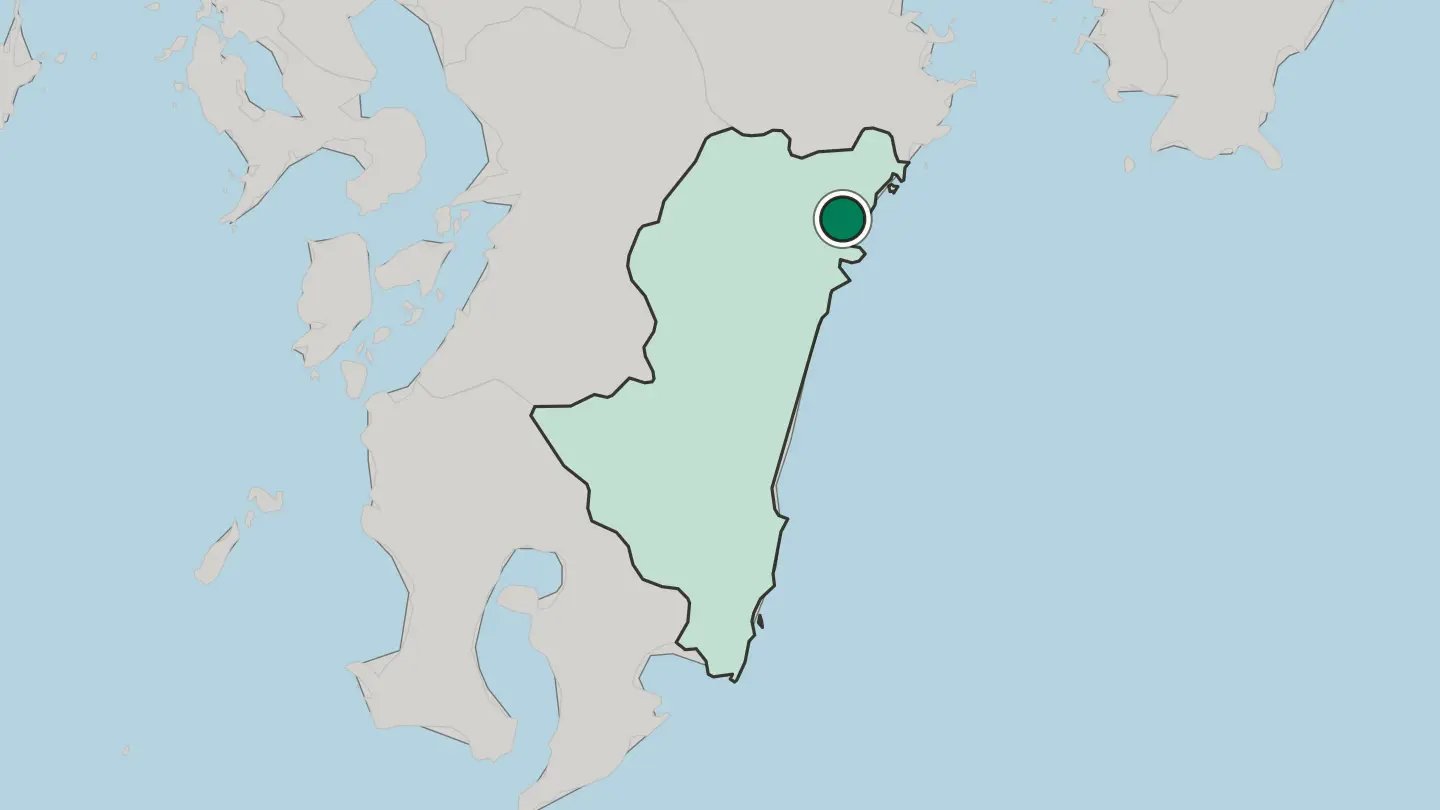
 Japan
Japan
Nichinan
Nichinan is a small city in southern Miyazaki, Japan, holding Obi inland and Kurasaki Lighthouse out at the edge of its coast.Where to stay →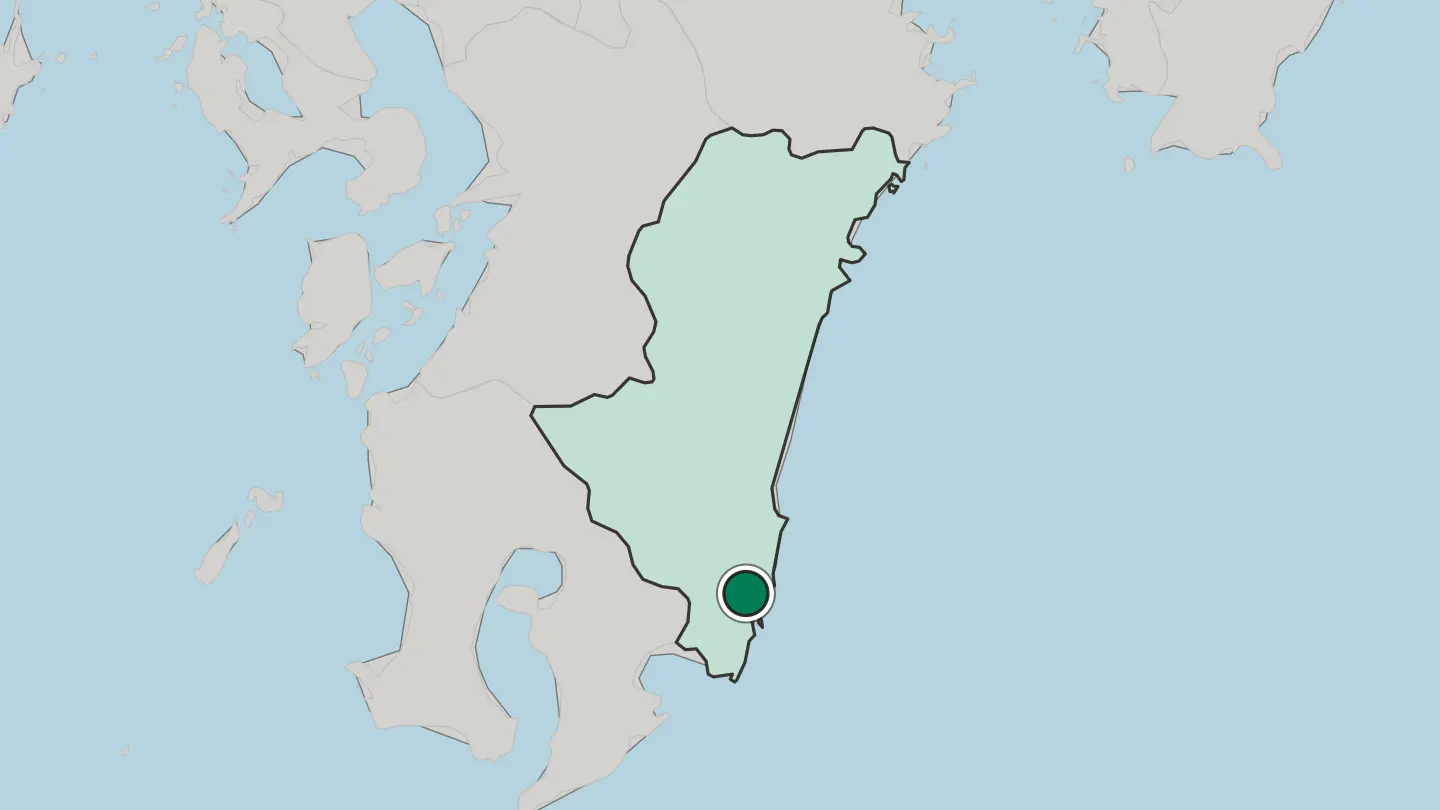
Hotel links are affiliate links: booking through them may earn us a commission, at no extra cost to you. It never affects how places are ranked. How this works
About Miyazaki
Miyazaki carries the founding myths of Japan.
What is Miyazaki known for?
Inland, the gorge and shrines around Takachiho are tied to Amaterasu, the sun goddess whose grandson is said to have descended to earth in these mountains. The coast tells a lighter story, with surfers riding the Pacific swell at beaches near Aoshima and mango orchards ripening in the long southern sun. Miyazaki, the capital, anchors the flat plain where the Ōyodo River reaches the sea.
Sun, surf and legend sit side by side here.
Where is Miyazaki?
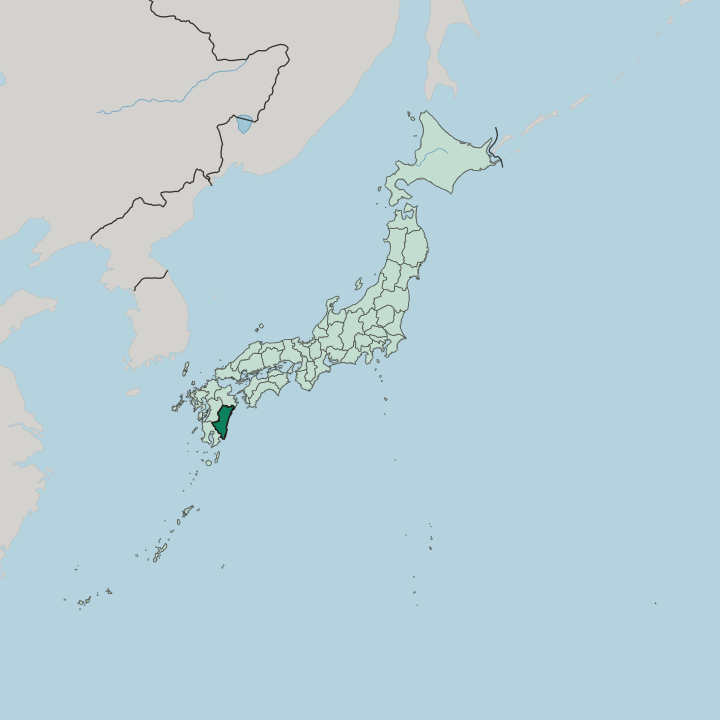
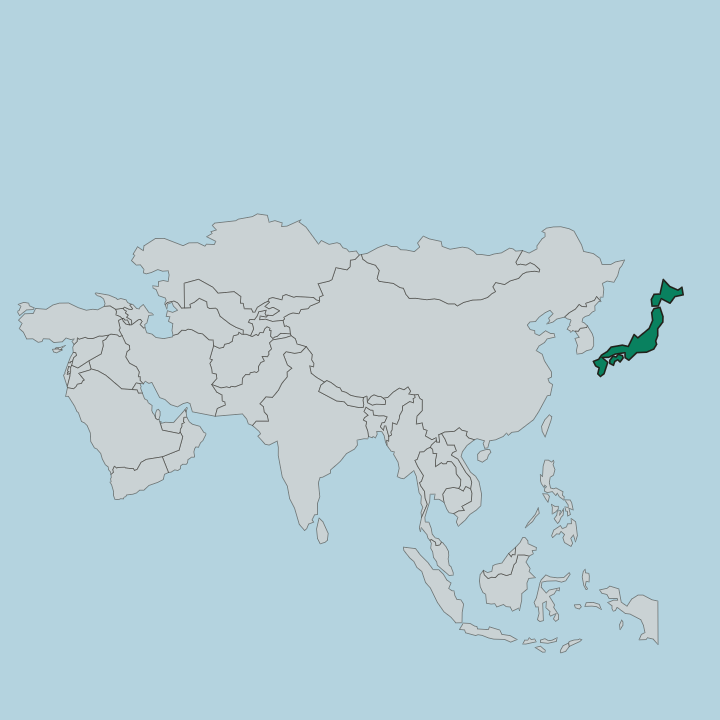
Miyazaki occupies the south-eastern corner of Kyushu, the southernmost of Japan's four main islands. The Pacific Ocean forms its whole eastern edge, a coastline of more than 400 kilometres that curves from Nobeoka in the north down past Miyazaki to Cape Toi in the south. That open sea is called the Hyūga-nada.
Behind the shore the land climbs fast. Most of the prefecture is mountain, part of the steep Kyushu Mountains that wall it off from the rest of the island. Ōita Prefecture lies to the north, Kumamoto to the north-west, and Kagoshima to the south-west, each reached only through those ranges or around the coast. The flat ground is scarce and it matters.
The largest of these lowlands is the Miyazaki plain, where the Ōyodo River drains out of the interior and reaches the sea beside the capital. Rivers cut the highlands into deep gorges, the famous one at Takachiho carved through columns of old lava in the north. The coast itself alternates between long surf beaches and rocky headlands, with the small island of Aoshima ringed by the wave-cut rock shelves called the Devil's Washboard.
Cape Toi marks the far south, where wild horses graze the headland above the water. Sea on one side, mountains on the other. That is Miyazaki in a sentence.
What is Miyazaki like?
Miyazaki thinks of itself as the cradle of Japan. Its myths run deep. The old chronicles place the descent of the sun goddess Amaterasu's line at Takachiho, and the first legendary emperor is said to have set out from Hyūga, the province's old name, to found the nation.
That inheritance is not just written down; it is danced. Through the winter nights, villages around Takachiho perform yokagura, all-night cycles of masked kagura dances that retell the gods' stories by firelight. Shrines carry the same weight, from Aoshima Shrine on its little island to the cave of Amano-Iwato inland.
Food is the other pleasure, and Miyazaki takes it seriously. The prefecture's mangoes are graded and prized across Japan, its charcoal-grilled jitokko chicken is a local institution, and chicken nanban, fried and dressed in tartar sauce, was invented in these towns. Warm weather shapes the rest of daily life.
Surfers treat the Pacific breaks as a way of living, not a holiday, and the beaches near Miyazaki fill on any bright morning. The mood is rural and unhurried. This is southern Kyushu, closer in feel to the subtropics than to the big cities up north, and it wears its distance from Tokyo lightly.
What is the history of Miyazaki?
For most of its history this was Hyūga, one of the old provinces of Kyushu, a name that meant the land facing the sun. The modern prefecture came late and came twice. Miyazaki was first drawn up in 1873, then folded into neighbouring Kagoshima only three years later, in 1876.
Local pressure undid that. Pushed by petitions and the Kagoshima assembly, Miyazaki won back its independence in 1883 and has kept its own borders since. The myth ran the other way round: this coast claimed the founding emperors of Japan long before it was ever a province.
What is the climate of Miyazaki?
Miyazaki has a humid subtropical climate, one of the warmest and sunniest in Japan. Summers arrive hot and soaking. The rains come in force from the early-summer baiu season into autumn, when typhoons track up the Pacific and can drench the coast in a single day, as one storm did in 1939.
Winters are the reward, mild and bright, kept gentle by the warm Kuroshio current running offshore. That long southern sun is why the mango orchards and the surf both thrive here, and why palms grow along the Nichinan coast that would never survive further north.
How do you get to Miyazaki?
The plane wins most arrivals. The mountains that wall Miyazaki off make the overland trip from the rest of Japan slow, so the airport just south of the capital does the heavy lifting, with short hops from Tokyo, Osaka and the other big hubs. By land, the JR Nippō Line is the spine, a coastal railway threading north to Nobeoka and Ōita and south toward Kagoshima.
Trains and expressway buses link the same corridor. Ferries also cross from the mainland to the port at Miyazaki. Once there, a car earns its keep, because the gorges, shrines and surf beaches sit far apart.
Common questions
What is the best area to stay in Miyazaki?
Miyazaki: first-timers wanting the airport and rail hub. The Nichinan coast: surf breaks and the shrine island of Aoshima. Takachiho: the mountain gorge and creation-myth shrines. The Kirishima highlands: volcano walks and open-air hot-spring nights.
Good for
More regions in Japan
Updated September 2026