Japan
Hyōgo, Japan — Towns & Travel Guide
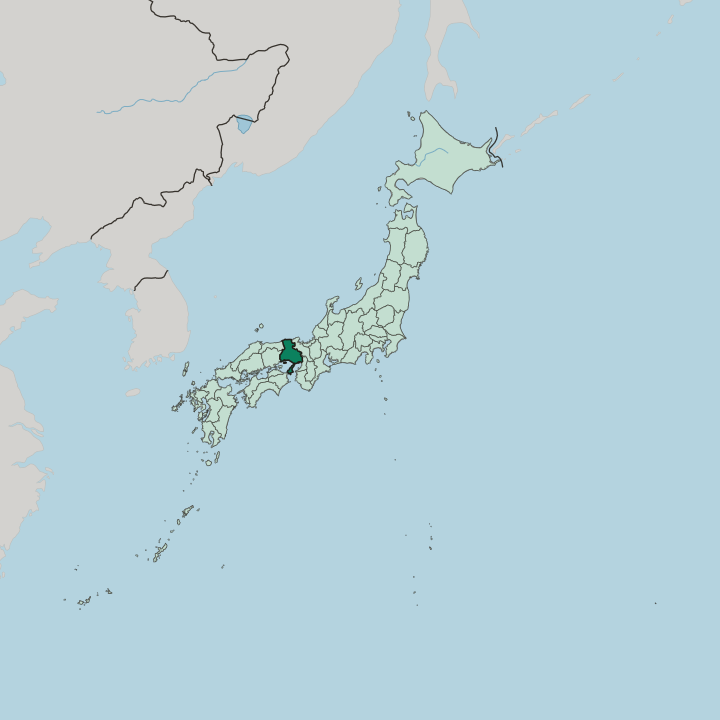
Hyōgo reaches across Kansai from the Sea of Japan to the Seto Inland Sea, with the port of Kobe at its heart.
Hotel links are affiliate links: booking through them may earn us a commission, at no extra cost to you. It never affects how places are ranked. How this works


Towns & cities in Hyōgo
Pick a town or city — each links to where to stay.
 Japan
Japan
Kobe
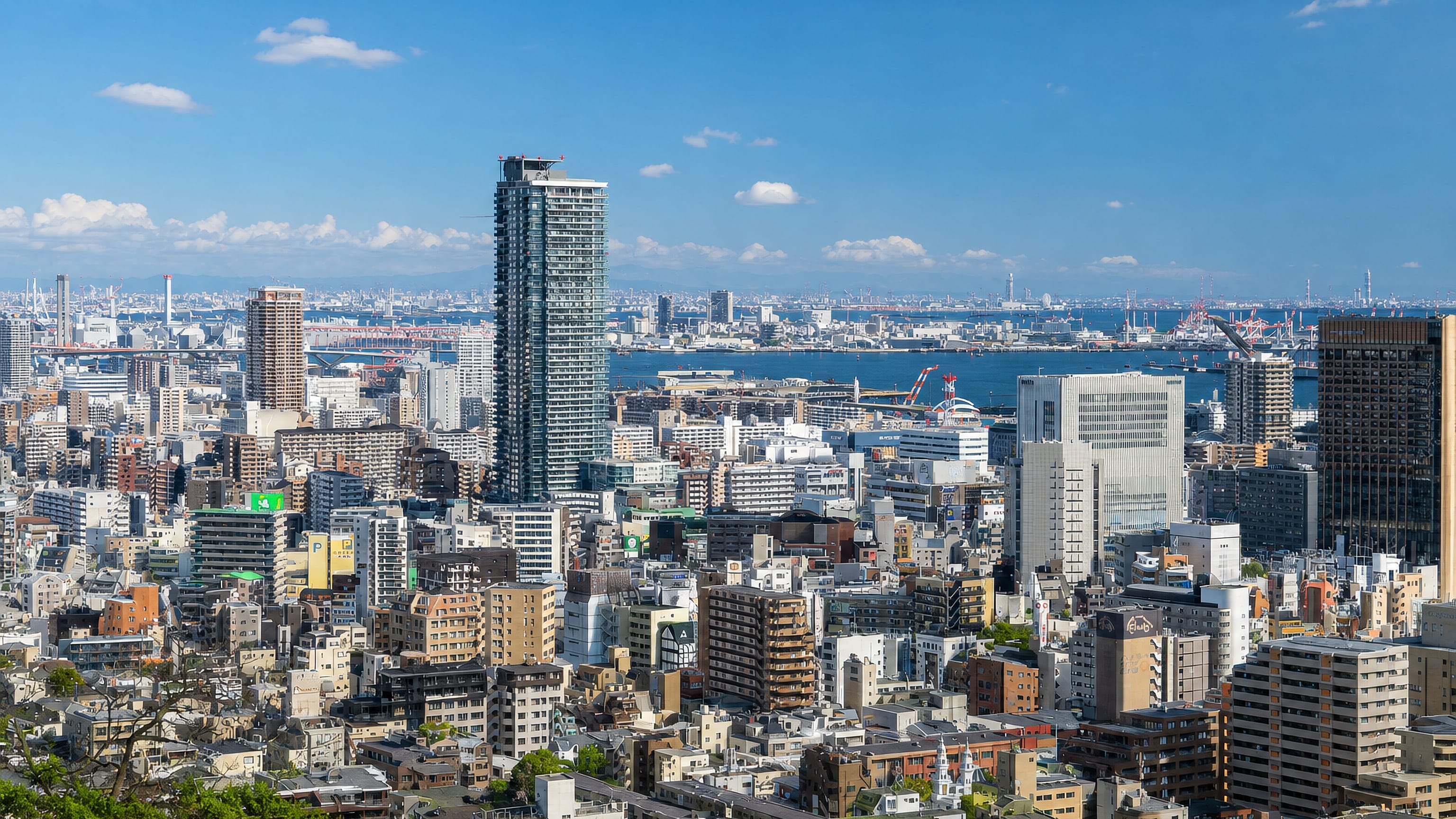
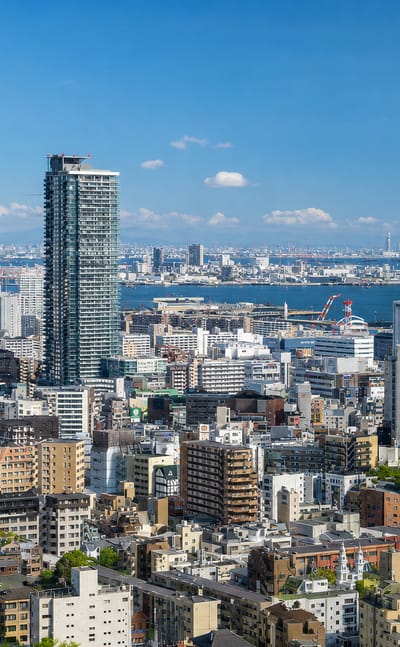
Wharves and hillside homes ring Kobe, a port city on Osaka Bay in the Kansai region of Honshu, known for Kobe Port Tower and the Kitano foreign houses.Where to stay →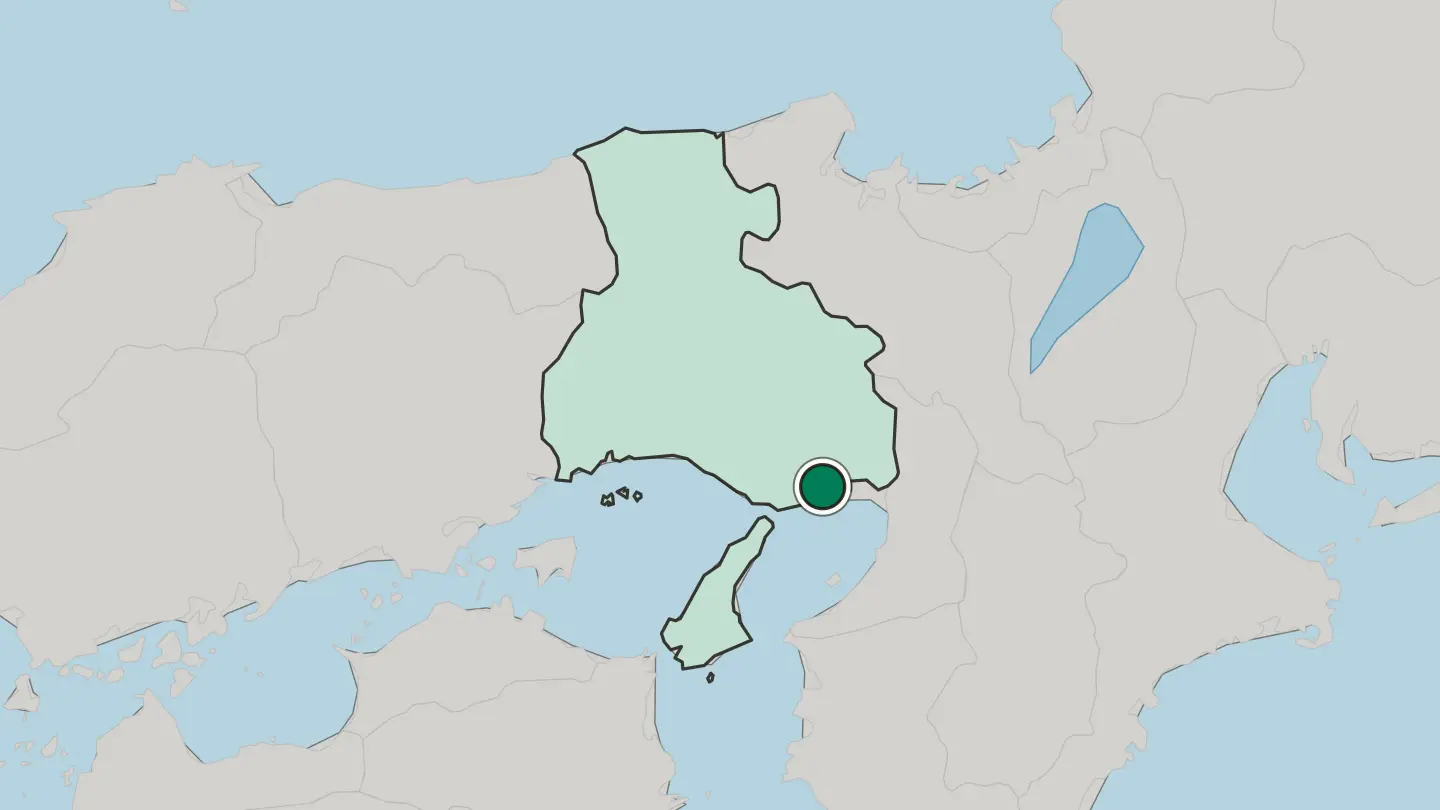
 Japan
Japan
Himeji
Himeji is a castle city in western Japan, crowned by the White Heron Castle, the finest old fortress in the country.Where to stay →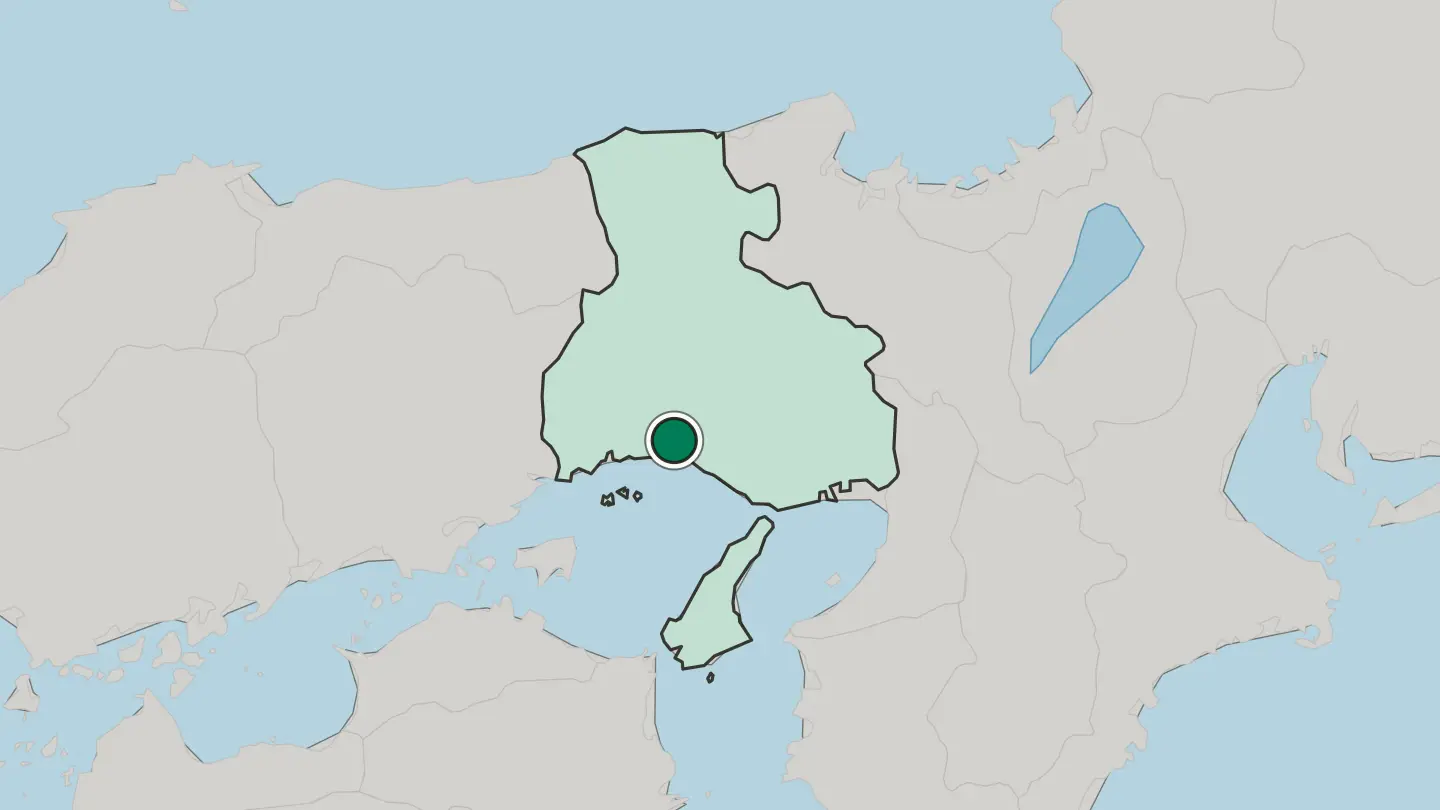
 Japan
Japan
Nishinomiya
Sake and baseball, side by side. Nishinomiya holds brewery halls, art museums, and the Koshien grounds in one Hyōgo city.Where to stay →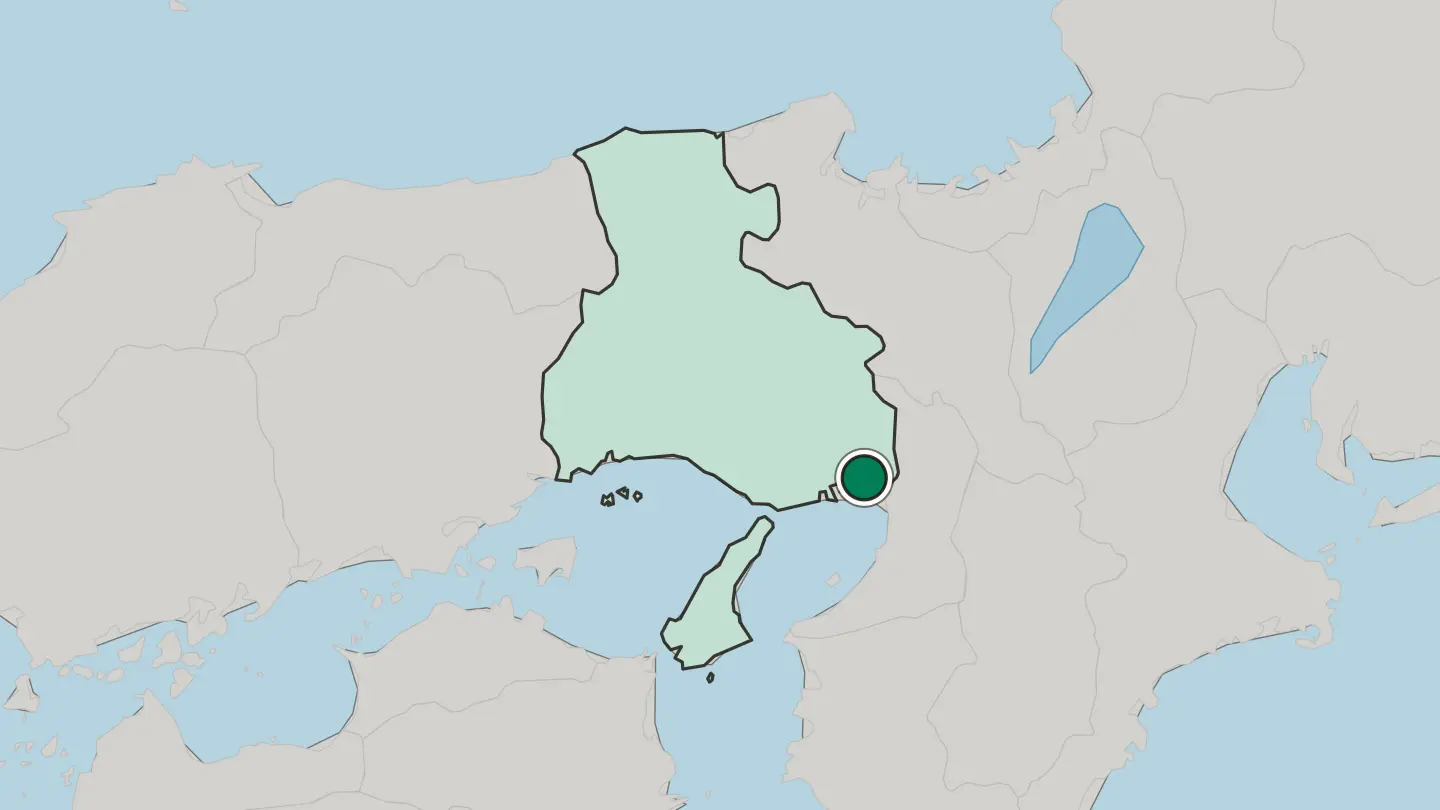
 Japan
Japan
Amagasaki
Amagasaki works for a living. It fills flat ground immediately west of Osaka in Hyōgo Prefecture, and its museums are small and specific.Where to stay →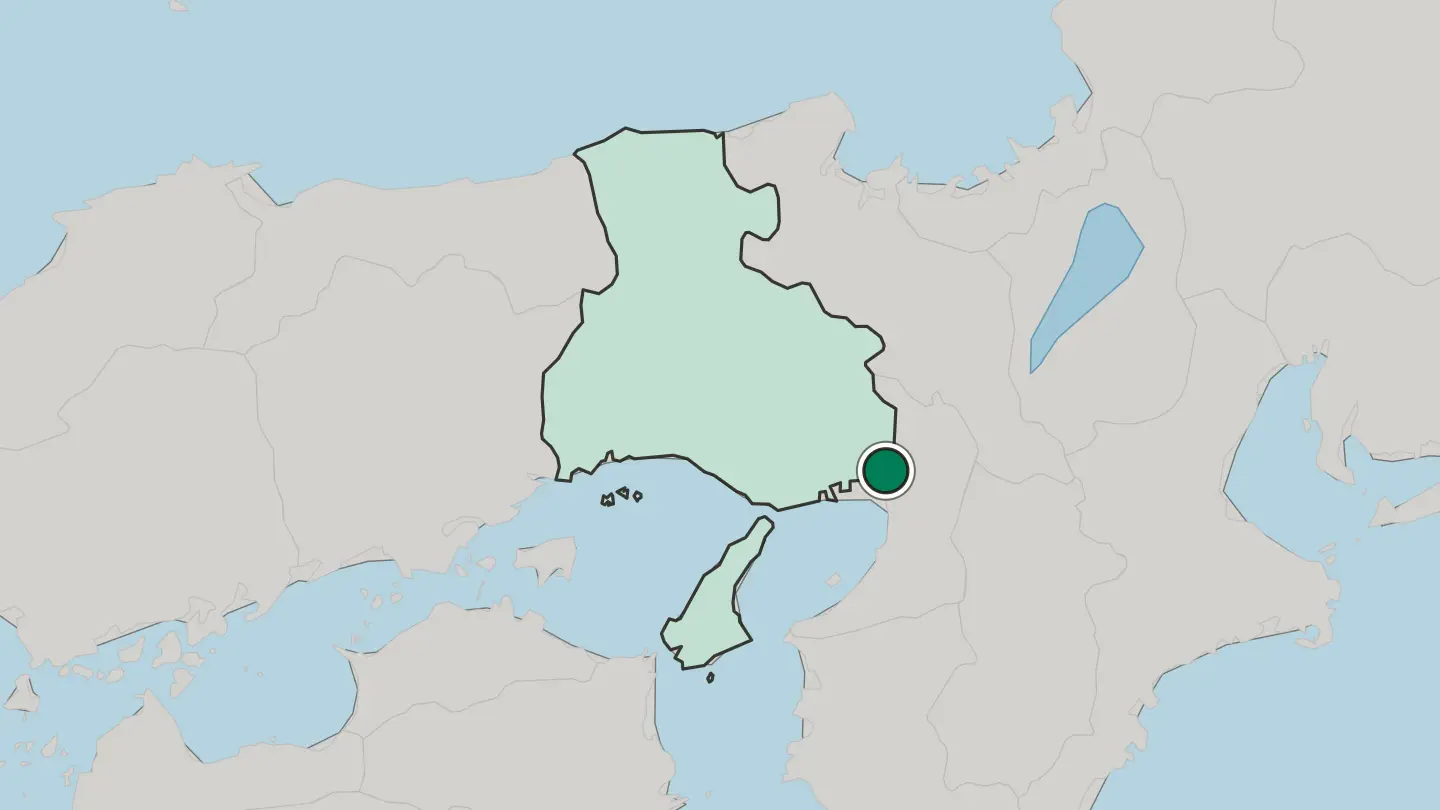
 Japan
Japan
Akashi
Akashi packs two battery sites, a planetarium and a bridge exhibition into barely fifty square kilometres west of Kobe. The city dates from 1889.Where to stay →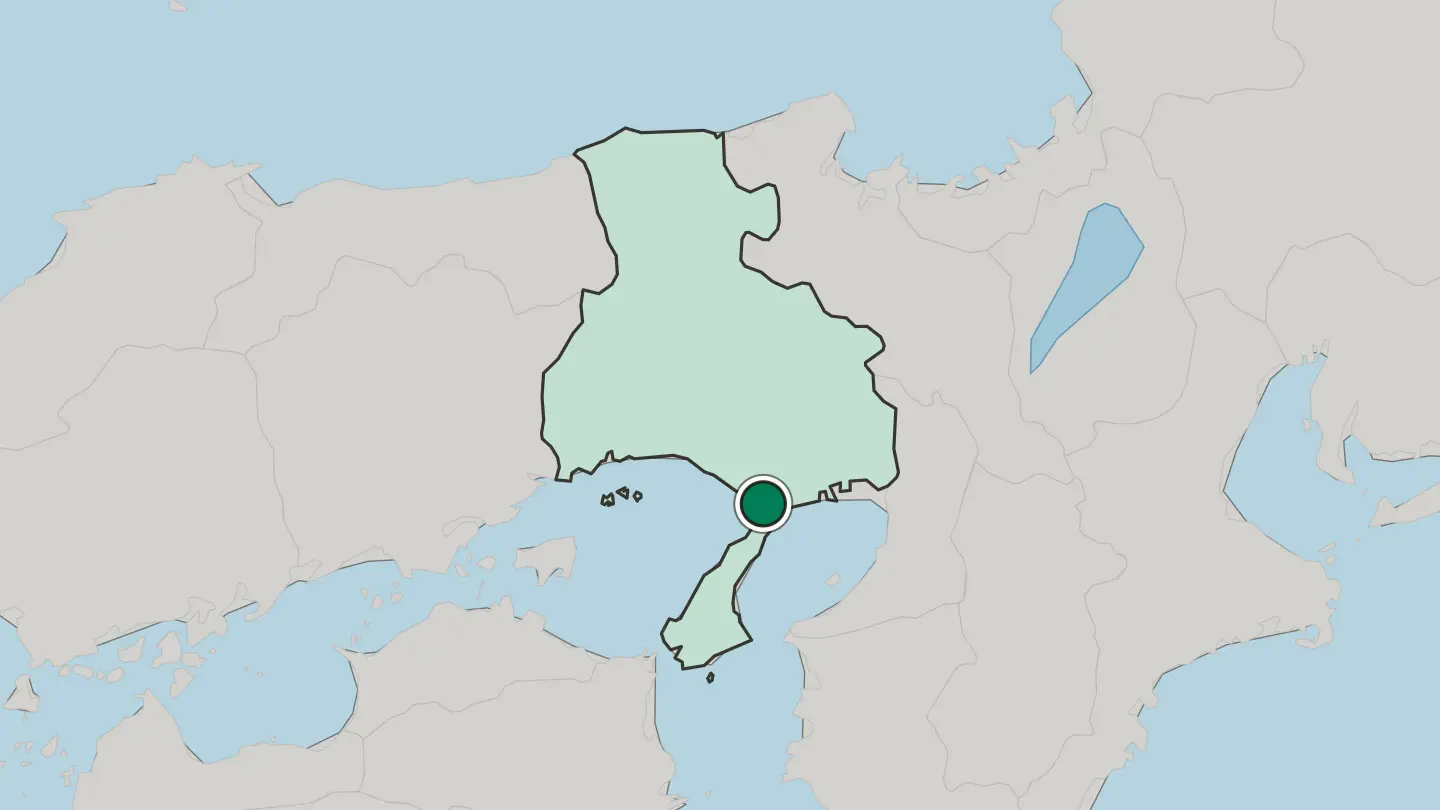 Japan
Japan
Kakogawachō-honmachi
Kakurin-ji Temple anchors Kakogawachō-honmachi. Most records call the place Kakogawa, and the whole of it lies in Hyōgo Prefecture.Where to stay →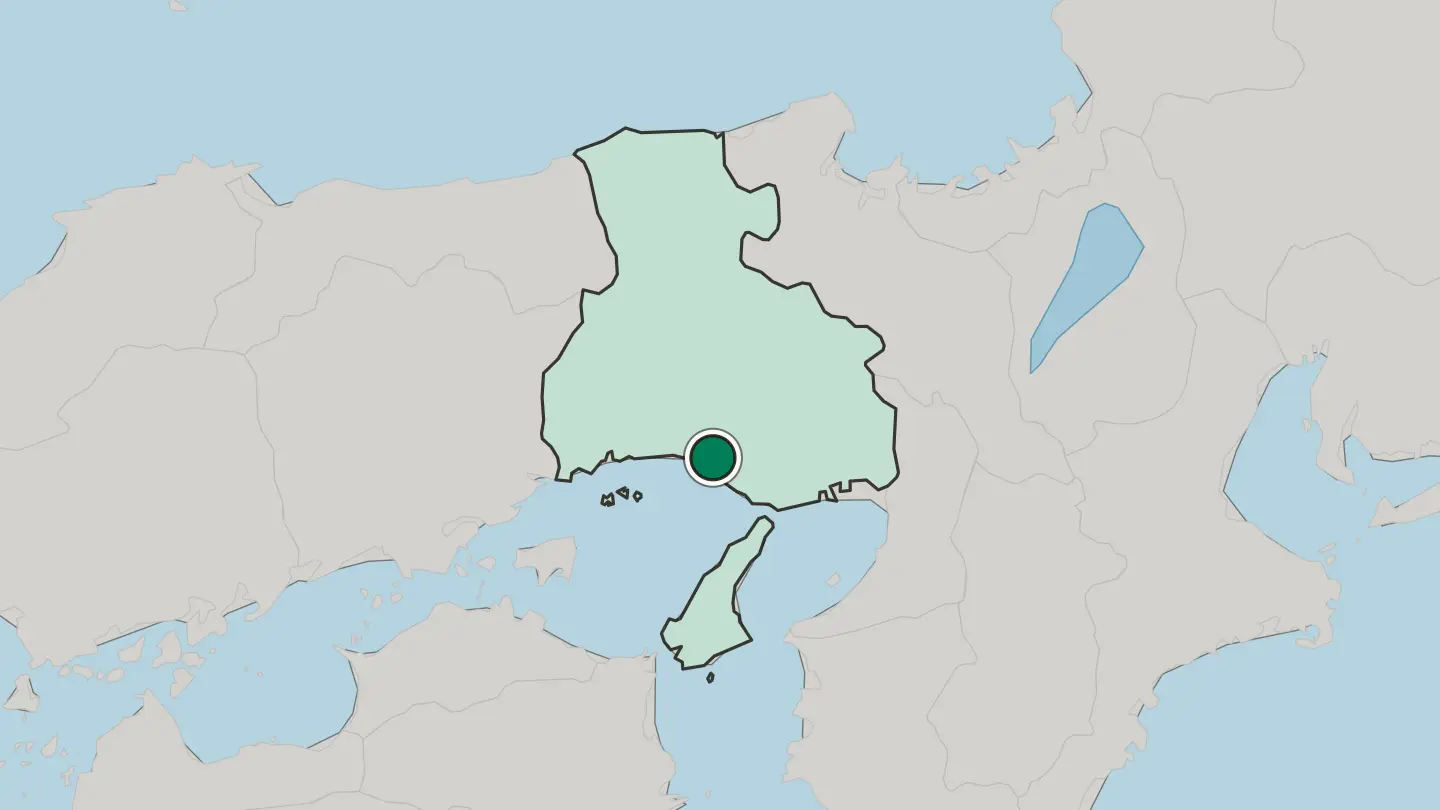
 Japan
Japan
Takarazuka
The Revue gave the town its name. Takarazuka, a Hyōgo city since 1954, sets theatre and hot springs beside the Osamu Tezuka Manga Museum.Where to stay →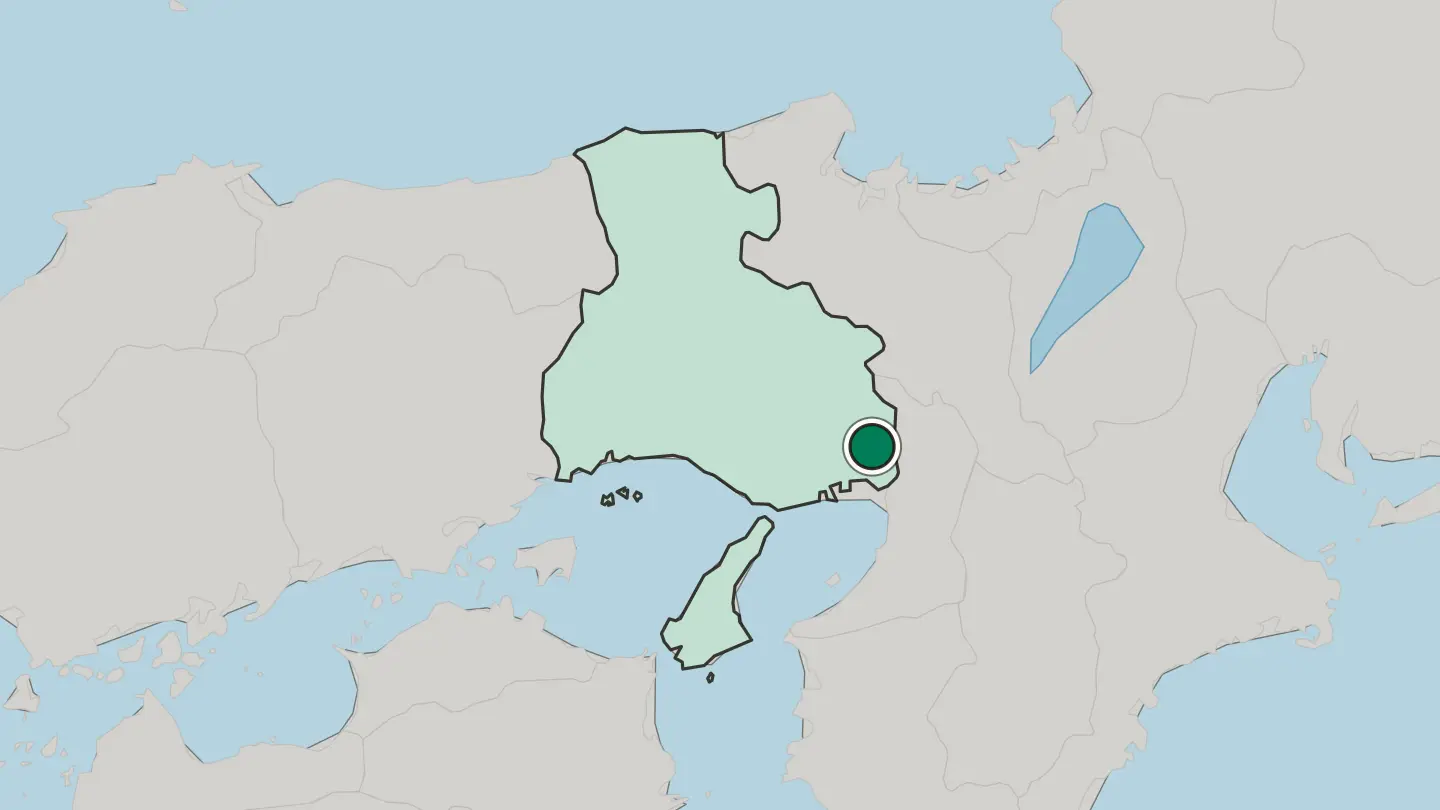 Japan
Japan
Itami
Itami is a city of collections. A brewery museum, an insect museum and a literary archive sit within one small municipality of Hyōgo Prefecture.Where to stay →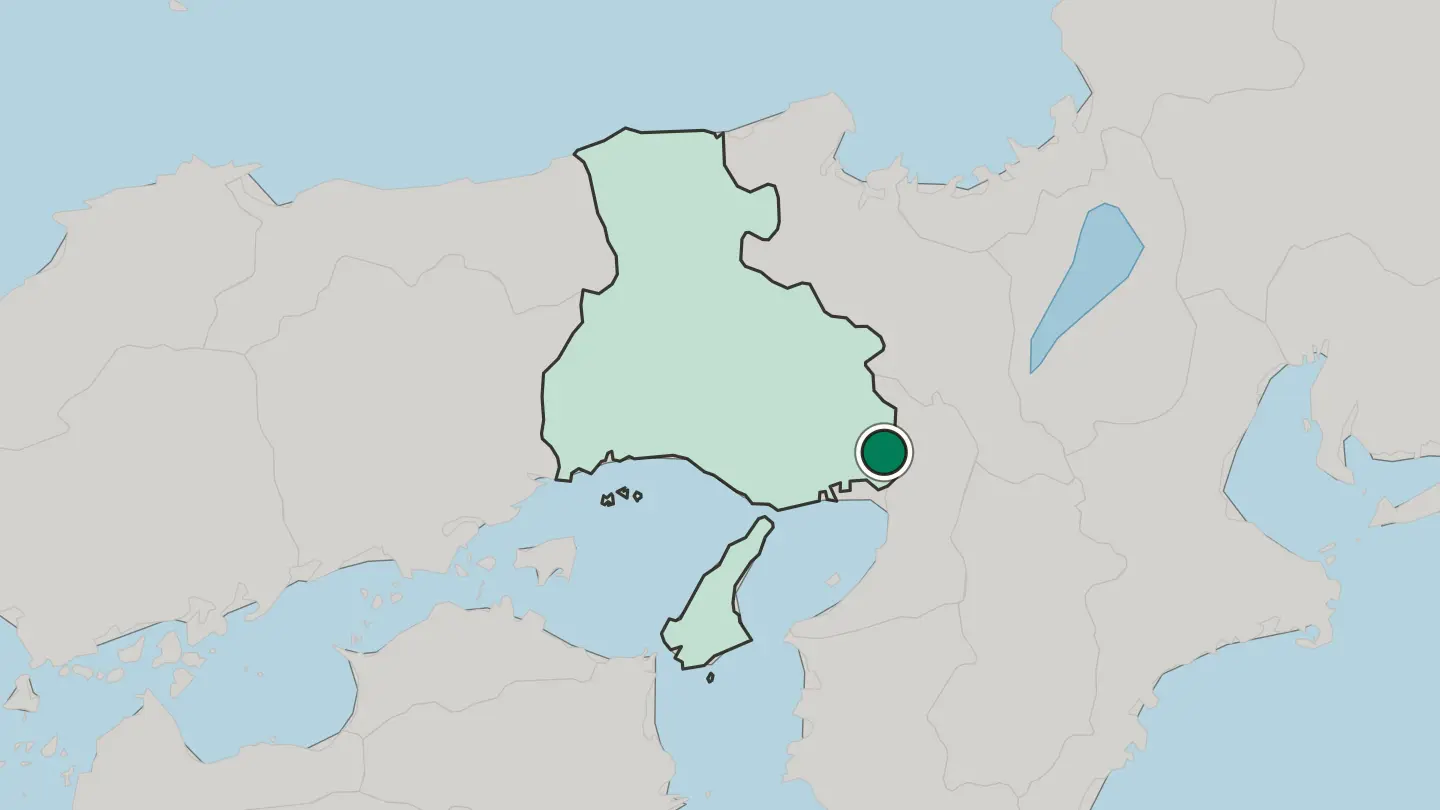
All towns & cities (15)
 Japan
Japan
Kawanishi
Excavation and neighbours shape Kawanishi. The Kamo Site sits inside this Hyōgo Prefecture city, with the museums of Ikeda close by.Where to stay →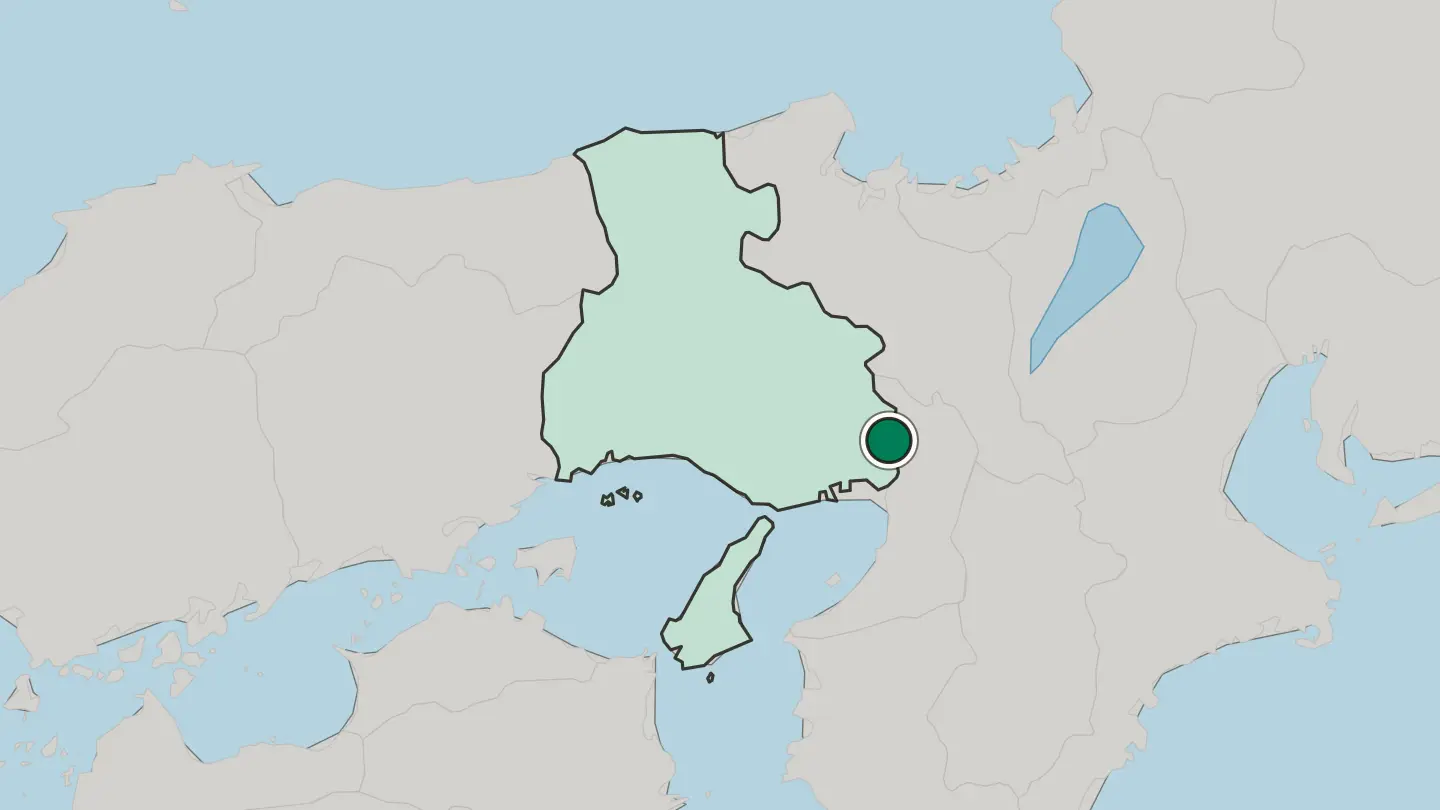
 Japan
Japan
Sandachō
Glass, paper, and natural history. Sandachō carries all three across a broad stretch of Hyōgo Prefecture.Where to stay →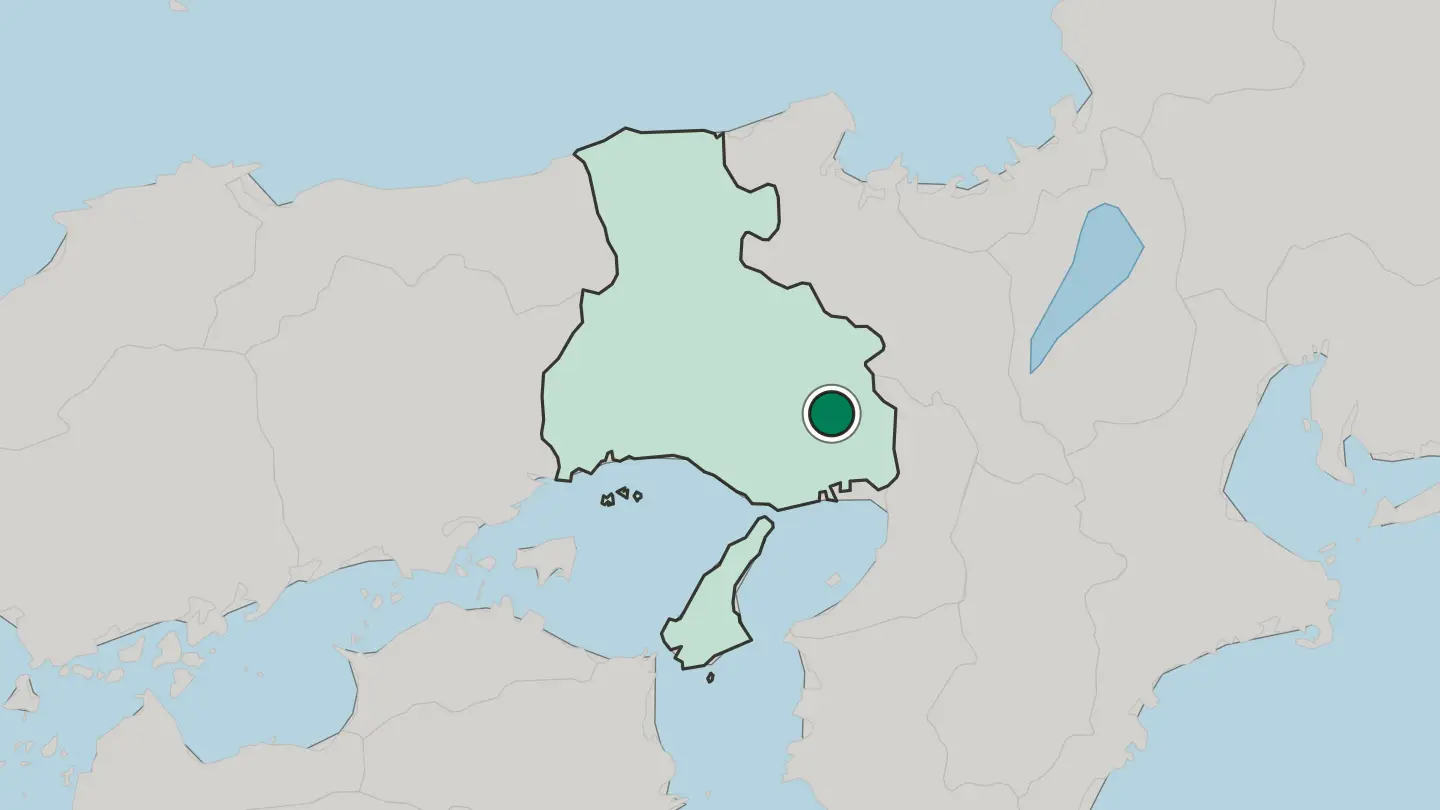
 Japan
Japan
Ashiya
Ashiya is a residential city. Large houses and the Tanizaki Jun'ichirō Memorial Museum of Literature mark this small corner of Hyōgo Prefecture.Where to stay →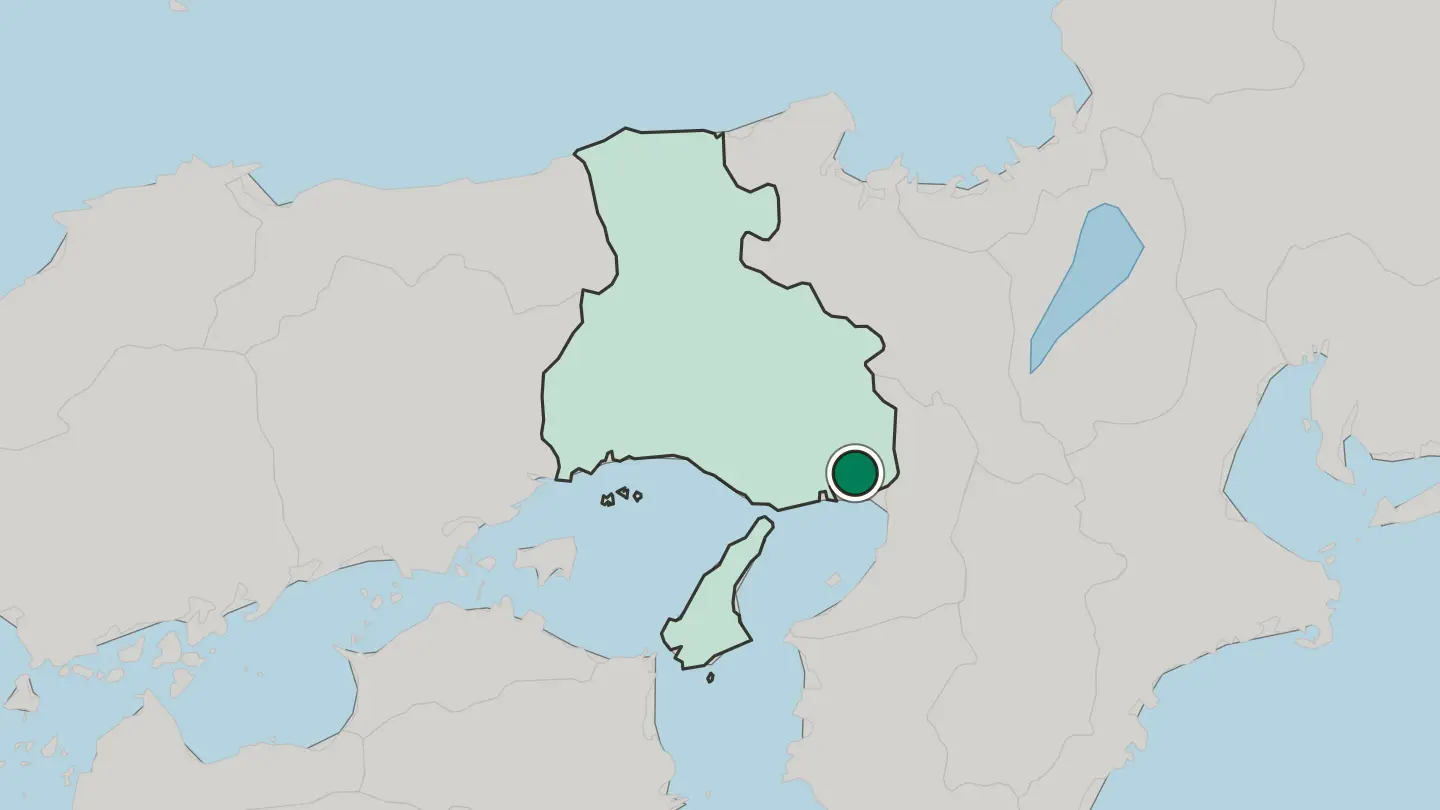 Japan
Japan
Takasago
Ishi-no-Hōden and the Tatsuyama quarry are the names that mark out Takasago, a compact city in Hyōgo Prefecture, Japan.Where to stay →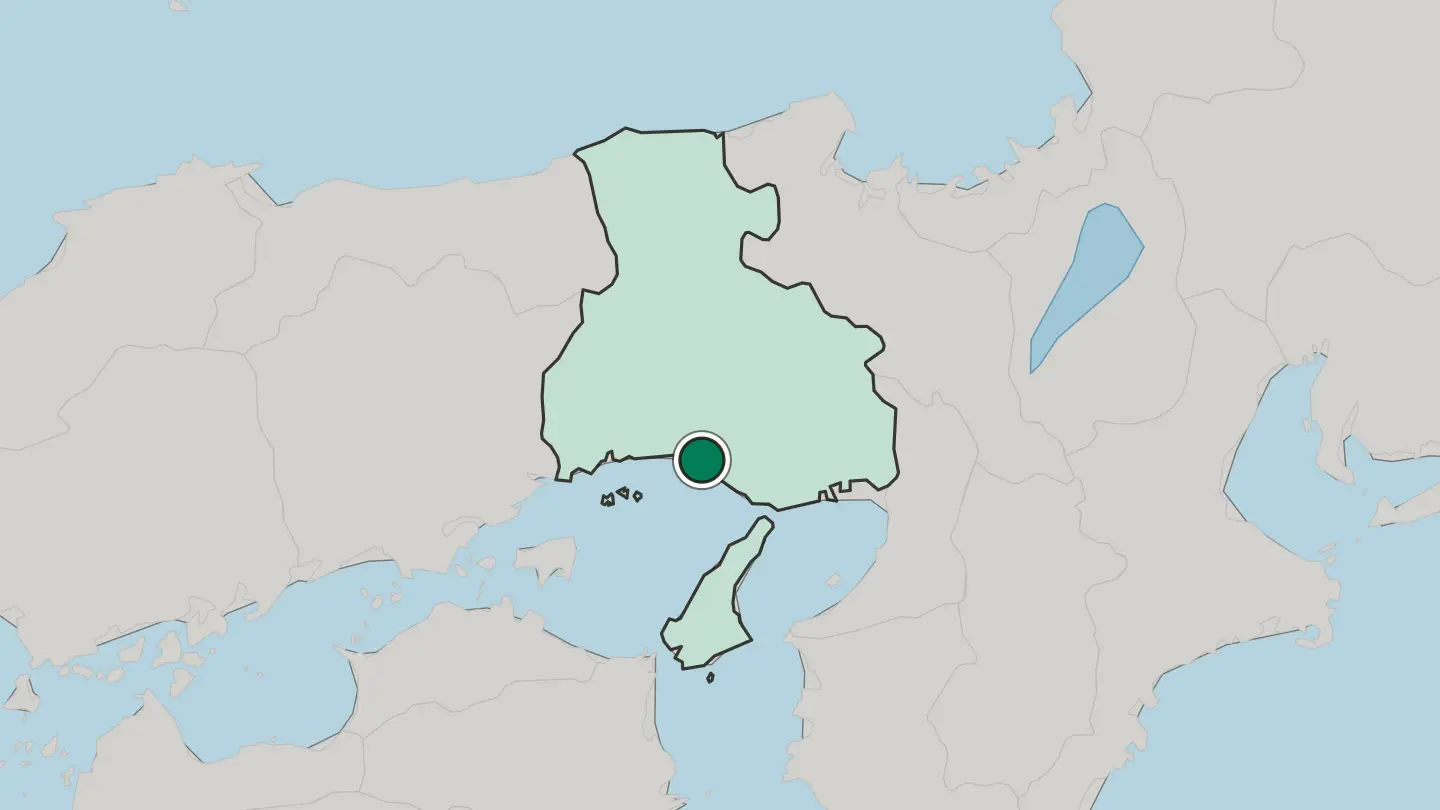
 Japan
Japan
Toyooka
A city facing the Sea of Japan. Toyooka, a city since 1950, takes in castle ground at Izushi, the rocks of Genbudō, and the Kinosaki lanes.Where to stay →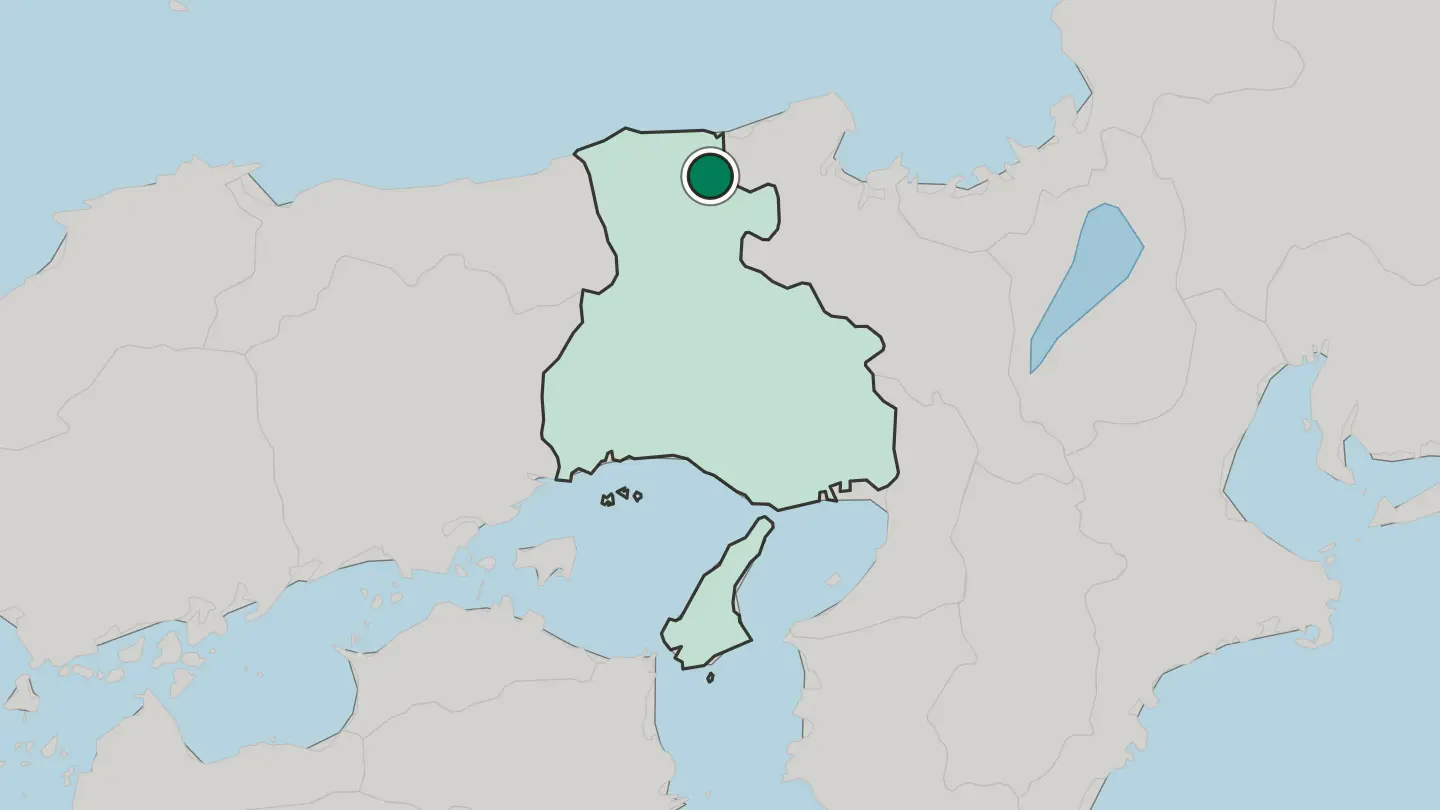
 Japan
Japan
Miki
Miki is a city of Hyōgo Prefecture in Japan, a municipality since 1954, and the keeper of a museum given entirely to hardware.Where to stay →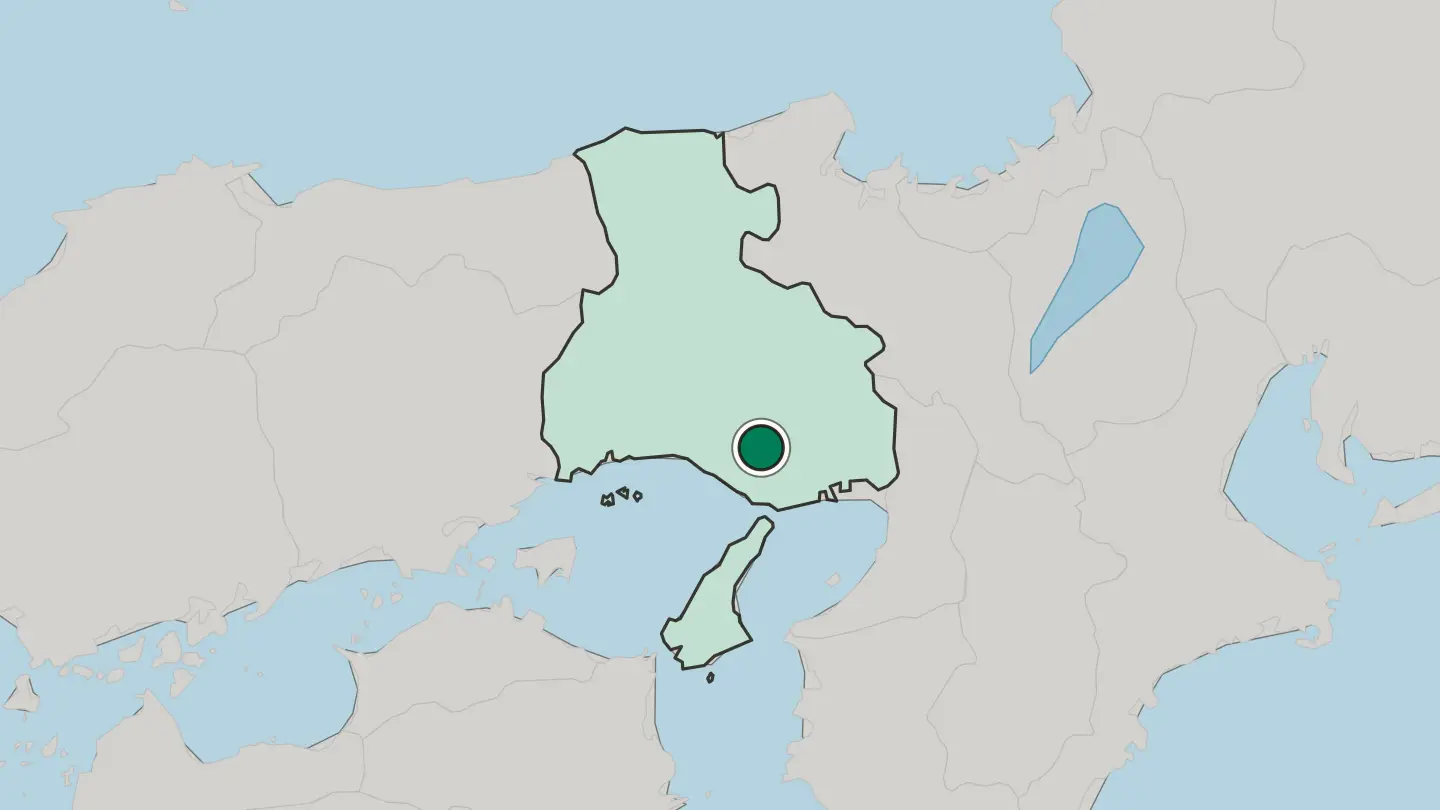 Japan
Japan
Kariya
Kariya belongs to Akō. Nine collections sit inside this Hyōgo Prefecture city, from a sake brewery museum to a marine one.Where to stay →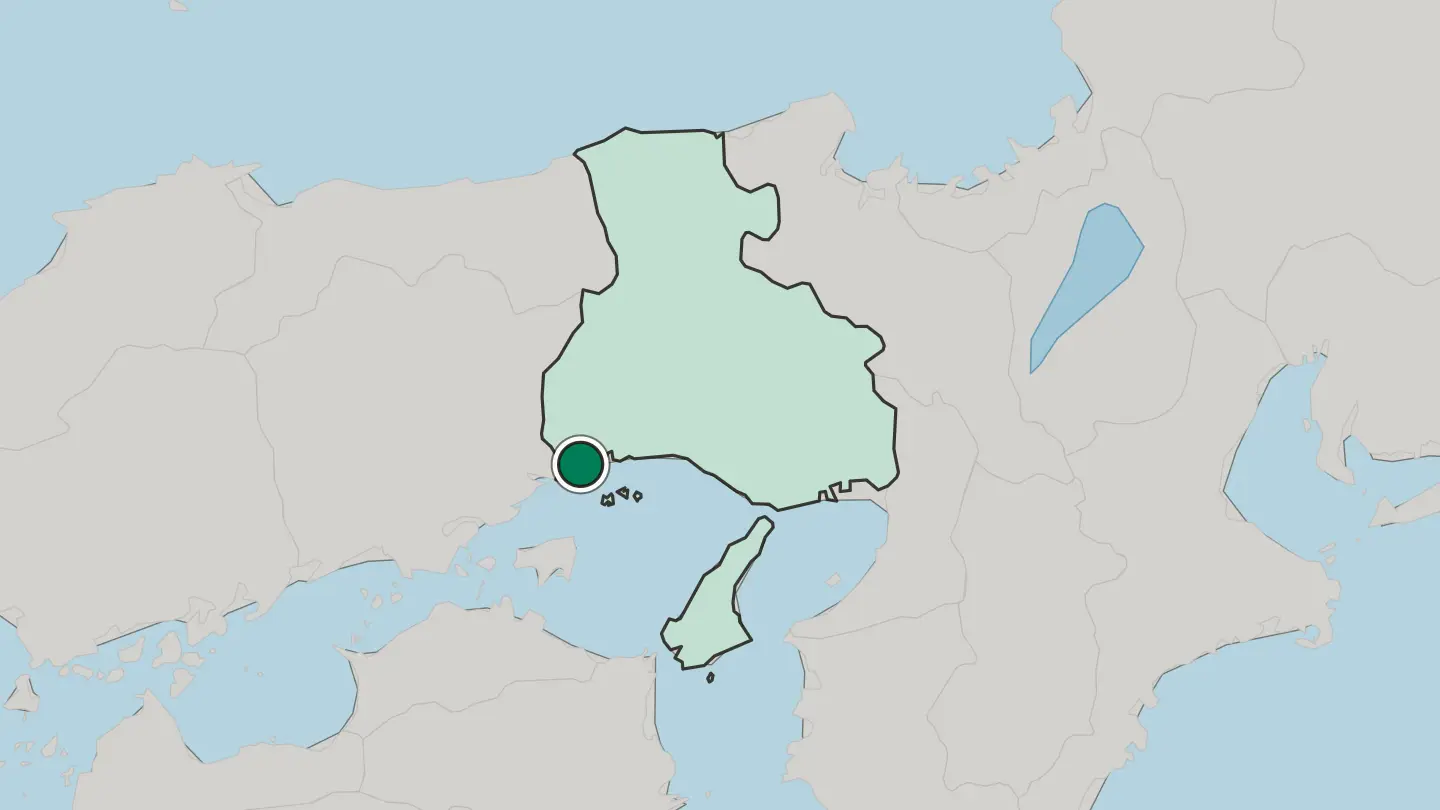
Hotel links are affiliate links: booking through them may earn us a commission, at no extra cost to you. It never affects how places are ranked. How this works
About Hyōgo
What is Hyōgo known for?
Kobe anchors the prefecture, a port city famous for its marbled beef and its terraced skyline under Mount Rokkō. Himeji Castle stands to the west, a UNESCO World Heritage Site and a white-plastered keep locals call the White Heron. The land itself is the headline.
Hyōgo has coastlines on two seas, running from the snow-country coast on the Sea of Japan clear down to the mild islands and bays of the Seto Inland Sea. Awaji Island guards the strait to Shikoku. Hot springs, sake towns, and castle keeps fill the space between.
Where is Hyōgo?
Hyōgo sits in the western Kansai region of Honshu, the main island. Kyoto Prefecture lies to the east and Osaka Prefecture to the southeast, while Okayama and Tottori prefectures close off the western side. What sets the prefecture apart is water on two coasts. The northern shore opens onto the Sea of Japan, grey and snow-battered in winter; the southern shore fronts the sheltered Seto Inland Sea.
Between the two runs a spine of forested mountains, so a single prefecture holds fishing ports, ski country, and a warm island sea within a few hours' drive. People call it Japan in miniature. Most people live along the southern edge.
Kobe stretches in a thin band between the Seto Inland Sea and the steep wall of Mount Rokkō, its neighbourhoods climbing the slope street by street. Offshore, Awaji Island plugs the mouth of Osaka Bay, separating it from the open Inland Sea and pointing south toward Shikoku across the Kii Channel. Inland the country breaks into old regions with their own character: Harima around Himeji in the west, Tajima in the northern hills, Tamba in the central uplands, and Awaji out on its island.
The reach from one sea to the other is the whole point of the place.
What is Hyōgo like?
Kobe set the tone for the whole prefecture. The port opened to foreign trade in the last years of the shogunate, and it drew merchants, sailors, and cooks from abroad whose descendants still fill the hillside houses of the Kitano quarter and the lanes of the city's Chinatown. That outside influence bred an appetite for good eating.
Kobe beef, the marbled wagyu raised from Tajima cattle, carries the city's name around the world. Just east, the Nada district presses sake, its breweries fed by hard Miyamizu water and rice off the Harima plain. The prefecture guards its old arts too.
Himeji Castle survives from the feudal age, remodelled by the lord Ikeda Terumasa in 1609. Awaji Island keeps a puppet theatre centuries old. Up in Takarazuka, by contrast, the all-female Takarazuka Revue has staged lavish musicals since the early twentieth century, a wholly modern invention.
Handwork is rooted deep across Hyōgo. Country potters, soba towns, and stork-filled paddies around Toyooka belong to the same prefecture as a container port, and the mix is the character.
What is the history of Hyōgo?
It began with the harbour beside Kobe. Foreign ships were admitted to Hyōgo, beside old Kobe, on the first day of 1868, one of the treaty harbours that ended Japan's long seclusion. The prefecture took shape the same year and grew by absorbing its neighbours.
Older provinces went into the mix: Harima, Tajima, Awaji, and parts of Tamba and Settsu, welded into one administration within a decade. Then, on a January dawn in 1995, the Great Hanshin earthquake tore through Kobe and killed thousands. The rebuilt city carries the memory still.
What is the climate of Hyōgo?
One prefecture holds two climates. The Seto Inland Sea coast in the south stays mild and unusually dry, sheltered by mountains on both sides, so Kobe and Himeji see little snow and long calm summers. Cross the mountains north and the weather flips.
The Sea of Japan shore piles up heavy winter snow off the cold sea wind, and the Tajima hills behind it turn white for months. Snow and sun share one prefecture.
How do you get to Hyōgo?
Hyōgo is reached through its neighbours. The Sanyō Shinkansen runs straight through the south of the prefecture, stopping at Shin-Kobe and Himeji, and it drops Kobe to under half an hour from Osaka by fast train. Kansai International Airport, built on its own artificial island in the bay, handles the long-haul arrivals, while Kobe Airport takes the domestic hops.
The Akashi Kaikyō Bridge carries the expressway south onto Awaji Island and on toward Shikoku. Trains crawl to the northern coast.
Common questions
What is the best area to stay in Hyōgo?
Kobe: a first base by the port and Sannomiya. Himeji: waking up under the White Heron Castle. Arima Onsen: gold and silver springs behind Mount Rokkō. Kinosaki Onsen: a yukata night on the Sea of Japan coast. Awaji Island: the island between Honshu and Shikoku.
Good for
More regions in Japan
Updated October 2026