Iran
South Khorasan Province, Iran — Towns & Travel Guide
South Khorasan is Iran's arid eastern province, a land of Qaen saffron, the record-hot Dasht-e Lut, and the walled gardens of Birjand.
Find your area →


Towns & cities in South Khorasan Province
One town here has its own guide — it links to where to stay.

 Iran
Iran
Bīrjand
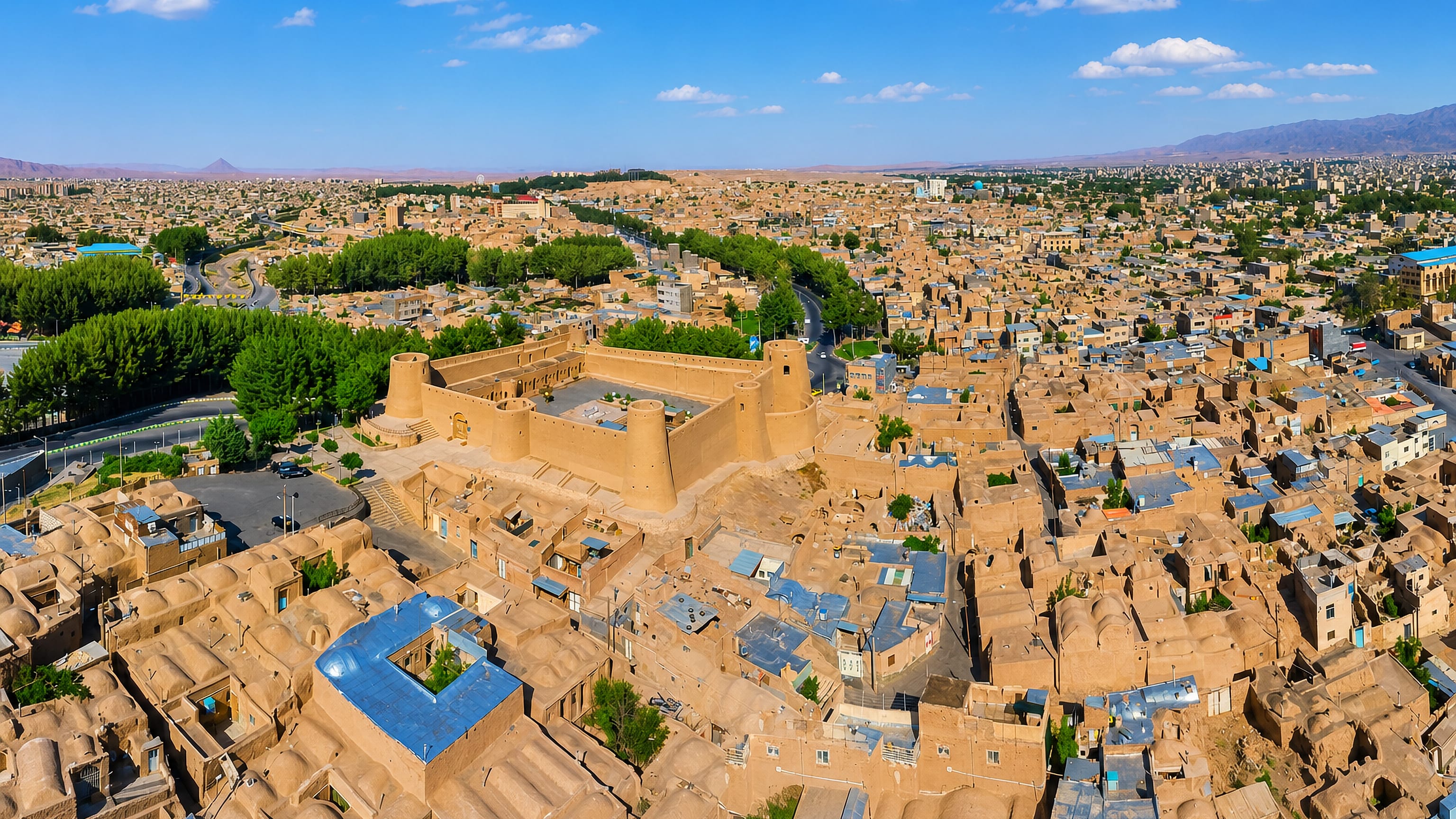
Birjand is a desert-edge city in eastern Iran, the capital of South Khorasan and the saffron capital of the country.Where to stay →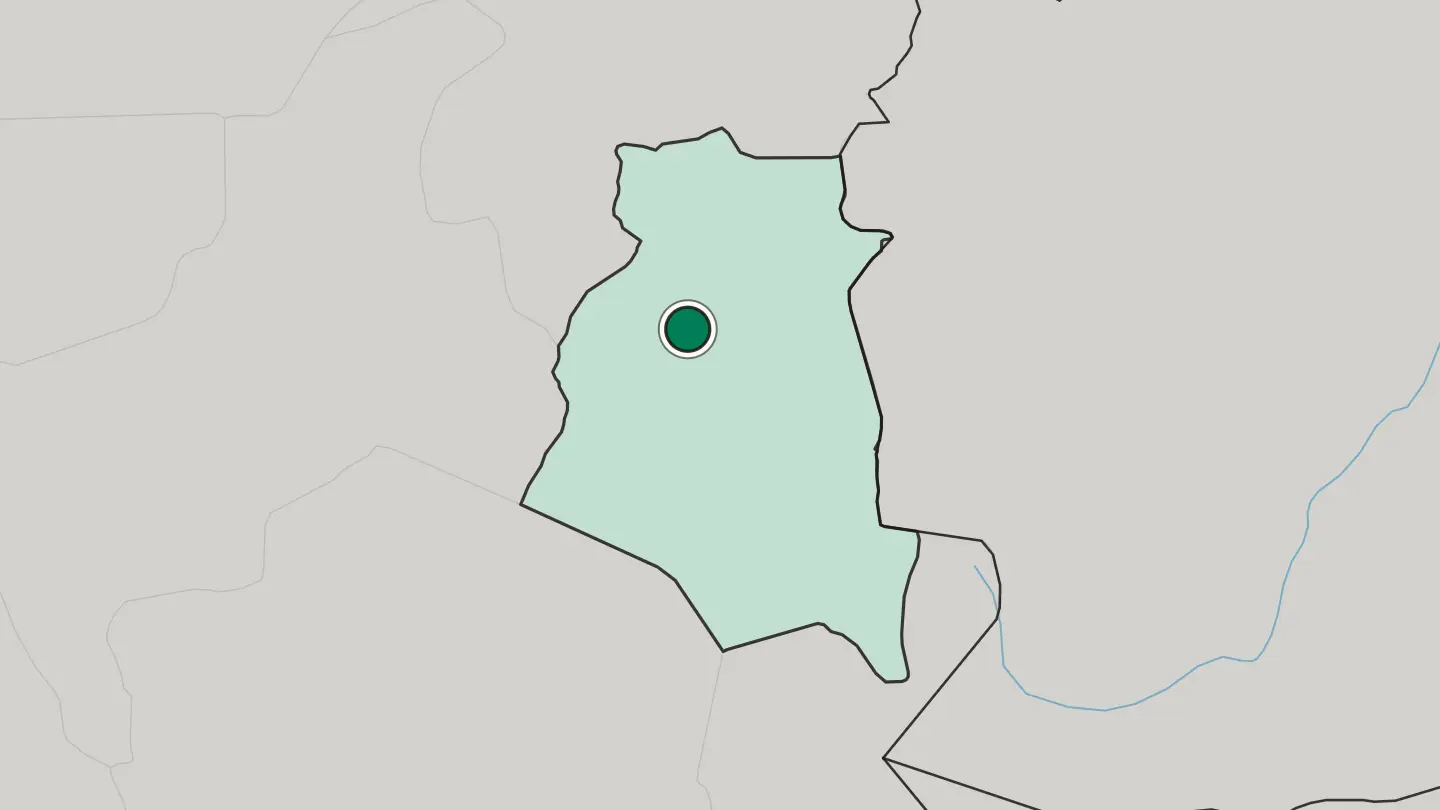
About South Khorasan Province
What is South Khorasan Province known for?
Saffron and barberry made this province's name. The town of Qaen, northwest of Birjand, is called Iran's saffron capital, and the deep-red zereshk berry that flavours Persian rice comes largely from the same terraced fields around Qaen and Birjand. Handwoven Birjand carpets carry the region's older Timurid weaving tradition.
To the south stretches the Lut Desert, whose black basalt plateau of Gandom Beryan has logged the hottest ground temperature ever recorded on Earth.
Where is South Khorasan Province?
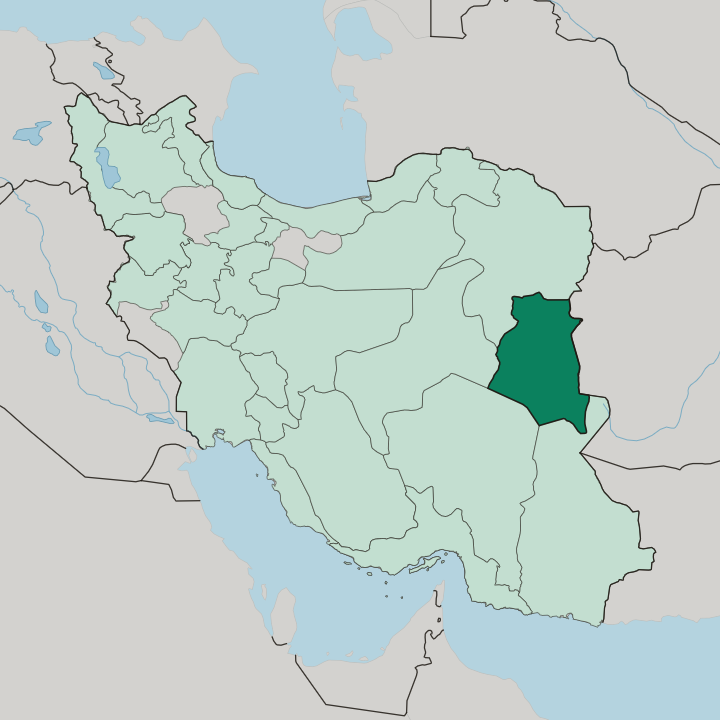
South Khorasan spreads across the arid east of Iran, pressed against the Afghan border. It is the third-largest of the country's provinces, and the most thinly peopled. The long eastern frontier runs some 331 km against Afghanistan, facing the Afghan provinces of Farah and Herat across the line. Razavi Khorasan lies to the north and Semnan to the north-west; Yazd and Isfahan edge the west, while Kerman and Sistan and Baluchestan close the province off along the south.
Birjand sits near the middle of all this, the provincial capital and largest town. The land runs high and dry, broken by bare ranges. Between the ridges lie gravel plains and salt flats, watered less by rivers than by qanats, the underground channels that have carried mountain water to the oases for centuries.
Southward the ground falls away into the Dasht-e Lut, the great sand-and-basalt desert whose northern reach is sometimes called Lut Birjand. This is the northern lobe of the hottest desert on Earth. Little grows without irrigation.
The saffron and barberry fields cluster where the qanats surface, around Qaen and Birjand, while Tabas guards the desert's northern edge and Ferdows its western oases.
What is South Khorasan Province like?
The people of South Khorasan are overwhelmingly Persian, and Persian is the everyday language, spoken here in a distinct Khorasani accent. Most are Shia Muslims. Winter brings Yalda night, the long-night festival marked with poetry and pomegranates, and with a local sweet called kaf, a frothy confection whipped from the root of the choobak plant.
Saffron threads and dried barberry are not just exports but kitchen staples, folded into the rice and stews of every household. The harvest of the purple saffron crocus, picked by hand before dawn, sets the rhythm of autumn across the Qaenat. Weaving is the province's signature craft.
Birjand and the villages of the Qaen valley, Dorokhsh chief among them, knot dense wool carpets in patterns handed down since the Timurid courts of nearby Herat, among them the fish-scale riz-e mahi and the horse-head kaleh asbi. The capital itself goes by the nickname City of Gardens. Its grandest, the Akbariyeh Garden, was laid out for a Qajar governor in the walled chahar-bagh style and shelters the province's archaeological museum among its cypress avenues and reflecting pools.
The best of these carpets furnish shrines and carpet museums across Iran.
What is the history of South Khorasan Province?
For most of its past this was Qohistan, 'the mountain land', a district of Greater Khorasan with its own rugged character, distinct from the plains to the north. Birjand grew into its main town under the Qajar-era Heshmat ol-Molk governors, who built the Akbariyeh Garden and ran Qohistan and Sistan from here. The modern province is young.
It was carved out in 2004, when the old Khorasan province of Iran was split three ways into North, Razavi, and South Khorasan.
What is the climate of South Khorasan Province?
The climate is desert-dry the year round. Summers are long and fierce, the Dasht-e Lut to the south ranking among the hottest ground on Earth, while winters on the high plateau turn genuinely cold, with frost and the odd snowfall over Birjand and Qaen. Days and nights swing far apart.
Rain is scarce and comes mostly in the cool months, so farming leans on snowmelt gathered through the qanats rather than on the sky.
How do you get to South Khorasan Province?
Most arrivals come by air into Birjand. Its airport, one of the oldest in Iran, runs daily domestic hops to Tehran and Mashhad on Iran Air and Iran Aseman. Everything else is a long desert drive.
Roads thread north to Mashhad and west across the plateau toward Yazd, while the eastern highways climb to the Afghan border crossings facing Farah. Long-distance buses link it to Mashhad and Kerman.
Common questions
What is the best area to stay in South Khorasan Province?
Birjand: a first base in eastern Iran's saffron country.
Good for
More regions in Iran
Updated September 2026