Japan
Ishikawa-ken, Japan — Towns & Travel Guide
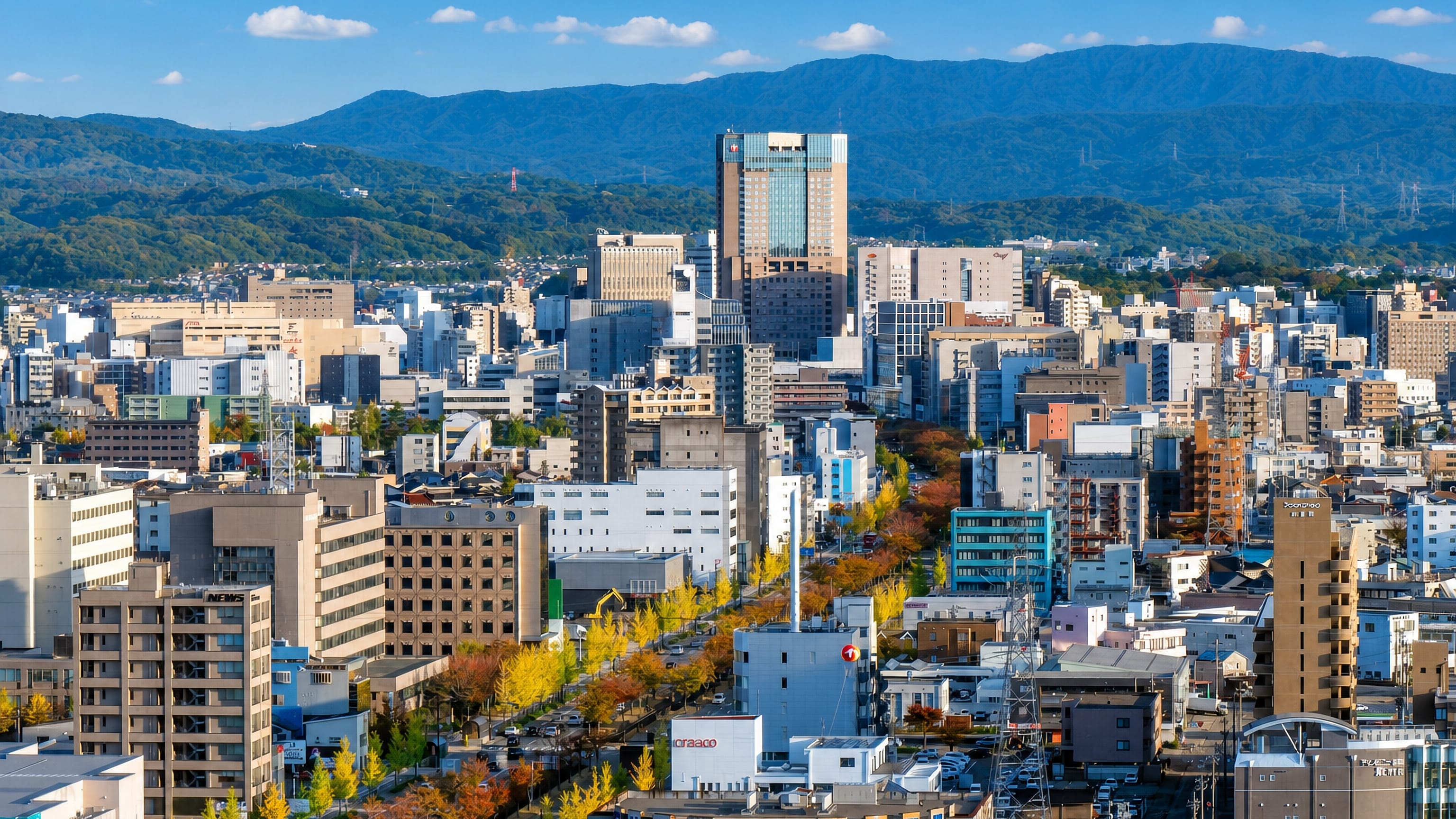
Ishikawa faces the Sea of Japan in central Honshu, where the castle town of Kanazawa keeps Kenroku-en garden and the Noto Peninsula reaches north.
Hotel links are affiliate links: booking through them may earn us a commission, at no extra cost to you. It never affects how places are ranked. How this works


Towns & cities in Ishikawa-ken
Pick a town or city — each links to where to stay.
 Japan
Japan
Kanazawa
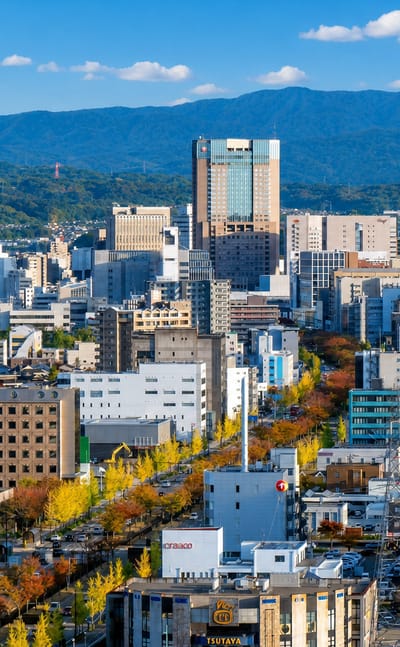
Gold leaf and old teahouses mark Kanazawa, the capital of Ishikawa Prefecture in central Japan, one of the best-preserved Edo-period cities.Where to stay →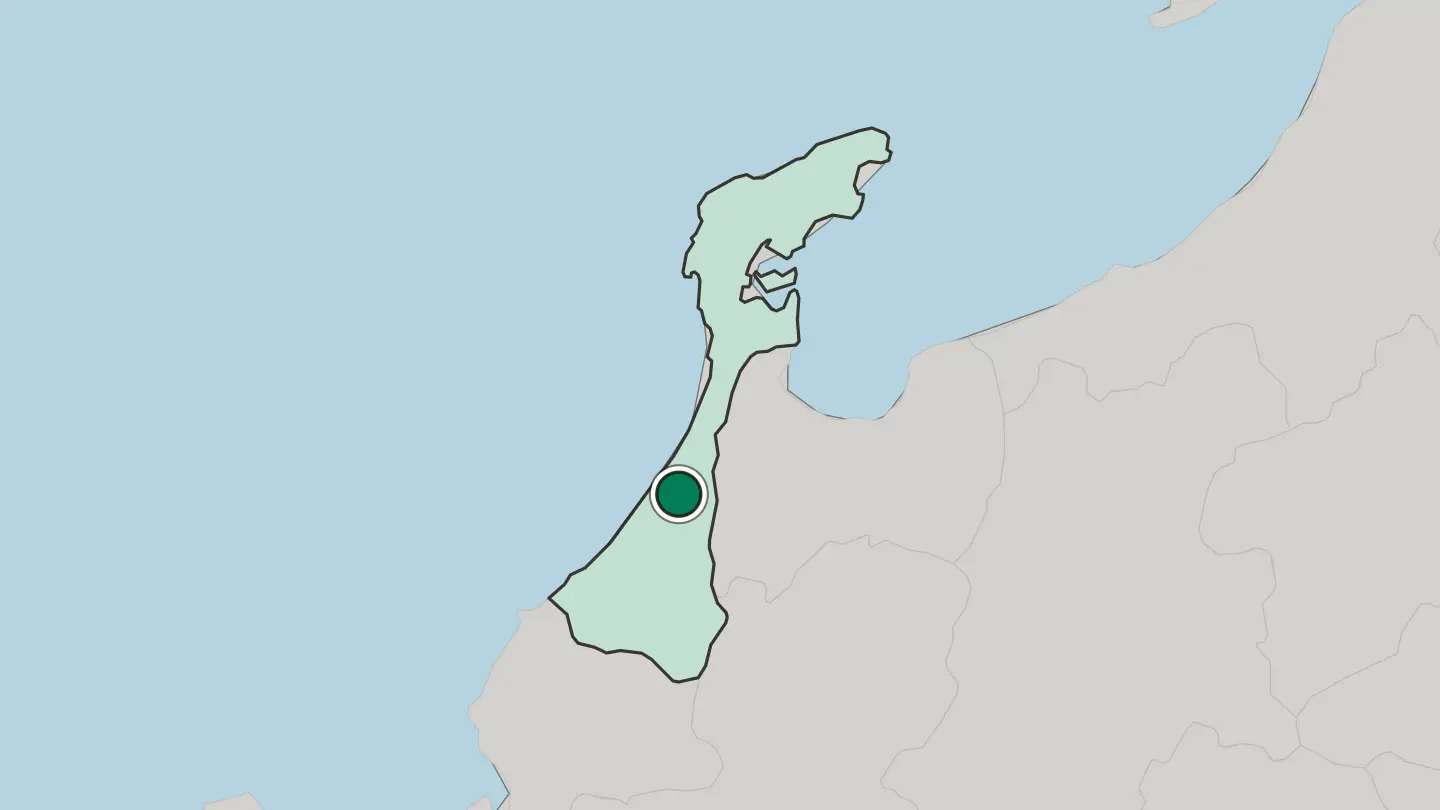
 Japan
Japan
Komatsu
Komatsu carries the name of the construction-equipment maker founded here, and keeps Nata-dera Temple as well. Ishikawa Prefecture's second city.Where to stay →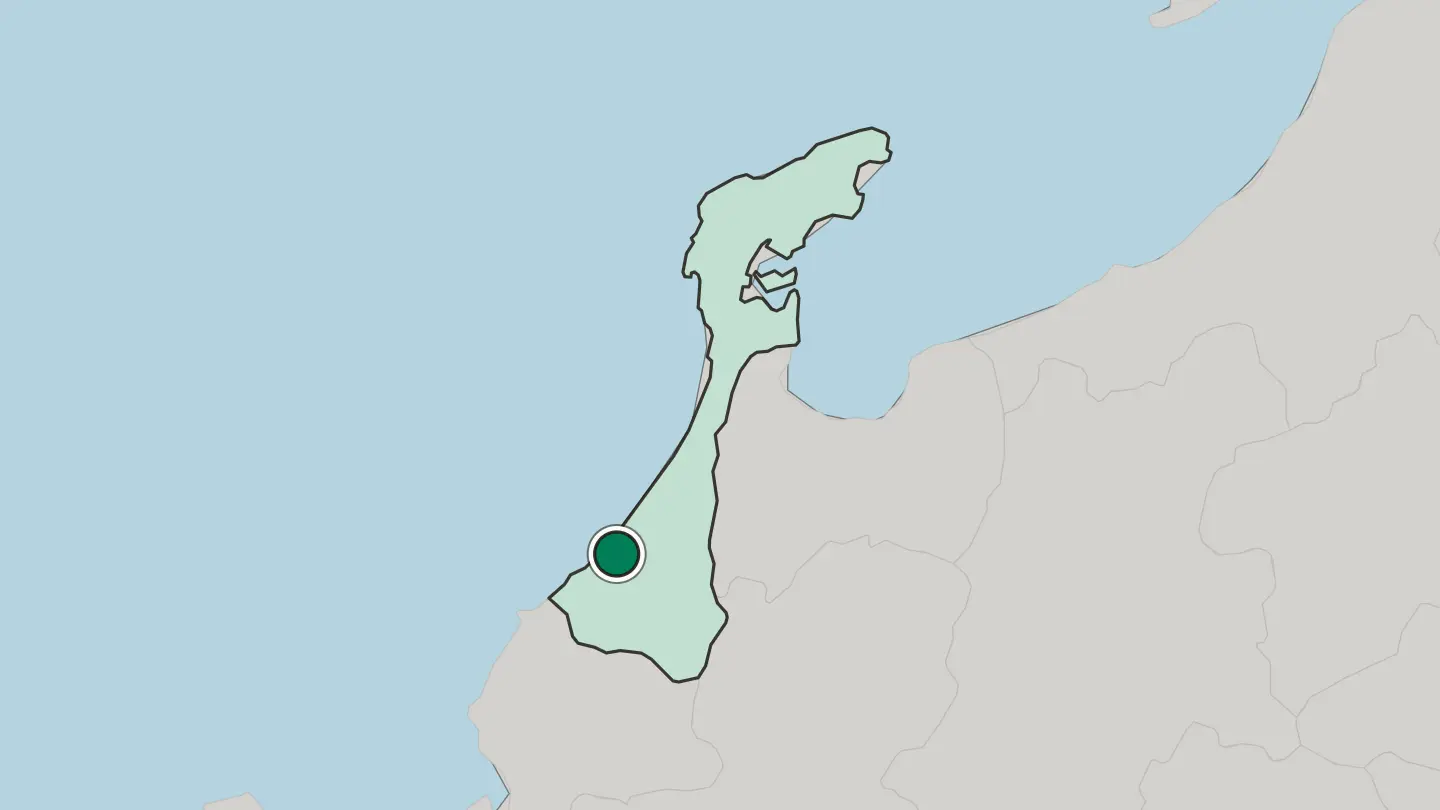
 Japan
Japan
Kaga
Kaga, written Kaga-shi, is the southernmost city of Ishikawa Prefecture in Japan, a municipality since 1958.Where to stay →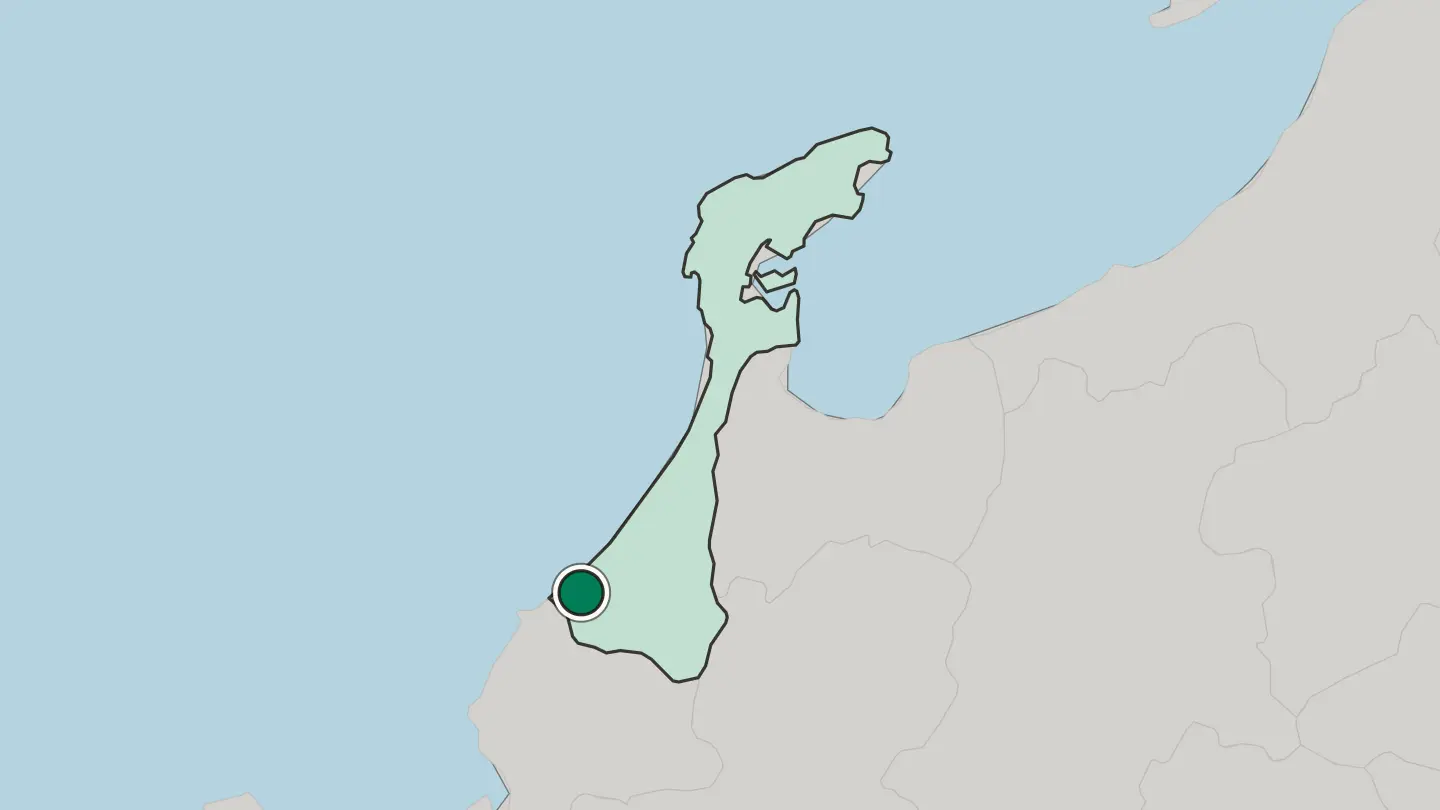 Japan
Japan
Nanao
Wakura Onsen's hot springs sit inside the largest city of the Noto Peninsula. Nanao took that shape in 2004.Where to stay →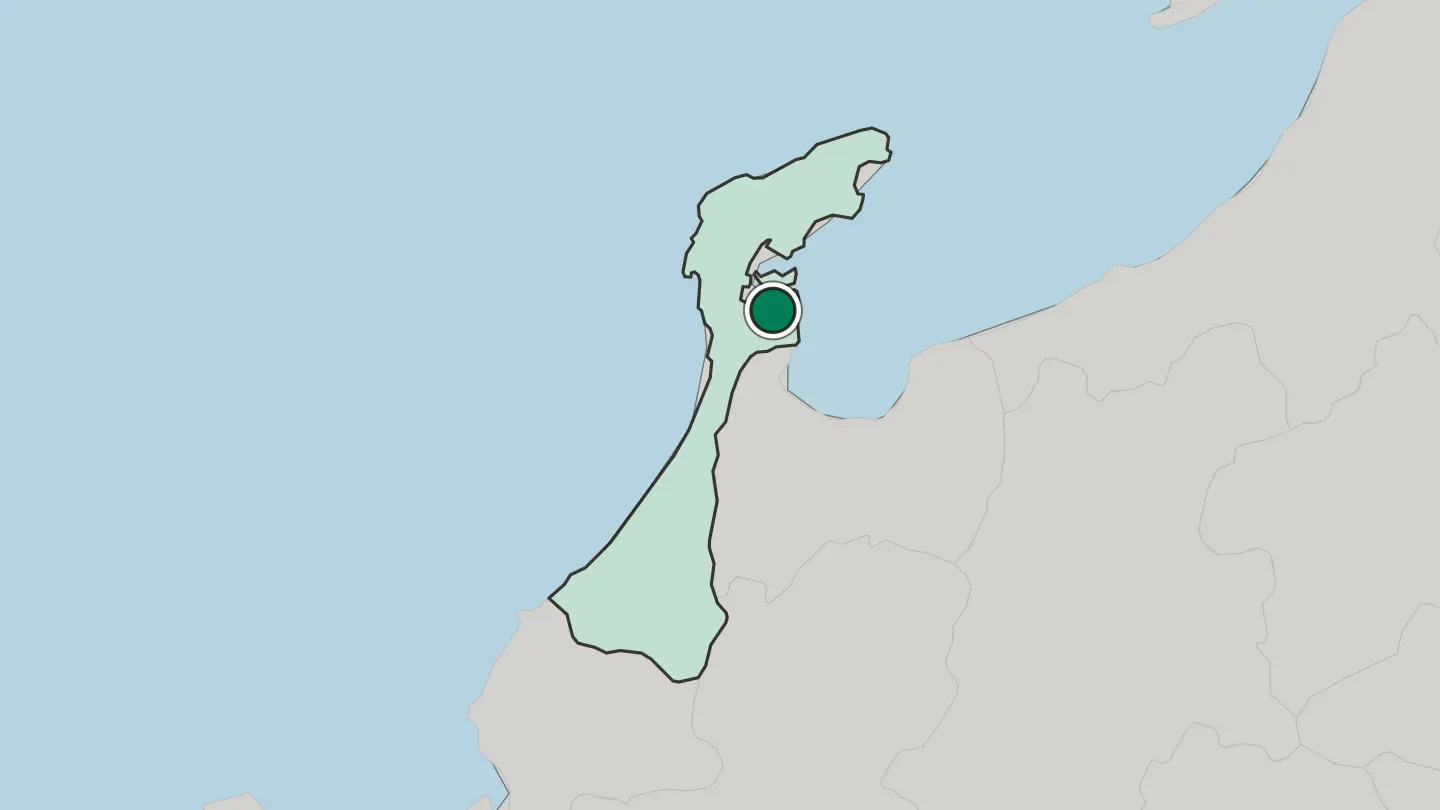
Hotel links are affiliate links: booking through them may earn us a commission, at no extra cost to you. It never affects how places are ranked. How this works
About Ishikawa-ken
What is Ishikawa-ken known for?
The prefecture's fame rests on Kanazawa. Its old castle town escaped wartime bombing, so the samurai lanes of Nagamachi, the teahouse quarter of Higashiyama-Higashi, and Kenroku-en survive largely intact, and the garden ranks among the three great landscape gardens of Japan. The craft tradition reaches far back.
Nearly all of Japan's gold leaf is beaten in Kanazawa, the kilns of the south fire the bold overglaze enamels of Kutani ware, and the workshops of Wajima on the Noto Peninsula turn out lacquer built up in many coats.
Where is Ishikawa-ken?
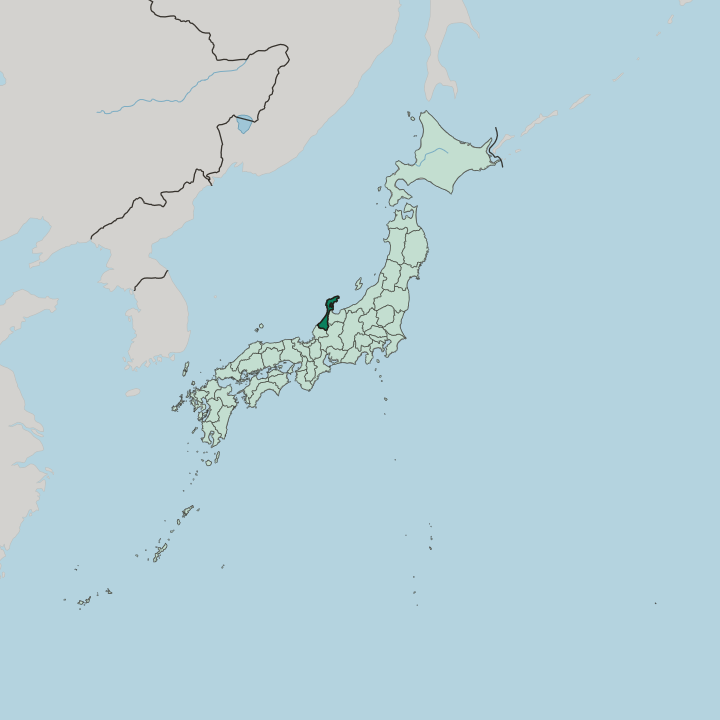
Ishikawa sits on the Sea of Japan coast of central Honshu, in the Hokuriku part of the wider Chūbu region. It is a long, narrow prefecture. Toyama Prefecture lies to the east, Gifu Prefecture to the southeast, and Fukui Prefecture along the south, while the whole western and northern edge is open sea. The shape is unmistakable on a map: a thin body in the south throwing out one long arm to the north.
That arm is the Noto Peninsula, a finger of land reaching into the Sea of Japan and curling east to shelter Toyama Bay. It is hilly, indented, and thinly settled, its coast a run of fishing coves and terraced fields. The south is different.
Here the land broadens into mountains, and the Hakusan range rises along the border with Gifu, crowned by Mount Haku, one of the three holy mountains of old Japan. Between the peaks and the sea lies the coastal Kaga plain, and on it stands Kanazawa, the capital, watered by rivers running down off the hills. Rice grows on the flats.
Almost nowhere in the prefecture is far from either the mountains or the sea.
What is Ishikawa-ken like?
Ishikawa is, above all, a craft prefecture. The wealth of its old rulers went into art rather than war, and the habit stuck. Gold leaf is the signature: nearly every sheet used to gild temples and screens across Japan is beaten in Kanazawa, pounded so thin it lifts on a breath.
Alongside it sit the overglaze colours of Kutani ware, the deep lacquer of Wajima, and the flowing dyed silk of Kaga yūzen. Even the sweets are an art, shaped to match the season and the tea served with them. That refinement runs through daily life.
The Maeda lords bankrolled Noh theatre, tea ceremony, and garden-making, and Kenroku-en is the grandest surviving fruit of it. Kanazawa still keeps its old bones, samurai walls in Nagamachi, the wooden teahouses of Higashiyama-Higashi where geisha still perform, and the crowded fish stalls of the Ōmichō market near the castle. Japanese is the language, spoken with a soft Hokuriku lilt.
The past is close here. It shows in a lacquer bowl or a garden stone as much as in any museum, and the crafts are living trades, not relics behind glass.
What is the history of Ishikawa-ken?
For most of the samurai age the land was two provinces, Kaga in the south, Noto in the north. Under the Tokugawa shogun both passed to the Maeda clan, whose Kaga Domain was assessed at more than a million koku of rice, the largest holding outside the shogun's own. From Kanazawa Castle the family ruled for close to three centuries, spending on gardens, theatre, and craft rather than arms.
The old domains ended in 1871. Ishikawa Prefecture took shape the following year, binding Kaga and Noto under one name.
What is the climate of Ishikawa-ken?
Winters here are grey and wet. Cold air off the Asian mainland picks up moisture crossing the Sea of Japan and drops it as heavy snow along the whole coast, from the Kaga plain to the tip of the Noto Peninsula. Gardeners rope the pines of Kenroku-en into tall cones each autumn so the snow load cannot snap their limbs.
Summers turn warm and humid, with rain spread through much of the year rather than saved for one season. Grey skies come with the coast.
How do you get to Ishikawa-ken?
Most travellers reach Ishikawa by rail. The Hokuriku Shinkansen runs from Tokyo to Kanazawa in about two and a half hours, threading the mountains before it drops to the coast, and its glass-and-timber station is where nearly every trip begins. Flights are the other way in.
Komatsu Airport, south of the city, links Ishikawa with Tokyo, Sapporo, and Fukuoka. From Kanazawa, local trains and buses carry on north up the Noto Peninsula and south to the Kaga hot springs, while the expressways run the same coast by car.
Common questions
What is the best area to stay in Ishikawa-ken?
Kanazawa: a first base around Kenroku-en and Kanazawa Castle. Kaga Onsen: old ryokan hot springs at Yamanaka and Yamashiro. Noto Peninsula: the coast and baths of the Noto Peninsula.
Good for
More regions in Japan
Updated September 2026