Japan
Ehime, Japan — Towns & Travel Guide
Ehime fills the western side of Shikoku, a coast of citrus groves, hot springs and island bridges facing the Seto Inland Sea.
Hotel links are affiliate links: booking through them may earn us a commission, at no extra cost to you. It never affects how places are ranked. How this works


Towns & cities in Ehime
Pick a town or city — each links to where to stay.
 Japan
Japan
Matsuyama
Matsuyama is the largest city of Shikoku in western Japan, known for a hilltop castle and one of the country's oldest hot springs.Where to stay →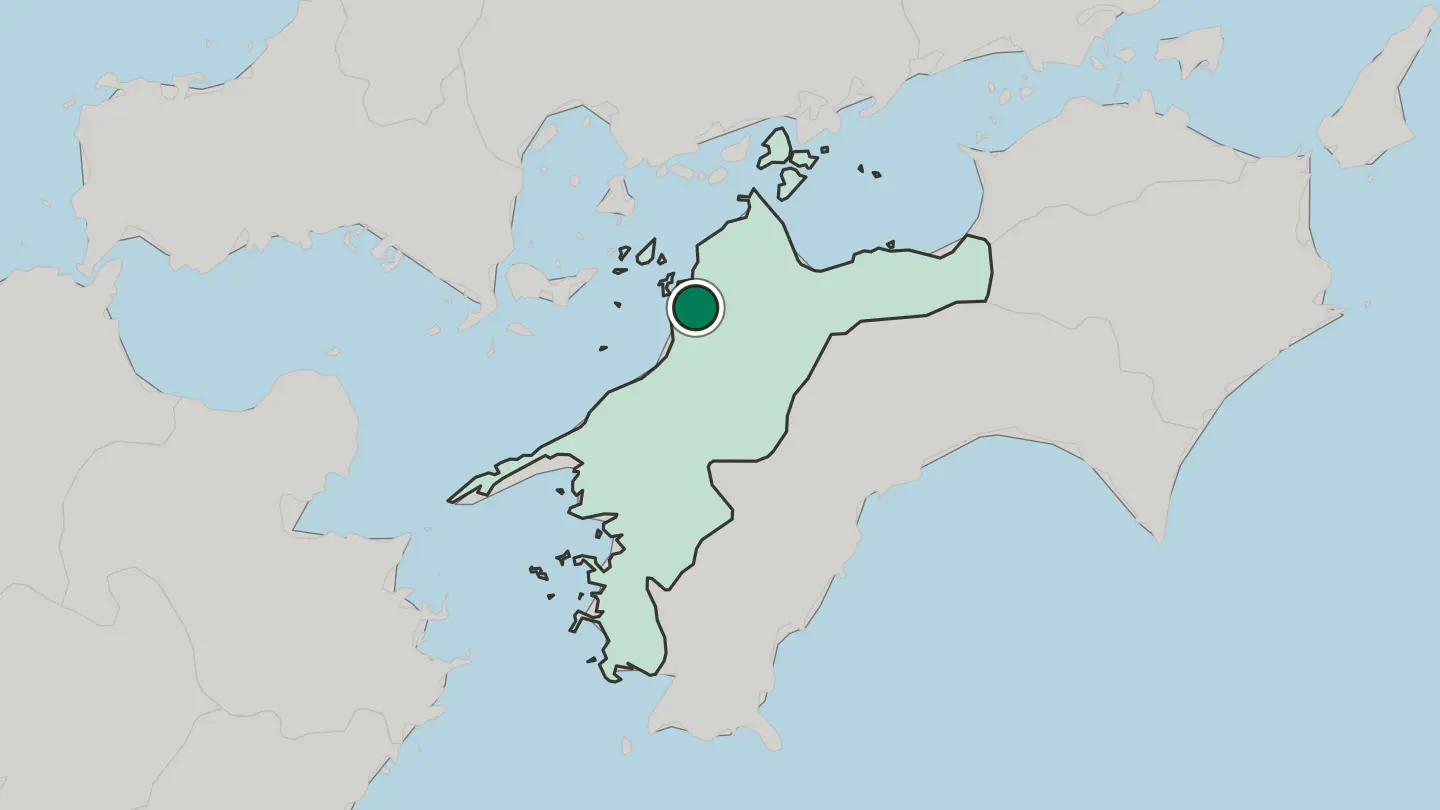
 Japan
Japan
Imabari
Imabari is the second city of Ehime Prefecture on Shikoku, a coastal place whose boundary carries on into the islands offshore.Where to stay →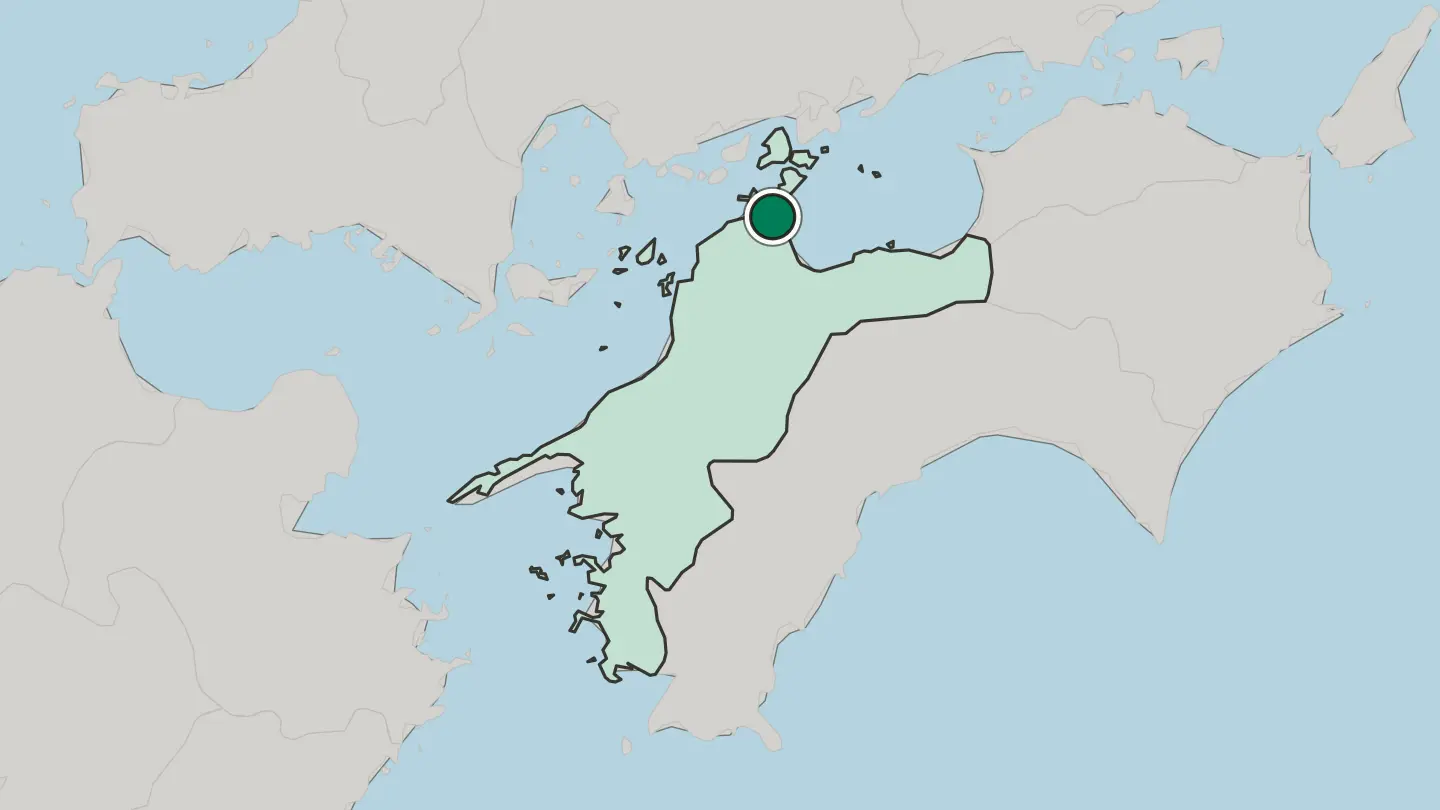
 Japan
Japan
Niihama
The Besshi copper mine built Niihama, a Shikoku city of Ehime Prefecture whose loudest days belong to the Taiko Festival.Where to stay →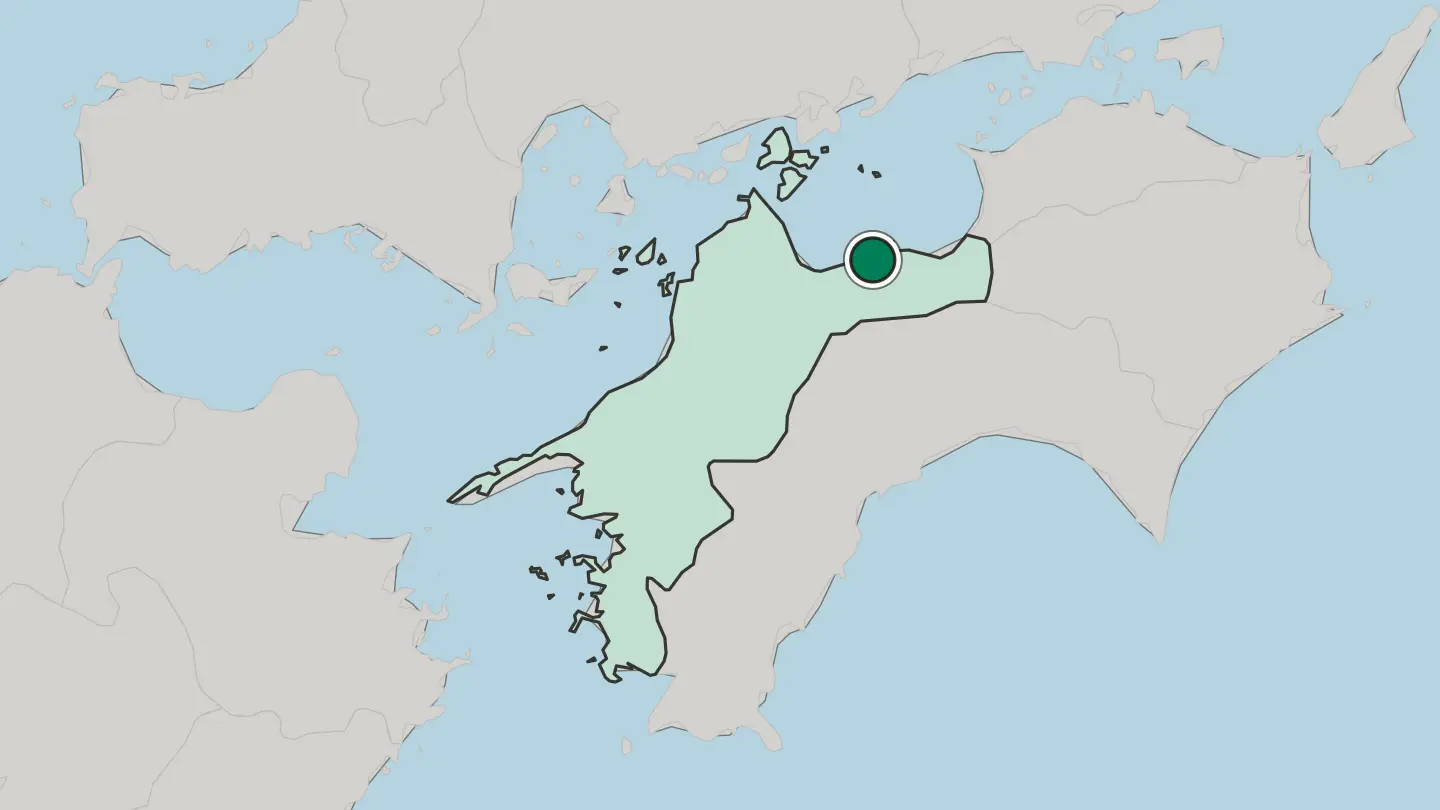
 Japan
Japan
Shikokuchūō
Paper made Shikokuchūō, the leading producer of paper and paper products in Japan and a port city among Ehime Prefecture's industrial centres.Where to stay →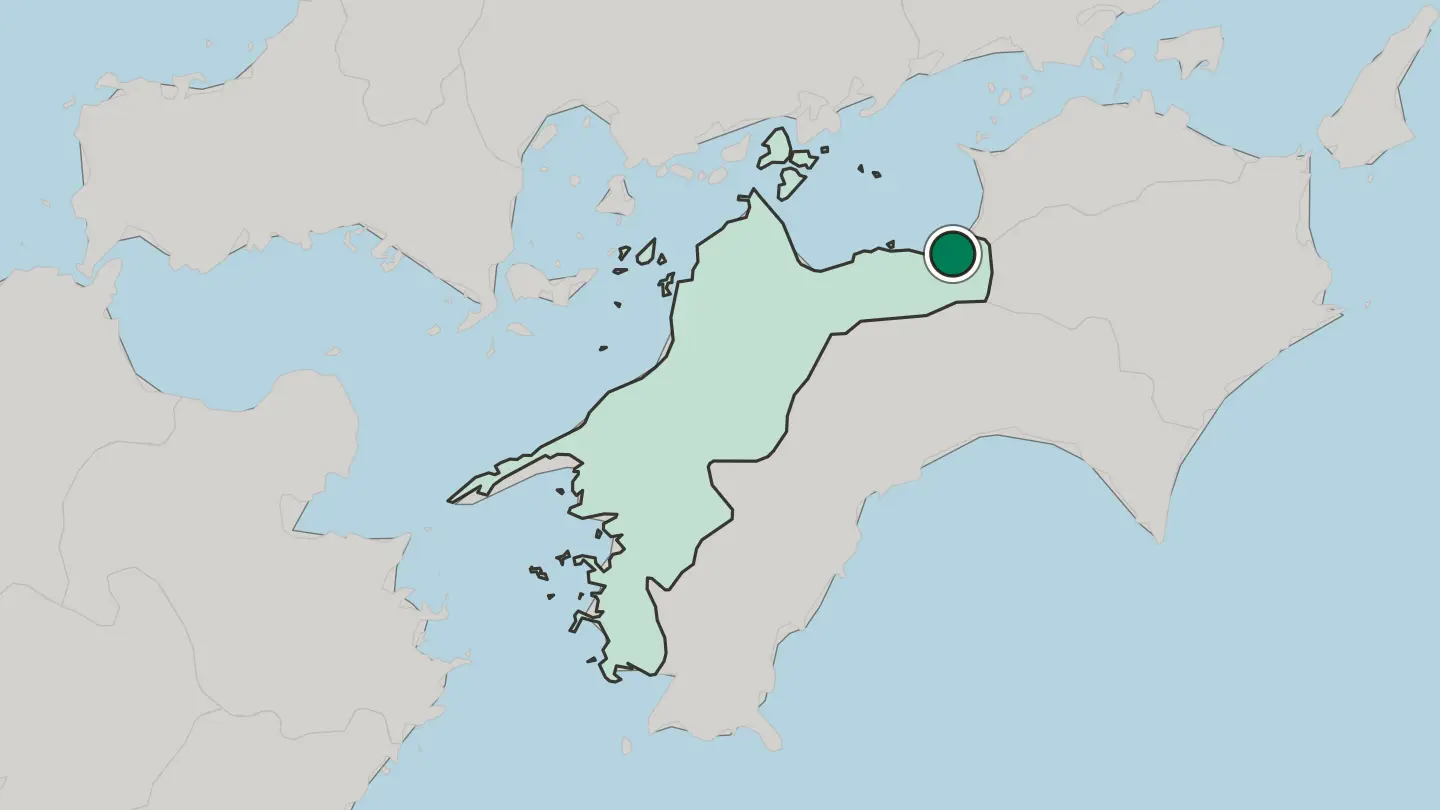
 Japan
Japan
Uwajima
Uwajima is a small city on the ocean coast of Shikoku, known for Uwajima Castle, Tensha-en and bouts fought between two bulls.Where to stay →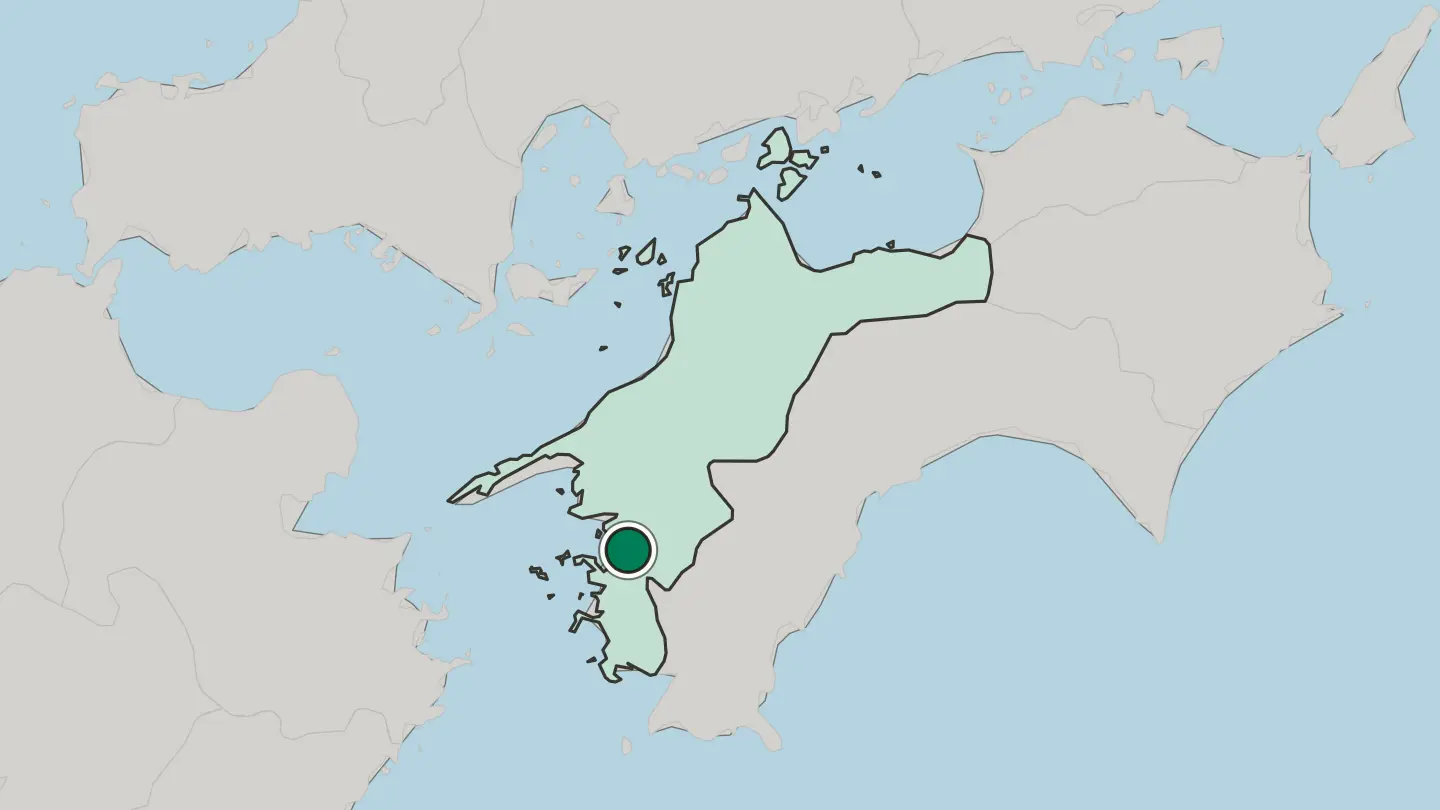
Hotel links are affiliate links: booking through them may earn us a commission, at no extra cost to you. It never affects how places are ranked. How this works
About Ehime
What is Ehime known for?
Three things pull travellers to Ehime: hot water, citrus, and a road built for bicycles. Dōgo Onsen, one of the oldest bathhouses in Japan, sits in the capital at Matsuyama below the hilltop keep of Matsuyama Castle, one of just a dozen in the country with its original wooden tower intact. Hillsides dropping to the Seto Inland Sea are terraced with mikan orange groves, and Ehime rivals any prefecture as the country's citrus heartland.
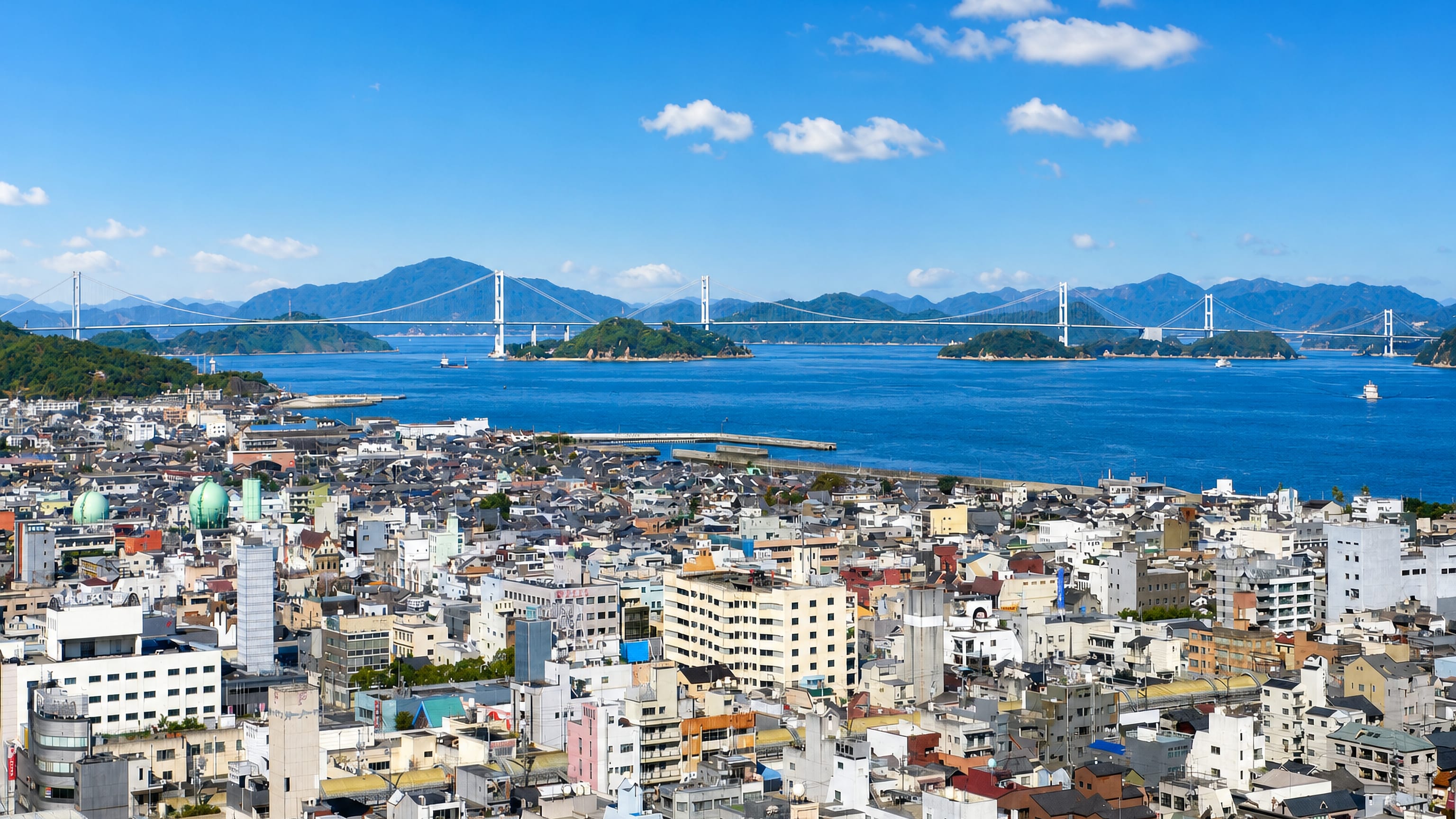
From Imabari the Shimanami Kaidō leaps island to island across the sea on a chain of long suspension bridges. Cyclists ride it end to end.
Where is Ehime?
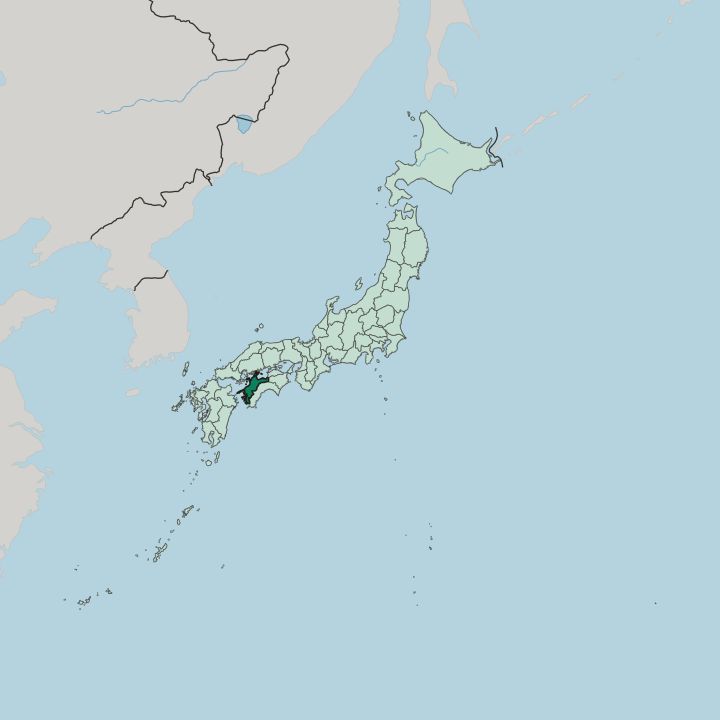
Ehime takes up the north-western and western third of Shikoku, the smallest of Japan's four main islands. Its long coast faces north across the Seto Inland Sea. Kagawa and Tokushima lie over the mountains to the east, and Kōchi shares the high spine of the island to the south. The interior climbs fast from the shore.
Mount Ishizuchi rises inland to the highest peak on Shikoku, and steep river valleys cut down from the ridges toward the citrus terraces near the water. Little of the prefecture is truly flat. The sea does the rest of the shaping.
Ehime's northern edge dissolves into the islands of the Seto Inland Sea, and from Imabari the Shimanami Kaidō hops across six of them on a chain of bridges to reach Onomichi on Honshu. It is the only sea crossing between Shikoku and the main island open to cyclists and walkers. Ōmishima, one of Ehime's larger islands, holds the old Ōyamazumi Shrine. In the far west the Sadamisaki Peninsula, the narrowest in Japan, reaches out toward Kyūshū across the strait.
Hiroshima lies over the water to the north.
What is Ehime like?
Ehime's culture is bound up with Matsuyama and with words. The haiku reformer Masaoka Shiki was born in the castle town, and he pulled the old seventeen-syllable form into the modern age from here. His schoolfriend Natsume Sōseki came to teach at a Matsuyama middle school, and the year he spent there became the novel Botchan, still the book most people attach to the city.
Dōgo Onsen runs through that story. Bathers in cotton yukata still pad between the wooden bathhouse and the ryokan around it, much as they did in Sōseki's day, and the whole quarter treats a soak as an ordinary daily rite rather than a spectacle. Faith crosses the prefecture on foot.
Ehime holds a long central stretch of the Shikoku pilgrimage, the loop of 88 temples linked to the monk Kūkai, and white-clad henro walk its lanes between temples such as Ishite-ji near Dōgo. The table is local too. Uwajima serves sea bream over rice and fried fish cakes, the hills send down mikan and a dozen other citrus, and the south still stages its old sumo-style bullfighting.
It all stays close to the land and the sea.
What is the history of Ehime?
For most of its recorded past this was Iyo, one of the old provinces of the island. The name Ehime is older still, taken from the Kojiki, the eighth-century chronicle that calls the spirit of the Iyo land a lovely maiden. After the Battle of Sekigahara in 1600 the Tokugawa handed Iyo to their allies, and Katō Yoshiaki laid the first stones of Matsuyama Castle in 1602.
The land split into rival domains. Matsuyama and the smaller Date court at Uwajima grew into castle towns that still anchor the prefecture. The domains merged into Ehime Prefecture in 1873.
What is the climate of Ehime?
The Seto Inland Sea sets the weather along Ehime's north coast. Screened by mountains on two sides and by the islands offshore, Matsuyama and its shore stay mild and comparatively dry, and it is this even warmth that lets the mikan ripen on the slopes above the water. Summers turn hot and sticky.
Winters are gentle near the sea, though snow settles on Mount Ishizuchi and the inland ridges. The southern coast around Uwajima faces the open Pacific and runs warmer and wetter, catching more of the rain and the passing storms.
How do you get to Ehime?
Most travellers fly into Matsuyama, the airport a short ride from the castle and the hot springs. Boats matter here too. Fast ferries cross the Seto Inland Sea from Hiroshima on Honshu to Matsuyama's port, the old sea route into the prefecture.
By road or bike the way in is the Shimanami Kaidō, whose bridges step down from Onomichi through the islands to Imabari. Trains come the long way round, crossing into Shikoku from Okayama and running west along the coast. The sea is never far from any of these.
Common questions
What is the best area to stay in Ehime?
Matsuyama: the obvious starting point for Ehime. Dōgo Onsen: a ryokan night at Dōgo Onsen. Imabari: riding the Shimanami Kaidō. Uwajima: a quiet southern castle town.
Good for
More regions in Japan
Updated September 2026